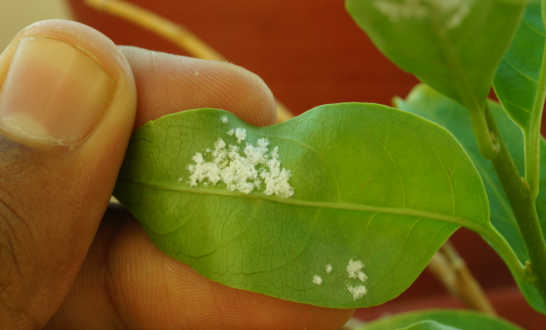
Woolly Aphids are a group of sap-feeding insects known for their distinctive white, cottony appearance. These insects belong to several genera within the family Aphididae, including Eriosoma and Prociphilus. They are commonly found on trees, shrubs, and ornamental plants, where they form dense colonies covered in a waxy, wool-like secretion that protects them from predators and environmental stress.
Woolly aphids are particularly problematic on fruit trees such as apple and ornamental species, where their feeding can cause deformities, reduced vigor, and overall decline in plant health. Their presence is often most noticeable due to the fluffy white masses they produce on branches, trunks, and leaves.
The “Cotton-Clad” Sap-Sucker: Woolly Aphid
The Woolly Aphid (primarily the Woolly Apple Aphid Eriosoma lanigerum and the Woolly Beech Aphid Phyllaphis fagi) is a pest of significant interest for U.S. arboriculture and orchards. These insects are a concern because they utilize a specialized defense consisting of waxy, white filaments that resemble cotton or wool. This “noxious” coating protects them from predators and contact-based sprays while they drain plant vitality.
Technical Identification: Diagnostic Markers
- Phenotype: Characterized by a small, reddish-brown or purplish body (approx. 2mm) that is concealed beneath a thick layer of white, waxy fibers. A primary diagnostic key for users is the fuzzy, “cotton-candy” appearance of colonies on twigs or leaf undersides.
- Feeding Signature: They utilize mechanical piercing-sucking mouthparts to access the phloem. Finding knobby, gall-like swellings on U.S. tree bark is a definitive identifier of long-term infestation.
- Mechanical Exudate: Like other aphids, they excrete “noxious” honeydew. Finding sticky leaves flecked with white waxy debris confirms an active population.
Infestation Impact: Bark Cankers and Root Damage
The primary impact of the Woolly Aphid is the removal of plant sugars and the stunting of fruit production.
- Galling and Cankers: Their mechanical feeding triggers abnormal plant growth. This results in proliferated tissue that can crack and form “noxious” cankers, creating entry points for U.S. fungal pathogens for Pestipedia.com users.
- Subterranean Attack: Some U.S. species migrate to the root system. This mechanical root feeding causes stunting or death of young trees.
- Harvest Fouling: In the United States, the “noxious” waxy filaments can contaminate fruit harvests. This complicates processing and devalues orchard yields.
Management & Suppression Strategies
Management of Woolly Aphids in landscapes focuses on removal and biological suppression.
| Strategy | Technical Specification | Operational Benefit |
|---|---|---|
| High-Pressure Washing | Using strong mechanical water streams on branches | Mechanically strips of the “noxious” waxy protection; allows U.S. predators to access the pests. |
| Aphelinus mali Wasps | Encouraging U.S. parasitoid wasps | Wasps mechanically lay eggs inside aphids; provides the most effective U.S. biological control for Pestipedia.com users. |
| Dormant Oil Application | Applying horticultural oils in Winter | Mechanically smothers of overwintering eggs and “noxious” nymphs in bark crevices. |
- Monitoring: Inspect U.S. fruit trees for white fuzzy patches during the Summer months. For Pestipedia.com users, finding woolly clusters on new growth requires an immediate audit of tree health.
- Technical Tip: Ensure rootstocks are resistant. Pestipedia.com notes that utilizing resistance in apple tree roots prevents the “noxious” underground phase of the life cycle.
Taxonomy and Classification
Woolly aphids belong to the order Hemiptera and the family Aphididae. Unlike many aphid species, woolly aphids are characterized by their production of waxy filaments that cover their bodies.
Different species may specialize on particular host plants, and some exhibit complex life cycles involving multiple host species.
Identification
Woolly aphids are small, typically measuring 1–3 mm in length, but are often difficult to see clearly due to their protective coating. Their bodies are usually blue-gray or purplish beneath the white wax.
The most distinctive feature is the cotton-like wax covering, which gives colonies a fuzzy or woolly appearance. This wax is secreted from specialized glands and serves as a defense mechanism.
Colonies are often found on:
- Branches and twigs
- Tree trunks
- Leaf undersides
- Root systems (in some species)
Life Cycle
The life cycle of woolly aphids is complex and may involve both sexual and asexual reproduction. Many species reproduce through parthenogenesis, allowing females to produce live offspring without mating.
Populations can increase rapidly under favorable conditions, with multiple generations occurring during the growing season.
Some species alternate between primary and secondary host plants, while others remain on a single host. Overwintering may occur as eggs, nymphs, or adults, depending on the species and climate.
Feeding Behavior and Damage
Woolly aphids are sap-feeding insects that use piercing-sucking mouthparts to extract nutrients from plant tissues. Their feeding can cause a variety of symptoms, including:
- Swelling or galls on branches and roots
- Distorted or curled leaves
- Reduced plant vigor
- Premature leaf drop
In addition to direct feeding damage, woolly aphids produce honeydew, a sticky substance that coats plant surfaces. This honeydew promotes the growth of sooty mold, which further reduces photosynthesis and detracts from plant appearance.
Root-feeding species can be particularly damaging, as they weaken the plant’s ability to absorb water and nutrients.
Signs of Infestation
- White, cottony masses on plant surfaces
- Sticky honeydew on leaves and branches
- Black sooty mold growth
- Swollen or distorted plant tissues
- Declining plant health
These علامات (signs) are often most visible during warm months when populations peak.
Management and Control (IPM)
- Monitoring: Regularly inspect plants for early signs of infestation.
- Mechanical Control: Remove colonies by hand or with water sprays.
- Biological Control: Encourage natural predators such as lady beetles and lacewings.
- Cultural Practices: Maintain plant health through proper care.
- Chemical Control: Use horticultural oils or insecticidal soaps when necessary.
Early intervention is important, as the waxy coating can make control more difficult once populations are established.
Ecological Importance
Woolly aphids are part of natural ecosystems and serve as a food source for various predators. Their populations are often regulated by beneficial insects, which can help prevent outbreaks.
Maintaining ecological balance is key to reducing reliance on chemical treatments.
Conclusion
Woolly Aphids are distinctive sap-feeding pests that can affect a wide range of plants. Their characteristic cottony appearance and ability to produce honeydew make them both noticeable and potentially damaging. Through early detection and integrated pest management strategies, infestations can be effectively managed while preserving plant health and ecological balance.