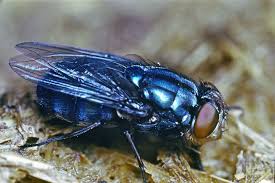
Queen Blowflies generally refers to mature reproductive female blowflies in the family Calliphoridae, including common bluebottle and greenbottle flies. These females are responsible for locating decaying organic matter and laying clusters of eggs that hatch into maggots. While the term “queen” is not used in blowfly biology the same way it is for ants, termites, bees, or wasps, reproductive female blowflies play the central role in starting infestations. Their presence around homes, restaurants, farms, dumpsters, animal facilities, or food-processing areas is a strong warning sign of decaying material and poor sanitation.
The main conflict with blowflies is public health and nuisance. Female blowflies lay eggs on carrion, garbage, spoiled meat, fish waste, feces, dead rodents, dead birds, and other moist organic material. Adults and larvae may then move between filthy sources and clean surfaces, creating the risk of mechanical pathogen transmission. A sudden indoor blowfly outbreak often means a hidden animal carcass or decaying waste source is present nearby.
Taxonomy and Classification
Blowflies belong to the order Diptera, the true flies, and the family Calliphoridae. Many species are recognized by their shiny metallic bodies and loud buzzing flight.
- Order: Diptera
- Family: Calliphoridae
- Common Groups: Bluebottle flies, greenbottle flies, bronze bottle flies
- Life Cycle: Complete metamorphosis
- Damaging/Nuisance Stage: Adults and larvae
Blowflies undergo complete metamorphosis with egg, larval, pupal, and adult stages. Females are strongly attracted to odors produced by decay. This makes them among the first insects to find carrion, which is why blowflies are important in forensic entomology.
Physical Description
Adult blowflies are medium-sized flies, usually about 1/4 to 1/2 inch long. They are often larger, shinier, and noisier than common house flies.
- Adult Size: About 1/4 to 1/2 inch long
- Color: Metallic blue, green, bronze, copper, or black
- Body Shape: Robust and bristly
- Wings: Clear wings held flat over the body at rest
- Antennae: Short, thick antennae typical of many flies
- Larva: White, tapered, legless maggot
Female blowflies are usually difficult to distinguish from males without magnification, but behavior provides clues. Reproductive females actively search for egg-laying sites and may be seen landing repeatedly on garbage, carcasses, meat scraps, pet waste, or compost containing animal material.
Common signs of blowfly activity include:
- Metallic blue or green flies indoors or around trash
- Loud buzzing near windows
- White maggots in garbage or carrion
- Sudden emergence of many flies indoors
- Bad odors from hidden decay sources
- Fly activity near dead rodents, birds, or wildlife
Distribution and Habitat
Blowflies are found worldwide and are common in urban, suburban, rural, agricultural, and natural environments. They are especially abundant where warm temperatures and decaying organic matter are available.
Common breeding sites include:
- Garbage bins and dumpsters
- Spoiled meat and fish scraps
- Animal carcasses
- Dead rodents in wall voids or attics
- Pet waste and livestock manure
- Roadkill
- Compost piles containing animal products
- Slaughterhouse or food-processing waste
In homes, a large number of blowflies appearing suddenly often indicates a dead animal inside a wall, chimney, crawl space, attic, basement, or duct area. Once larvae finish feeding, they may crawl away from the source to pupate, and adults may later emerge indoors.
Life Cycle
Female blowflies lay eggs in clusters on suitable decaying material. Eggs may hatch quickly in warm conditions, sometimes within a day. The larvae, or maggots, feed heavily on moist organic matter and grow rapidly.
After completing larval development, maggots leave the feeding source and seek a drier protected place to pupate. The pupal stage is enclosed in a hardened brown case. Adults emerge later and begin searching for food, mates, and new breeding sites.
In warm weather, the entire life cycle may be completed very quickly. This is why a single carcass or garbage source can produce a large number of flies in a short period of time.
Behavior and Health Concerns
Blowflies feed and breed in unsanitary materials, which makes them important nuisance and public health pests. They do not transmit disease by biting, but they can mechanically carry bacteria and other contaminants on their legs, body hairs, mouthparts, and digestive tract.
- Food Contamination: Adults may move from garbage or carrion to kitchen surfaces and food.
- Pathogen Risk: Flies may carry organisms associated with filth, including bacteria from feces and decaying matter.
- Odor Association: Blowfly activity often points to hidden decay sources.
- Rapid Population Growth: Warm conditions allow quick development from egg to adult.
- Animal Health: Some blowfly species can cause myiasis in wounds or soiled animal tissue.
Myiasis occurs when fly larvae infest living tissue. This is more common in animals with open wounds, dirty wool, matted fur, or poor hygiene. Veterinary care is required if maggots are found in living tissue.
Management and Prevention
Blowfly control depends on sanitation and source elimination. Killing adult flies may provide temporary relief, but infestations will continue until the breeding source is removed.
| Management Strategy | Description | Purpose |
|---|---|---|
| Source Removal | Locate and remove carrion, spoiled food, pet waste, or garbage. | Eliminates egg-laying and larval development sites. |
| Sanitation | Clean trash cans, dumpsters, drains, and food waste areas. | Reduces odors and breeding material. |
| Exclusion | Repair screens, seal gaps, and block attic or wall void access. | Prevents adult flies and animals from entering. |
| Trapping | Use baited fly traps away from buildings. | Captures adults while drawing them away from people. |
| Rodent and Wildlife Control | Prevent rodents, birds, and wildlife from nesting or dying inside structures. | Reduces hidden carcass-related outbreaks. |
If many blowflies appear indoors at once, inspect attics, crawl spaces, fireplaces, vents, basements, garages, wall voids, and areas where rodents or birds may have died. Odor, stains, and concentrated fly activity can help locate the source.
Outdoor traps should be placed away from doors, patios, kitchens, and outdoor dining areas. Baited traps can attract flies, so placing them too close to a building may make the nuisance worse.
Forensic and Medical Importance
Blowflies are highly valued in forensic science because they are often among the first insects to colonize remains. Investigators can use the age and development stage of blowfly larvae to help estimate the time since death under certain conditions.
Some blowfly larvae are also used in controlled medical maggot therapy, where sterile larvae are applied to wounds to remove dead tissue. This medical use is carefully supervised and is very different from uncontrolled blowfly infestation in unsanitary conditions.
Conservation and Research
Although blowflies are managed as sanitation pests around people, they play important ecological roles in nature. They help recycle nutrients by breaking down carrion and waste, and they provide food for birds, reptiles, amphibians, spiders, and predatory insects.
Research focuses on forensic development models, improved sanitation monitoring, fly attraction and odor detection, livestock myiasis prevention, and better non-chemical control methods for urban and agricultural environments.
Conclusion
Queen Blowflies are best understood as reproductive female blowflies capable of laying large numbers of eggs on carrion, garbage, feces, and other decaying organic matter. Their offspring develop rapidly into maggots and may produce large adult fly populations in warm conditions. Because blowflies can move from filthy sources to food and clean surfaces, they are important sanitation pests. Effective control depends on finding and removing the breeding source, improving waste handling, excluding flies from buildings, and using traps or treatments only as supporting tools.