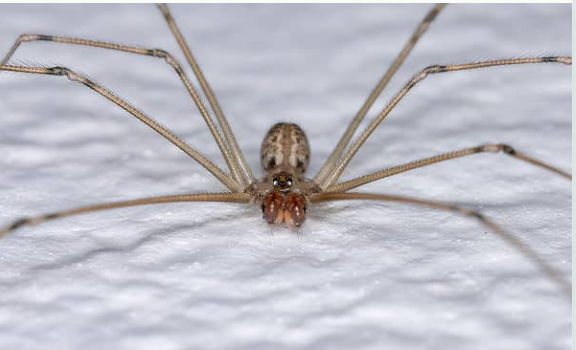
Psycho Spiders is a non-scientific nickname sometimes used for cellar spiders, particularly the long-bodied cellar spider (Pholcus phalangioides). These delicate, long-legged spiders are commonly found in basements, garages, crawl spaces, sheds, warehouses, bathrooms, and quiet corners of homes.
The nickname comes from their unusual defensive behavior. When disturbed, cellar spiders rapidly shake or rotate in their loose webs, creating a blurred, erratic movement. This behavior may appear alarming, but it helps confuse predators and makes the spider more difficult to capture.
Despite their unsettling appearance, cellar spiders are harmless to people and are considered beneficial predators. They consume flies, mosquitoes, moths, ants, beetles, and other spiders that enter buildings.
Overview
Cellar spiders belong to a large family of arachnids adapted to sheltered, low-light environments. They are often mistaken for harvestmen, which are also commonly called daddy long-legs. However, harvestmen belong to the order Opiliones and have a single, fused-looking body, while cellar spiders have two distinct body sections and produce silk webs.
Cellar spiders do not damage wood, clothing, food, or household materials. Their main nuisance is the accumulation of tangled webs that collect dust, dead insects, and debris. Large populations may make basements, garages, or commercial buildings appear poorly maintained.
Taxonomy and Classification
Psycho Spiders belong to the family Pholcidae within the order Araneae. The family includes more than 1,800 described species distributed throughout much of the world.
- Order: Araneae
- Family: Pholcidae
- Common Species: Pholcus phalangioides
- Common Names: Cellar Spider, Long-Bodied Cellar Spider, Daddy Long-Legs Spider, and Psycho Spider
The long-bodied cellar spider is believed to have originated in warmer regions but has spread widely through human buildings and transportation. Heated indoor environments allow it to survive in climates that would otherwise be too cold.
Identification
Cellar spiders are recognized by their extremely long, thin legs and small, lightly colored bodies. Adult body length is generally about 1/4 to 3/8 inch, although the legs may span several inches.
- Body Color: Pale tan, gray, cream, or light brown.
- Abdomen: Long, narrow, and cylindrical in the long-bodied cellar spider.
- Legs: Very long, fragile-looking, and sometimes translucent.
- Eyes: Small and arranged in groups near the front of the head.
- Web: Loose, irregular, and usually located in an upper corner or sheltered recess.
- Movement: Rapid vibration or spinning when the web is disturbed.
Short-bodied cellar spiders also occur and may have rounder abdomens, but they share the same delicate legs, irregular webs, and sheltered habits.
Distribution and Habitat
Cellar spiders are found in many regions of the world. They are especially common in buildings that provide stable temperatures, humidity, shelter, and a steady supply of insect prey.
Typical indoor locations include:
- Basements and cellars
- Garages and sheds
- Crawl spaces
- Closets and utility rooms
- Warehouses and barns
- Ceiling corners
- Window recesses
- Under stairs and furniture
Outdoors, some species live beneath rocks, inside caves, under bridges, in hollow trees, or among protected rock formations.
Web Structure and Vibrating Behavior
Cellar spiders build loose, tangled webs rather than the symmetrical circular webs produced by orb-weaving spiders. The silk is not heavily adhesive. Instead, prey becomes trapped among the disorganized strands, allowing the spider to approach and wrap it.
When threatened, a cellar spider may shake its body and web rapidly. This behavior is sometimes called whirling or web vibration. The movement blurs the spider’s outline and may discourage predators such as birds, wasps, or other spiders.
Frequent vibration does not indicate aggression. It is a defensive response intended to prevent contact.
Life Cycle
Cellar spiders develop through egg, spiderling, and adult stages. After mating, the female produces a loose cluster of eggs held together with a small amount of silk.
Unlike many spiders that hide their eggs inside a thick silk sac, a female cellar spider carries the exposed egg cluster in her mouthparts beneath her body. She remains with the eggs until they hatch.
Young spiderlings resemble miniature adults but have shorter legs. They grow by shedding their outer skeleton several times. In heated buildings, cellar spiders may reproduce throughout the year.
Feeding Behavior
Cellar spiders are generalist predators that feed on many small arthropods. Their diet may include:
- Flies
- Mosquitoes
- Moths
- Ants
- Small beetles
- Silverfish
- Other spiders
Despite their fragile appearance, cellar spiders can overpower other spiders. They may enter an occupied web, vibrate the silk to imitate trapped prey, and attack the resident spider from a distance using their long legs.
Cellar spiders have occasionally been observed capturing species such as widow spiders. However, their presence should not be considered a dependable control method for medically significant spiders.
Human Interaction and Safety
Cellar spiders are not aggressive and do not normally bite people. If trapped against the skin or handled roughly, a bite may be possible, but documented bites are uncommon and are not considered medically significant.
A widespread myth claims that cellar spiders possess extremely powerful venom but cannot bite humans because their fangs are too small. This is false. Their venom is adapted for small prey and is not regarded as dangerous to people.
Individuals should still avoid handling unidentified spiders, especially in areas where medically important species may occur.
Damage and Nuisance Issues
Cellar spiders do not cause structural damage. They do not infest wood, eat fabrics, contaminate stored food, or transmit known human diseases.
Their primary nuisance is web accumulation. Old webs remain after spiders relocate and gradually trap dust, insect remains, and debris. Numerous webs can create an untidy appearance in homes, restaurants, warehouses, offices, and other buildings.
A large cellar spider population may also indicate that many insects are entering or breeding inside the structure.
Management and Control
Cellar spider management should focus on physical removal, exclusion, and reducing insect prey. Broad pesticide applications are rarely necessary.
Web Removal
Vacuum or sweep webs from ceilings, corners, rafters, window frames, and storage areas. Removing the spider, egg clusters, and web at the same time provides immediate control.
Exclusion
- Seal cracks around windows, doors, foundations, and utility lines.
- Repair damaged screens and door sweeps.
- Close gaps around garage doors and vents.
- Reduce openings where insects and spiders can enter.
Reduce Insect Prey
Correct moisture problems, clean food residues, maintain screens, and reduce unnecessary nighttime lighting near doors and windows. Exterior lights can attract flying insects that later support indoor spider populations.
Habitat Reduction
Reduce clutter in basements, garages, and storage rooms. Store boxes away from walls and floors so corners can be inspected and cleaned easily.
Ecological Importance
Cellar spiders are useful predators that help suppress indoor insect populations. A small number in an undisturbed basement or garage may provide more benefit than harm.
Where webs do not create sanitation or appearance concerns, complete elimination is unnecessary. Occasional cleaning and insect prevention are usually sufficient to maintain an acceptable population.
Conclusion
Psycho Spiders, more accurately known as cellar spiders, are harmless, long-legged arachnids commonly found in sheltered indoor spaces. Their rapid web vibration is a defensive behavior rather than a sign of aggression.
These spiders help control flies, mosquitoes, moths, and other spiders but may become a nuisance when dusty webs accumulate. Regular vacuuming, exclusion, moisture correction, clutter reduction, and control of insect prey provide effective management without unnecessary pesticide use.