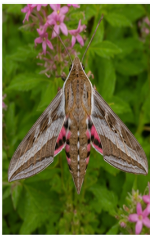
Pink-spotted Hawkmoths (Agrius cingulata), also known as the Sweetpotato Hawkmoth or Sweetpotato Hornworm Moth, are among the largest and most impressive sphinx moths found in the Americas. Renowned for their powerful flight, rapid wingbeats, and vivid pink markings on the abdomen and hindwings, these moths are both important nighttime pollinators and occasional agricultural pests. While the adult moths benefit ecosystems by pollinating a wide variety of flowering plants, their larvae—commonly called sweetpotato hornworms—can feed heavily on sweet potatoes, morning glories, and other members of the bindweed family.
Despite their size and striking appearance, Pink-spotted Hawkmoths are harmless to humans. Their ability to hover like hummingbirds while feeding from tubular flowers makes them one of North America’s most recognizable nocturnal pollinators.
Taxonomy and Classification
Pink-spotted Hawkmoths belong to the family Sphingidae, a group commonly referred to as hawkmoths or sphinx moths because of their streamlined bodies and exceptional flying abilities.
- Order: Lepidoptera
- Family: Sphingidae
- Genus: Agrius
- Species: Agrius cingulata
The species is closely related to several other large hawkmoths and is recognized as one of the most widespread sphinx moths throughout the Americas.
Physical Description
Pink-spotted Hawkmoths are large, fast-flying insects with aerodynamic bodies built for sustained flight.
- Wingspan: Approximately 90–120 mm.
- Forewings: Long, narrow gray-brown wings with darker mottled camouflage patterns.
- Hindwings: Black with vivid pink bands that become visible during flight.
- Abdomen: Gray with alternating bright pink and black bands along the sides.
- Larvae: Large green, brown, or purplish hornworms reaching up to 100 mm long, with diagonal white markings and a distinctive curved horn on the rear end.
- Proboscis: Long feeding tube adapted for reaching nectar deep inside tubular flowers.
The brilliant pink coloration hidden beneath the forewings creates a startling flash display that may help confuse predators during flight.
Distribution and Habitat
Pink-spotted Hawkmoths occur throughout much of North, Central, and South America. In the United States they are most common in southern states but regularly migrate northward during warmer months.
Preferred habitats include:
- Agricultural fields
- Sweet potato farms
- Vegetable gardens
- Open woodlands
- Flower-rich meadows
- Urban landscapes with ornamental flowers
The species is highly migratory and can appear far beyond its normal breeding range during favorable weather conditions.
Behavior and Ecology
Adults are active after sunset and are among the strongest flying moths in North America. Like hummingbirds, they hover while feeding, visiting flowering plants with long tubular blossoms.
Important nectar sources include moonflowers, petunias, jimsonweed, four o’clocks, and many native wildflowers. During nectar feeding, they transfer pollen between plants, making them valuable nocturnal pollinators.
The caterpillars feed primarily on plants in the family Convolvulaceae, including sweet potatoes, morning glories, bindweeds, and related species.
Life Cycle
Pink-spotted Hawkmoths undergo complete metamorphosis through four life stages.
- Eggs: Small green eggs are laid individually on host plant leaves.
- Larvae: Hornworms feed voraciously on foliage through several molts before reaching full size.
- Pupae: Mature caterpillars burrow into loose soil where they pupate.
- Adults: Emerge several weeks later to mate and continue the life cycle.
Multiple generations may occur annually in warmer climates, while northern populations often consist of seasonal migrants.
Damage and Pest Status
The adult moth causes no plant damage and provides valuable pollination services.
Larvae, however, can occasionally become agricultural pests by feeding heavily on:
- Sweet potatoes
- Morning glories
- Water spinach
- Bindweeds
- Other members of the morning glory family
Heavy infestations may result in extensive defoliation, reducing plant vigor and potentially lowering crop yields. In most gardens, however, populations remain low enough that damage is limited.
Management and Prevention
Integrated Pest Management (IPM) is the preferred approach when hornworm populations become problematic.
- Regular Inspection: Monitor foliage for large caterpillars and feeding damage.
- Hand Removal: Remove hornworms from small gardens when practical.
- Encourage Beneficial Insects: Birds, predatory insects, and parasitic wasps naturally reduce hornworm populations.
- Targeted Biological Controls: Products containing Bacillus thuringiensis (Bt) are effective against young caterpillars while minimizing impacts on beneficial insects.
- Avoid Broad-spectrum Insecticides: Protect pollinating adults and beneficial natural enemies whenever possible.
Conservation and Research
Pink-spotted Hawkmoths are widely studied for their remarkable flight performance, migratory behavior, pollination ecology, and sensory biology. Scientists continue to investigate how these moths locate flowers at night using vision, scent, and memory. Their role as both pollinators and occasional crop pests makes them an important species for balancing agricultural production with biodiversity conservation.
Conclusion
The Pink-spotted Hawkmoth is one of the largest and most spectacular moths in the Americas. While its caterpillars can occasionally damage sweet potato crops and related plants, the adults are valuable nocturnal pollinators that contribute to healthy ecosystems. Proper monitoring and Integrated Pest Management allow growers to protect crops while conserving these impressive native insects.