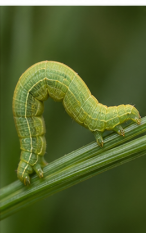
Pine False Looper Zale Moth (Zale duplicata) is a native North American moth associated primarily with pine forests and other coniferous woodlands. The species belongs to the family Erebidae and is best known for its caterpillar, commonly called the pine false looper, which feeds on pine needles. Unlike true loopers (family Geometridae), the larvae of Zale duplicata possess additional abdominal prolegs but move with a looping gait that closely resembles inchworms. Under normal conditions, these moths are considered minor forest insects, but localized outbreaks can result in noticeable defoliation of young pine trees and ornamental conifers.
Taxonomy and Classification
The Pine False Looper Zale Moth belongs to the order Lepidoptera, which includes all butterflies and moths, and the family Erebidae, one of the largest moth families worldwide. Within this family, the genus Zale contains numerous woodland moth species whose larvae feed on hardwoods and conifers.
- Order: Lepidoptera
- Family: Erebidae
- Genus: Zale
- Species: Zale duplicata
Like all moths, Pine False Loopers undergo complete metamorphosis, progressing through egg, larva, pupa, and adult stages.
Physical Description
Adult Pine False Looper Zale Moths are medium-sized nocturnal moths with excellent camouflage that allows them to blend into pine bark and forest debris.
- Wingspan: Approximately 35–45 mm (1.4–1.8 inches).
- Coloration: Forewings are mottled brown, gray, and tan with irregular zigzag lines and darker patches that closely resemble tree bark.
- Hindwings: Slightly lighter in color with subtle banding.
- Body: Stout, densely covered with fine scales and short hairs.
- Larvae: Green to yellow-green caterpillars with pale longitudinal stripes that resemble pine needles. Their looping movement gives rise to the common name “false looper.”
- Pupae: Form within leaf litter or shallow soil beneath host trees.
Distribution and Habitat
Pine False Looper Zale Moths are widely distributed throughout eastern and central North America wherever pine forests occur.
Preferred habitats include:
- Mature pine forests
- Mixed conifer-hardwood woodlands
- Commercial pine plantations
- Christmas tree farms
- Forest edges
- Suburban landscapes containing ornamental pines
The species is especially common where eastern white pine, red pine, jack pine, Scotch pine, and other native or planted pines dominate the landscape.
Life Cycle and Behavior
Adults emerge during late spring and summer depending on geographic location. Being nocturnal, they spend daylight hours resting against tree trunks where their bark-like wing patterns provide excellent camouflage.
After mating, females lay eggs individually or in small groups on pine needles. Newly hatched caterpillars begin feeding almost immediately.
The larvae consume current-season needles and continue feeding as they grow through several molts. Although their movement resembles that of inchworms, they retain more abdominal prolegs than true loopers, making them “false” loopers.
Once fully developed, caterpillars descend to the forest floor and pupate within leaf litter or shallow soil. Most populations complete one generation annually, although development may vary depending on local climate.
Damage and Economic Importance
Most Pine False Looper populations remain at low densities and cause little measurable injury. During occasional population increases, however, larvae may remove significant amounts of pine foliage.
Typical damage includes:
- Chewed pine needles
- Partial branch defoliation
- Reduced seedling vigor
- Slower tree growth
- Stress on ornamental and plantation pines
Healthy mature trees generally recover from moderate feeding. Young seedlings, nursery stock, and repeatedly defoliated trees are more susceptible to growth loss, secondary insects, and disease.
Unlike destructive bark beetles or wood borers, Pine False Looper Zale Moths rarely kill healthy trees outright.
Management and Prevention (IPM)
Integrated Pest Management (IPM) focuses on monitoring populations and preserving natural forest balance.
- Monitoring: Inspect pine foliage during spring and early summer for feeding injury and caterpillars.
- Natural Enemies: Birds, predatory insects, spiders, parasitic wasps, and disease organisms naturally suppress most populations.
- Forest Health: Maintain vigorous trees through proper spacing, irrigation during drought, and avoidance of unnecessary mechanical injury.
- Biological Control: When outbreaks occur, microbial insecticides containing Bacillus thuringiensis var. kurstaki (Btk) are highly effective against young caterpillars while preserving beneficial insects.
- Chemical Control: Insecticides are rarely necessary except in commercial nurseries, Christmas tree plantations, or high-value ornamental landscapes experiencing severe infestations.
Conservation and Research
The Pine False Looper Zale Moth is an important component of North American pine forest ecosystems. Its caterpillars provide food for birds, mammals, reptiles, and predatory insects, while adults serve as prey for bats and nocturnal wildlife.
Forest entomologists continue studying this species to better understand periodic population fluctuations, interactions with climate change, natural biological controls, and its role within healthy pine ecosystems. Research also examines how forest management practices influence outbreak frequency while promoting sustainable woodland health.
Conclusion
The Pine False Looper Zale Moth is a native forest moth whose caterpillars occasionally feed on pine needles but seldom become serious pests. Although localized outbreaks can temporarily defoliate young pines, healthy forests usually recover with little lasting damage. Natural predators, biological controls, and sound forest management practices generally provide effective long-term regulation, making chemical intervention necessary only in exceptional circumstances.