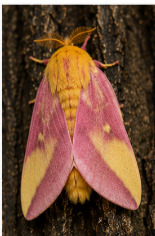
Pine Imperial Moth (Eacles imperialis pini) is a large, striking giant silk moth that represents a pine-feeding form of the Imperial Moth (Eacles imperialis). Belonging to the family Saturniidae, it is one of North America’s most impressive native moths. Unlike many forest pests that regularly cause widespread defoliation, the Pine Imperial Moth is generally considered a beneficial native species whose caterpillars rarely occur in sufficient numbers to damage healthy forests. The large green larvae feed primarily on pine needles, while the spectacular adults contribute to forest biodiversity and serve as an important food source for birds, bats, and other wildlife.
Taxonomy and Classification
The Pine Imperial Moth belongs to the order Lepidoptera and the family Saturniidae, commonly known as giant silk moths. Members of this family are recognized for their large size, colorful wings, and adults that possess reduced mouthparts and do not feed.
- Order: Lepidoptera
- Family: Saturniidae
- Genus: Eacles
- Species: Eacles imperialis
- Subspecies/Form: Eacles imperialis pini
Like all giant silk moths, Pine Imperial Moths undergo complete metamorphosis, progressing through egg, caterpillar, pupa, and adult stages.
Physical Description
The Pine Imperial Moth is among the largest moths found in North America, making it a favorite among butterfly and moth enthusiasts.
- Wingspan: Approximately 75–100 mm (3–4 inches).
- Coloration: Adults display bright yellow wings decorated with irregular purple, reddish-brown, or dark brown blotches that provide camouflage among pine bark and forest litter.
- Body: Thick, fuzzy body covered with dense scales and hairs.
- Antennae: Males possess large feathery antennae capable of detecting female pheromones from long distances, while females have narrower antennae.
- Larvae: Large green caterpillars armed with short spines and fine hairs. As they mature, they may develop bluish or reddish coloration along the sides while retaining excellent camouflage among pine needles.
- Pupae: Dark reddish-brown pupae formed underground within earthen chambers beneath leaf litter.
Distribution and Habitat
The Pine Imperial Moth occurs throughout portions of the eastern United States and southeastern Canada where suitable pine forests are present.
Preferred habitats include:
- Mature pine forests
- Mixed pine-hardwood woodlands
- National forests
- State parks
- Pine barrens
- Large wooded residential properties
Larvae develop primarily on native pine species, although occasional feeding on other conifers has been documented.
Life Cycle and Behavior
Adult moths emerge during summer and are active exclusively at night. Unlike butterflies, adult Imperial Moths do not feed because their mouthparts are greatly reduced. Their sole purpose is reproduction.
Females deposit eggs individually or in small groups on host pine needles. Upon hatching, the caterpillars begin feeding on foliage and pass through several molts over a period of several weeks.
As fully grown larvae prepare to pupate, they leave the host tree and burrow several inches into loose soil where they construct underground chambers. The pupae remain protected throughout the winter, with adults emerging the following summer.
Most populations complete one generation per year.
Ecological Role and Plant Impact
Pine Imperial Moth caterpillars feed by chewing pine needles. Under normal conditions, feeding causes little measurable injury because populations remain naturally low.
Occasionally, localized populations may produce:
- Minor needle loss
- Partial branch defoliation
- Temporary reduction in seedling growth
- Cosmetic injury to ornamental pines
Healthy mature pine trees tolerate this feeding well and quickly replace lost foliage. Unlike bark beetles, borers, or sawflies, Pine Imperial Moths rarely threaten forest health or commercial timber production.
The species also provides valuable ecological benefits by serving as prey for birds, bats, reptiles, mammals, and numerous predatory insects throughout its life cycle.
Management and Prevention (IPM)
Because Pine Imperial Moths are native insects with minimal economic impact, management is rarely necessary.
- Monitoring: Inspect young ornamental pines if noticeable feeding occurs.
- Natural Predators: Birds, parasitic wasps, predatory bugs, spiders, and small mammals naturally regulate caterpillar populations.
- Maintain Tree Health: Proper irrigation during drought and avoidance of mechanical injury help trees recover from occasional feeding.
- Manual Removal: Individual caterpillars may be relocated from ornamental trees when necessary.
- Biological Control: If unusually large infestations occur in nurseries, Bacillus thuringiensis var. kurstaki (Btk) may provide selective control of young caterpillars while preserving beneficial insects.
- Chemical Control: Insecticides are seldom justified because populations rarely reach economically damaging levels.
Conservation and Research
Pine Imperial Moths have declined in portions of their historical range due to habitat loss, artificial lighting, pesticide exposure, and introduced parasitoids. Conservation efforts emphasize preserving mature pine forests and minimizing unnecessary insecticide applications that affect native moth populations.
Researchers continue studying the species’ genetics, host preferences, life history, and response to environmental changes. The Pine Imperial Moth also serves as an important indicator of healthy pine ecosystems and contributes to ongoing studies of native Saturniid moth conservation throughout North America.
Conclusion
The Pine Imperial Moth is one of North America’s largest and most beautiful native silk moths. Although its caterpillars feed on pine needles, they seldom occur in sufficient numbers to threaten healthy forests. Instead, the species plays an important ecological role as both a native herbivore and a valuable food source for wildlife. Maintaining healthy pine forests and conserving native habitats remain the best strategies for protecting this remarkable moth while ensuring balanced forest ecosystems.