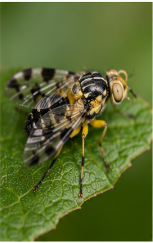
Ceroxys Picture-winged Flies (Ceroxys spp.) are attractive members of the picture-winged fly family (Ulidiidae), a diverse group of flies recognized for their boldly patterned wings and unusual display behaviors. Unlike many flies that are considered nuisance pests, Ceroxys species are primarily associated with decaying vegetation and organic matter, where they contribute to the natural recycling of nutrients. Their striking wing markings and habit of holding their wings upright have made them popular subjects of study among entomologists interested in insect communication and evolution.
These flies are harmless to people, pets, and healthy plants. While they may occasionally be noticed resting on vegetation or visiting compost piles and garden debris, they are not agricultural pests and rarely require any form of management. Instead, they serve as beneficial decomposers within natural and landscaped environments.
Overview
Species in the genus Ceroxys belong to the order Diptera and are distributed throughout much of North America, Europe, Asia, and other temperate regions. Their larvae develop primarily in decaying plant material, helping accelerate decomposition while returning nutrients to the soil.
The adults are often mistaken for fruit flies because of their patterned wings, but they differ significantly in both appearance and ecology. Rather than attacking healthy fruit, Ceroxys flies are associated almost exclusively with decomposing vegetation and organic debris.
Taxonomy and Classification
- Order: Diptera
- Family: Ulidiidae
- Genus: Ceroxys
- Common Name: Ceroxys Picture-winged Flies
The family Ulidiidae contains hundreds of species known for decorative wing patterns and distinctive courtship displays. The genus Ceroxys is one of the better-known representatives of this family.
Identification
Ceroxys flies are small to medium-sized insects with several distinctive characteristics.
- Length: Approximately 6–10 mm.
- Body Color: Dark brown to black, sometimes with metallic highlights.
- Wings: Clear wings marked with dark bands, spots, or mottled patterns.
- Posture: Frequently holds wings partially raised or spread while resting.
- Eyes: Large compound eyes typical of true flies.
The decorative wing markings provide excellent field identification and help distinguish these flies from house flies and fruit flies.
Life Cycle
Ceroxys picture-winged flies undergo complete metamorphosis, progressing through four developmental stages:
- Egg
- Larva (maggot)
- Pupa
- Adult fly
Females deposit eggs on suitable organic material where larvae feed on microorganisms and decomposing plant tissue. After completing development, the larvae pupate within nearby soil or plant debris before emerging as adults.
Several generations may occur annually depending on climate, moisture, and the availability of suitable breeding material.
Distribution and Habitat
Ceroxys species occur throughout many temperate regions and are commonly encountered in habitats rich in decaying vegetation.
Typical habitats include:
- Open woodlands
- Grasslands
- Prairies
- Urban parks
- Gardens
- Compost piles
- Forest edges
- Areas containing leaf litter or plant debris
Adults are usually observed resting on foliage, logs, or other vegetation during warm weather.
Behavior and Ecology
Adult Ceroxys flies are active during daylight hours and display several unique behaviors that distinguish them from many other flies.
- Wing Displays: Adults frequently raise or wave their patterned wings during courtship or territorial interactions.
- Slow Movement: They often walk deliberately across leaves and branches rather than flying continuously.
- Decomposer Role: Larvae help recycle dead plant material by feeding on decaying organic matter.
- Wildlife Food Source: Adults and larvae provide food for birds, spiders, amphibians, and predatory insects.
Their wing movements may also confuse predators or assist with communication between individuals.
Importance to Ecosystems
Although relatively inconspicuous, Ceroxys flies perform valuable ecological functions.
- Nutrient Recycling: Larvae accelerate decomposition of organic matter.
- Food Web Support: Provide prey for numerous beneficial predators.
- Biodiversity: Contribute to healthy woodland and grassland ecosystems.
- Environmental Indicators: Healthy populations often reflect functioning natural habitats.
Because they feed primarily on decomposing vegetation rather than living plants, they help maintain healthy ecological cycles.
Human Interaction
Ceroxys flies pose virtually no threat to humans. They do not bite, sting, damage structures, contaminate food, or spread disease under normal circumstances. Their occasional appearance around compost piles or mulch simply reflects the availability of suitable breeding habitat.
Many homeowners never notice them unless they are specifically observing insects in gardens or natural areas.
Management and Prevention
Control measures are generally unnecessary because these flies are beneficial decomposers.
- Manage Compost Properly: Turn compost regularly to promote efficient decomposition.
- Remove Excess Organic Debris: Reduces localized breeding if large numbers develop.
- Seal Building Openings: Prevent occasional accidental entry indoors.
- Avoid Broad-Spectrum Insecticides: Preserve beneficial decomposer insects and pollinators.
Natural populations remain low and usually disappear as available organic material is consumed.
Conservation and Research
Researchers continue studying Ceroxys flies to better understand the evolution of wing patterning, visual communication, courtship behavior, and ecological specialization. Their unique displays provide valuable insights into insect behavior and species recognition.
Conserving woodland habitats, native vegetation, and healthy decomposer communities helps support these and many other beneficial insects.
Conclusion
Ceroxys Picture-winged Flies are fascinating members of the picture-winged fly family whose decorative wings and display behaviors distinguish them from most other flies. Although sometimes mistaken for pest species, they play an important ecological role by recycling decaying vegetation and supporting healthy ecosystems. Because they rarely interact negatively with people or agriculture, they should be regarded as beneficial insects rather than pests.