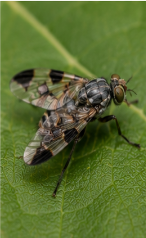
Picture-winged Flies (genus Delphinia) are small, attractive flies belonging to the family Ulidiidae, a group recognized for the distinctive patterns and markings on their wings. Unlike common nuisance flies that breed in garbage or animal waste, Delphinia species are primarily associated with decaying vegetation, compost, fungi, and other organic material where they contribute to decomposition and nutrient recycling. Although they may occasionally be noticed in gardens or around compost piles, they are not considered household or agricultural pests and rarely require any control measures.
Many picture-winged flies display unusual behaviors, including raising, waving, or flicking their patterned wings while walking. Scientists believe these displays may help deter predators, establish territory, or play a role in courtship. Their unique appearance often causes them to be mistaken for small fruit flies or tephritid fruit flies, although Delphinia species generally do not attack healthy fruits or crops.
Overview
Picture-winged flies are part of a diverse family containing hundreds of species distributed worldwide. Members of the genus Delphinia are commonly encountered in wooded habitats, gardens, parks, compost piles, and areas rich in decaying plant material. Because their larvae feed primarily on decomposing organic matter, they provide valuable ecological services by accelerating the breakdown of dead vegetation and returning nutrients to the soil.
Unlike many true pest flies, these insects are generally regarded as harmless components of healthy ecosystems.
Taxonomy and Classification
- Order: Diptera
- Family: Ulidiidae
- Genus: Delphinia
- Common Name: Picture-winged Flies
The family Ulidiidae includes numerous species distinguished by decorative wing markings that separate them from many other fly families. Although they resemble tephritid fruit flies, they belong to a different taxonomic group and have different ecological roles.
Identification
Delphinia flies are relatively easy to recognize once their distinctive wing patterns are observed.
- Length: Approximately 5–8 mm.
- Body Color: Brown, gray, or dark brown.
- Wings: Clear with dark bands, spots, or intricate patterns.
- Eyes: Large compound eyes typical of flies.
- Legs: Slender and adapted for walking on vegetation and decaying material.
Many species hold or wave their patterned wings while moving, making them particularly noticeable despite their small size.
Life Cycle
Picture-winged flies undergo complete metamorphosis, progressing through four developmental stages:
- Egg
- Larva (maggot)
- Pupa
- Adult fly
Females deposit eggs on suitable organic material where newly hatched larvae begin feeding. The maggots consume decaying vegetation, fungi, or other decomposing plant matter before pupating within or near their food source.
Adult flies emerge after pupation and spend their lives feeding, reproducing, and searching for suitable egg-laying sites.
Several generations may occur annually depending on local climate and food availability.
Distribution and Habitat
Species in the genus Delphinia occur throughout much of North America and other temperate regions where suitable organic material is available.
Common habitats include:
- Woodlands
- Forest edges
- Gardens
- Parks
- Compost piles
- Leaf litter
- Rotting logs
- Areas containing decaying vegetation
They are most abundant during warm months when decomposition activity is highest.
Behavior and Ecology
Adult Delphinia flies are active during daylight hours and are frequently observed walking on leaves, logs, flowers, or compost. Rather than feeding on living plants, they typically consume moisture, microorganisms, and organic residues.
One of their most interesting behaviors involves slowly raising or waving their patterned wings. Researchers believe these displays may serve several purposes, including:
- Predator deterrence
- Mate attraction
- Species recognition
- Territorial communication
The larvae contribute to decomposition by breaking down dead plant material, making nutrients available for soil microorganisms and plants.
Importance to Ecosystems
Although often overlooked, picture-winged flies provide valuable ecological services.
- Decomposition: Larvae accelerate the breakdown of organic matter.
- Nutrient Cycling: Help return nutrients to the soil.
- Wildlife Food Source: Adults and larvae are eaten by birds, spiders, amphibians, and predatory insects.
- Biodiversity: Contribute to healthy woodland and garden ecosystems.
Their presence is generally considered an indication of active natural decomposition rather than poor sanitation.
Human Interaction
Picture-winged flies rarely interact negatively with people. They do not bite, sting, damage buildings, or infest stored food. Occasionally they may be noticed around compost piles or moist organic debris, but they are generally regarded as harmless.
Because they resemble other fly species, they are sometimes mistakenly identified as agricultural pests despite posing little threat to crops or gardens.
Management and Prevention
Control is almost never necessary because Delphinia flies are beneficial decomposers.
- Reduce Excess Organic Debris: Compost and garden waste can be managed if fly numbers become excessive.
- Maintain Compost Properly: Turning compost regularly reduces localized breeding.
- Seal Indoor Entry Points: Prevent occasional accidental entry into buildings.
- Avoid Unnecessary Insecticides: Chemical treatments are generally unwarranted and may harm beneficial insects.
Most populations naturally remain low and decline as organic materials decompose.
Conservation and Research
Entomologists continue studying picture-winged flies because of their remarkable wing displays, evolutionary relationships, and ecological importance in decomposition. Researchers are also investigating how wing markings influence predator avoidance and mating behavior.
Maintaining healthy forests, gardens, and compost systems supports these beneficial insects along with many other important decomposer species.
Conclusion
Picture-winged Flies (Delphinia spp.) are attractive and ecologically valuable insects that contribute to nutrient recycling by feeding on decaying organic matter. Their beautifully patterned wings, unusual display behaviors, and harmless nature make them fascinating members of woodland and garden ecosystems. Since they do not damage crops, structures, or stored products, they are best appreciated as beneficial decomposers rather than pests.