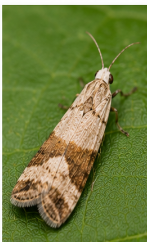
Pickleworm Moths (Diaphania nitidalis) are among the most destructive insect pests of cucurbit crops throughout the southeastern United States, Central America, the Caribbean, and other tropical and subtropical regions. While the adult moth is relatively harmless, the larval stage—commonly known as the pickleworm—causes extensive damage by tunneling into cucumbers, squash, pumpkins, cantaloupes, gourds, and other members of the cucumber family (Cucurbitaceae). Feeding inside flowers, stems, and fruit not only reduces yields but also allows rot-causing organisms to enter, making produce unmarketable.
Unlike many caterpillar pests that feed openly on leaves, pickleworms spend much of their life protected inside plant tissues, making them difficult to detect and even harder to control. In warm climates where multiple generations occur each year, unmanaged infestations can quickly devastate home gardens and commercial vegetable production.
Overview
The Pickleworm Moth belongs to the family Crambidae, a large family of moths containing numerous agricultural pests. Although the species cannot survive prolonged freezing temperatures, it migrates northward each growing season from southern overwintering areas, allowing populations to establish throughout much of the southeastern United States during the summer.
Because the larvae attack developing fruit rather than simply feeding on foliage, even relatively small populations can cause significant economic losses.
Taxonomy and Classification
- Order: Lepidoptera
- Family: Crambidae
- Genus: Diaphania
- Species: Diaphania nitidalis
- Common Name: Pickleworm Moth
The Pickleworm is closely related to the Melonworm (Diaphania hyalinata), another important cucurbit pest, although the two species differ in their feeding habits and damage patterns.
Identification
Adult Pickleworm Moths are attractive insects that are often mistaken for harmless ornamental moths.
- Wingspan: Approximately 25–30 mm.
- Forewings: Yellowish to pearly white with broad dark brown margins.
- Body: Slender with a slight metallic sheen.
- Activity: Primarily nocturnal and attracted to lights.
The caterpillars are responsible for virtually all crop damage.
- Larvae: Pale green to yellow-green with small dark spots.
- Length: Up to 20 mm when fully grown.
- Head: Brownish to dark.
- Appearance: Smooth-bodied with sparse hairs.
Fresh feeding often produces moist frass around entry holes, providing one of the earliest signs of infestation.
Life Cycle
Pickleworm Moths undergo complete metamorphosis, progressing through four life stages:
- Egg
- Larva (pickleworm)
- Pupa
- Adult moth
Females lay eggs individually or in small groups on flower buds, blossoms, stems, and young fruit. Eggs hatch within only a few days during warm weather.
Young caterpillars initially feed within blossoms before tunneling into developing fruit, where they remain protected while feeding. Mature larvae leave the host plant to pupate inside loose silken cocoons among leaves or plant debris.
In warm climates, several overlapping generations may occur annually, allowing populations to build rapidly throughout the growing season.
Distribution and Habitat
Pickleworm Moths are primarily found in tropical and subtropical climates but migrate into temperate regions each summer.
They commonly occur in:
- Southeastern United States
- Florida and Gulf Coast states
- Central America
- Caribbean islands
- Northern South America
- Commercial vegetable farms
- Home gardens
- Greenhouses
They thrive wherever cucurbit crops are actively growing.
Host Plants
Pickleworms attack numerous members of the cucumber family.
Common host plants include:
- Cucumbers
- Summer squash
- Winter squash
- Zucchini
- Cantaloupes
- Muskmelons
- Pumpkins
- Gourds
- Occasionally watermelons
Summer squash and zucchini are generally among the most heavily attacked crops.
Behavior and Damage
Unlike many caterpillars that feed externally, pickleworms quickly bore into protected plant tissues where they remain hidden.
Damage includes:
- Fruit Tunneling: Larvae bore directly into developing fruit, leaving holes filled with moist frass.
- Flower Feeding: Blossoms are destroyed before fruit develops.
- Stem Injury: Feeding weakens vines and reduces plant vigor.
- Secondary Rot: Feeding wounds allow fungi and bacteria to invade the fruit.
- Yield Reduction: Damaged produce becomes unsuitable for fresh markets.
Even a single larva inside a cucumber or squash can make the fruit unmarketable.
Management and Prevention
Successful management depends on early detection before larvae enter fruit.
- Frequent Monitoring: Inspect flowers and young fruit several times each week.
- Remove Infested Fruit: Destroy damaged produce immediately to reduce future populations.
- Crop Sanitation: Remove vines and crop debris after harvest.
- Row Covers: Protect young plants before flowering in home gardens.
- Biological Control: Encourage beneficial insects including parasitic wasps and predatory bugs.
- Bacillus thuringiensis (Bt): Apply while larvae are still feeding externally.
- Targeted Insecticides: Treatments are most effective immediately after egg hatch and before caterpillars bore into fruit.
Once larvae enter fruit, insecticide applications become much less effective.
Integrated Pest Management (IPM)
Commercial vegetable growers often rely on integrated pest management programs combining scouting, biological controls, weather monitoring, and carefully timed insecticide applications.
Using pheromone traps and regular field inspections allows growers to detect adult moth activity before serious infestations develop. Combining monitoring with selective insecticides helps preserve beneficial insects while reducing pickleworm populations.
Conservation and Research
Agricultural research continues to improve pickleworm management through enhanced monitoring techniques, biological control programs, resistant cucurbit varieties, and environmentally friendly insecticides. Scientists are also studying migration patterns and climate influences that affect seasonal outbreaks.
Conclusion
Pickleworm Moths (Diaphania nitidalis) remain one of the most economically important pests of cucurbit crops in warm climates. Although the attractive adult moth causes no direct injury, the concealed feeding habits of the caterpillars can result in severe crop losses if infestations are not detected early. Regular monitoring, sanitation, biological control, and integrated pest management provide the most reliable methods for protecting cucumbers, squash, melons, and other valuable vegetable crops.