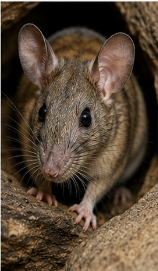
Pack Rats, also called Woodrats, are medium-sized native rodents in the genus Neotoma. Common species include the Bushy-Tailed Woodrat (Neotoma cinerea) and the Desert Woodrat (Neotoma lepida). They are best known for collecting sticks, plant material, bones, cactus pieces, shiny objects, and human-made debris to build large nests called middens. In natural settings, Pack Rats are important wildlife, but around homes, cabins, garages, vehicles, sheds, and outbuildings, they can become serious nuisance pests.
The main conflict with Pack Rats is nesting, contamination, gnawing damage, and health risk. Their middens may contain sticks, leaves, seed pods, cactus spines, insulation, wire pieces, food scraps, feces, urine, and stolen objects. When nests are built in attics, crawl spaces, sheds, pump houses, or vehicle engine compartments, Pack Rats can create costly damage and hazardous cleanup conditions.
Taxonomy and Classification
Pack Rats belong to the family Cricetidae, which includes many New World rats, mice, voles, and related rodents. They are native rodents and should not be confused with non-native commensal rats such as Norway Rats or Roof Rats.
- Order: Rodentia
- Family: Cricetidae
- Genus: Neotoma
- Common Names: Pack Rat, Woodrat, Trader Rat
- Example Species: Neotoma cinerea, Neotoma lepida
Unlike Norway Rats and Roof Rats, Pack Rats often have softer fur, larger ears, and more conspicuous nesting habits. Their large stick nests are one of the clearest signs of their presence.
Physical Description
Adult Pack Rats are usually about 7 to 9 inches long, not including the tail, and may weigh 5 to 16 ounces depending on species, age, and habitat. Their fur is commonly gray, brown, buff, or mixed above, with lighter gray or whitish underparts.
- Body Length: About 7 to 9 inches, excluding tail
- Weight: About 5 to 16 ounces
- Fur: Soft, grayish, brownish, or buff-colored
- Ears: Relatively large compared with many rats
- Tail: May be furry, especially in Bushy-Tailed Woodrats
- Key Sign: Large stick nests or middens
Pack Rat middens are often dome-shaped or mound-like structures made from sticks, twigs, cactus pieces, bones, leaves, grasses, insulation, paper, cloth, and other available materials. In desert areas, nests may include cactus spines or thorny branches for defense.
Distribution and Habitat
Pack Rats are found throughout much of North and Central America. They are especially common in the western United States, where deserts, rocky slopes, chaparral, woodlands, mountains, and riparian corridors provide shelter and food.
Common habitats include:
- Deserts and arid scrublands
- Rocky canyons and cliffs
- Chaparral and brushy slopes
- Conifer forests
- Riparian corridors
- Wood piles and debris piles
- Cabins and sheds
- Garages and outbuildings
- Vehicle engine compartments
- Attics, crawl spaces, and wall voids
They are excellent at exploiting sheltered spaces around human structures, especially properties with heavy vegetation, stored materials, firewood, brush piles, or access to pet food, birdseed, fruit, or garden crops.
Behavior and Diet
Pack Rats are primarily nocturnal. They spend the day hidden in nests, burrows, rock crevices, or structural voids and emerge at night to forage. Their diet is mostly plant-based, although they may consume a wide range of available materials.
- Seeds
- Nuts
- Fruits
- Cactus pads and fruits
- Leaves and green vegetation
- Bark and twigs
- Garden produce
- Stored pet food or birdseed
- Occasional insects or scraps
Their hoarding behavior is one of their most famous traits. Pack Rats collect objects and carry them back to the nest. They may gather shiny items, small tools, wrappers, bones, hardware, and other unusual materials. This behavior earned them the nickname Trader Rats, because they sometimes drop one object while picking up another.
Damage and Human Conflict
Pack Rats can cause significant problems when they nest near or inside structures. Their gnawing, nesting, and contamination can damage property and create health hazards.
- Vehicle Damage: Gnawing on wiring, hoses, insulation, and engine components.
- Structural Damage: Nesting in attics, crawl spaces, walls, sheds, and garages.
- Contamination: Accumulation of urine, feces, nesting debris, and food waste.
- Noise: Scratching, chewing, and movement sounds at night.
- Fire Risk: Chewed electrical wiring can create dangerous conditions.
- Parasites: Nests may harbor fleas, ticks, mites, and other arthropods.
Their nests may also attract snakes, predators, insects, and other wildlife. In vehicles, damage can be especially costly because Pack Rats may build nests in engine compartments and chew wiring harnesses or insulation.
Health Concerns
Pack Rats can create health concerns through droppings, urine, nesting material, parasites, and contaminated dust. In some regions, wild rodents may be associated with diseases such as Hantavirus, plague risk through fleas, and other zoonotic concerns.
Cleanup should be handled carefully. Dry sweeping or vacuuming rodent droppings and nests can aerosolize contaminated dust. Always wet contaminated material first with an appropriate disinfectant and use protective equipment.
Signs of Pack Rat Activity
- Large stick nests or middens
- Gnaw marks on wires, wood, hoses, or plastic
- Droppings near nests or travel paths
- Stored seeds, cactus pieces, or debris piles
- Scratching or chewing sounds at night
- Missing small objects
- Damage inside vehicle engine compartments
- Tracks or runways in dusty areas
Management and Prevention
Pack Rat control relies on exclusion, sanitation, habitat modification, and trapping. Because they are native wildlife, management should focus on preventing conflict around structures rather than eliminating them from natural habitats.
| Management Strategy | Description | Purpose |
|---|---|---|
| Exclusion | Seal gaps larger than 1/2 inch with metal flashing, hardware cloth, or heavy-gauge mesh. | Prevents entry into buildings. |
| Harborage Removal | Remove debris, brush piles, wood piles, and junk near structures. | Reduces nesting sites. |
| Food Control | Store pet food, birdseed, livestock feed, and garbage in sealed containers. | Reduces attractants. |
| Trapping | Use heavy-duty snap traps or live traps near runways and nests. | Reduces active rodents around structures. |
| Safe Cleanup | Wet droppings and nesting material before removal and wear protection. | Reduces exposure to contaminated dust. |
Traps may be baited with peanut butter, nuts, dried fruit, oatmeal, or similar foods. Placement is important. Traps should be set near known travel routes, nesting sites, walls, or protected areas where Pack Rats are active.
Vehicle Protection
Pack Rats are notorious for nesting in parked vehicles, especially in rural and desert areas. Vehicles that sit unused for long periods are at greater risk.
- Park away from brush, wood piles, and dense vegetation.
- Open the hood periodically to inspect for nesting material.
- Remove food, pet food, and seed bags from garages.
- Use exclusion or trapping around storage areas.
- Keep engine compartments clean and free of nesting debris.
Midden Cleanup Safety
Pack Rat middens should be treated as potentially contaminated. Avoid stirring up dust. Wear gloves, eye protection, and an appropriate respirator when cleanup is necessary. Wet droppings and nesting material with disinfectant before removal. Bag material securely and dispose of it according to local guidance.
Large or long-established nests in attics, crawl spaces, or enclosed areas may require professional cleanup due to contamination risk and possible structural damage.
Conservation and Research
Pack Rats are ecologically important native rodents. Their middens provide shelter for small animals and can persist for extremely long periods in dry climates. Ancient middens preserved by crystallized urine are valuable to scientists because they contain plant remains, seeds, bones, and other materials that reveal past vegetation and climate conditions.
Research on Pack Rat middens has helped reconstruct historic desert ecosystems, plant distributions, and climate shifts. This makes Pack Rats unusually important in paleoecology and environmental history.
Conclusion
Pack Rats are native rodents known for building large stick nests and collecting unusual objects. In natural habitats, they are important wildlife and valuable to ecological research. Around homes, cabins, vehicles, and outbuildings, however, they can cause contamination, wiring damage, noise, and health concerns. Effective management depends on sealing entry points, removing harborage, storing food securely, trapping active rodents, and cleaning middens safely. The best long-term approach is to reduce conflict around human structures while recognizing the important ecological role Pack Rats play in wild landscapes.