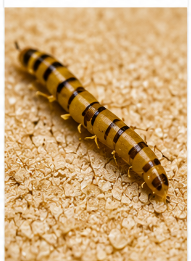
Mealworms are the larval stage of the Mealworm Beetle, Tenebrio molitor, a darkling beetle commonly associated with stored grain products, animal feed, pet food, warehouses, mills, barns, and neglected pantry goods. Despite their common name, mealworms are not worms. They are beetle larvae with long, hardened, segmented bodies and three pairs of small legs near the head.
Mealworms are primarily considered stored-product pests because they contaminate flour, bran, cereal, grain, birdseed, dry pet food, and livestock feed. Infested products may contain larvae, adult beetles, eggs, pupae, shed skins, dead insects, and frass. Heavy infestations may also produce stale odors, encourage mold growth, and make stored food unsuitable for consumption or sale.
However, mealworms also have several beneficial uses. They are commercially raised as food for reptiles, birds, fish, amphibians, poultry, and other animals. Their protein content has also made them the subject of research into sustainable animal feed, human food, organic-waste recycling, and the breakdown of certain plastics.
Taxonomy and Classification
Mealworms belong to the order Coleoptera, which includes all beetles, and the family Tenebrionidae, commonly known as darkling beetles.
- Kingdom: Animalia
- Phylum: Arthropoda
- Class: Insecta
- Order: Coleoptera
- Family: Tenebrionidae
- Genus: Tenebrio
- Species: Tenebrio molitor
- Common Names: Mealworm, Yellow Mealworm, Mealworm Beetle
Mealworms undergo complete metamorphosis, developing through egg, larval, pupal, and adult stages. The larval stage lasts much longer than the other immature stages and is responsible for most feeding and contamination.
Physical Description
Mature mealworm larvae are elongated, cylindrical, and yellowish brown. Their bodies are firm, smooth, and divided into clearly visible segments.
- Length: Commonly 3/4 to 1 1/4 inches when fully grown
- Color: Pale cream after molting, later becoming golden or yellowish brown
- Body: Long, narrow, segmented, and slightly flattened
- Head: Darker than the body with strong chewing mouthparts
- Legs: Three pairs of short legs near the front of the body
Mealworms may be confused with wireworms, which are the larvae of click beetles. Wireworms are usually more rigid, narrower, and more commonly found feeding on roots in soil.
Adult Mealworm Beetles
The adult Mealworm Beetle is approximately 1/2 to 5/8 inch long. Newly emerged adults are pale brown, but they gradually darken as their outer covering hardens.
- Color: Dark brown to shiny black
- Shape: Elongated and somewhat flattened
- Wings: Hardened forewings cover the abdomen
- Antennae: Short and segmented
Adults usually crawl through grain, debris, cracks, and dark storage areas. They may occasionally fly under favorable conditions but are more commonly found beneath sacks, shelving, stored feed, or accumulations of organic material.
Distribution and Habitat
Mealworms are found worldwide and are considered cosmopolitan insects. Their broad distribution is closely connected with the transportation and storage of grain, animal feed, and other dry products.
They may occur in:
- Flour mills
- Grain warehouses
- Feed stores
- Commercial bakeries
- Food-processing facilities
- Barns and poultry houses
- Pet stores
- Garages and basements
- Residential pantries
Mealworms prefer dark, sheltered, and undisturbed locations. They often thrive where food is old, damp, moldy, spilled, or poorly stored. Outdoors, darkling beetles and their larvae may be found beneath decaying wood, around animal nests, in stored hay, or among decomposing organic material.
Life Cycle
The mealworm life cycle includes four distinct stages: egg, larva, pupa, and adult. Development time depends on temperature, humidity, food quality, and crowding.
Egg Stage
Female beetles lay tiny, white eggs in food material, grain dust, cracks, or debris. The eggs are difficult to see because flour and dust often stick to their surfaces.
Larval Stage
After hatching, the larvae begin feeding immediately. They molt repeatedly as they grow, shedding their outer coverings many times. The larval period may last several months and can continue much longer under cool or unfavorable conditions.
Pupal Stage
Fully grown larvae stop feeding and transform into exposed pupae. Mealworm pupae do not produce silk cocoons. They are initially pale and later become darker before the adult beetle emerges.
Adult Stage
Adult beetles begin reproducing after their bodies have hardened. Adults may live for several months, and females may continue laying eggs throughout much of that period. In warm buildings, multiple overlapping generations may occur.
Diet and Feeding Habits
Mealworms are scavengers that feed on a wide variety of dry plant and animal materials. They are especially common in products that have been stored for long periods or exposed to moisture.
Common food sources include:
- Flour and bran
- Whole grain
- Cereal and oatmeal
- Cornmeal
- Animal feed
- Dry pet food
- Birdseed
- Dried plant material
- Dead insects
- Decaying organic matter
Mealworms may also feed on fungi and microorganisms growing in damp products. This ability allows them to survive in neglected storage areas where higher-quality food is limited.
Signs of a Mealworm Infestation
Infestations are often discovered when larvae or adult beetles are found in food packages, on floors, beneath shelving, or near stored feed.
Common signs include:
- Yellow-brown larvae in flour, grain, or feed
- Dark adult beetles near storage areas
- Shed larval skins
- Frass and powdery debris
- Damaged or contaminated packaging
- Clumped or moldy food
- Stale odors
- Larvae wandering away from the source
Because mature larvae may leave the food source before pupating, they can be found some distance from the original infestation.
Damage and Food Contamination
The primary problem caused by mealworms is contamination rather than the amount of food consumed. Infested products may contain shed skins, frass, beetle fragments, dead insects, and mold.
Potential damage includes:
- Direct feeding on stored food
- Contamination of grain and feed
- Growth of mold and microorganisms
- Unpleasant odors
- Loss of commercial product quality
- Rejection of food shipments
Even when mealworms consume only a small portion of a product, contamination may make the entire package unsuitable for people or animals.
Mealworms in Homes
Household infestations commonly begin in forgotten packages of flour, oatmeal, cereal, baking mix, birdseed, pet food, or livestock feed. Mealworms may also develop beneath appliances where crumbs, grease, and organic debris have accumulated.
Other possible sources include bird nests, rodent nests, dead animals in wall voids, feed stored in garages, and containers used for raising mealworms as pet food.
Mealworms in Barns and Animal Facilities
Mealworms and related darkling beetles may occur in barns, poultry houses, feed rooms, and livestock facilities. They may develop in spilled feed, damp litter, manure, insulation, or decomposing organic debris.
The Lesser Mealworm, Alphitobius diaperinus, is more commonly associated with severe commercial poultry-house infestations. It should not be confused with Tenebrio molitor, although both belong to the darkling beetle family.
Health and Sanitation Concerns
Mealworms do not normally bite or sting people. Their main health significance is related to food contamination, mold, and exposure to insect material.
People who handle large numbers of mealworms may become sensitive to shed skins, frass, or insect proteins. Gloves, good ventilation, and frequent cleaning may reduce exposure in commercial-rearing facilities.
Commercial and Beneficial Uses
Mealworms are widely raised as a live or processed food for reptiles, birds, fish, amphibians, poultry, and small mammals. They may be sold live, dried, frozen, powdered, or incorporated into animal-feed products.
Mealworms are also being studied as an alternative protein source for humans. They contain protein, fat, vitamins, and minerals, although their nutritional content depends on diet and processing.
Only mealworms raised under controlled food-production conditions should be used for consumption. Pantry-infesting mealworms may have contacted mold, pesticides, bacteria, or unsuitable materials and should not be eaten.
Plastic-Degradation Research
Mealworms have received attention because they can chew and partially digest certain plastics, including polystyrene. Microorganisms in their digestive systems appear to help break down some of these materials.
This research may eventually contribute to new waste-management methods, but mealworms are not currently a practical solution for large-scale plastic pollution. Questions remain about the speed of degradation, chemical residues, environmental safety, and economic feasibility.
Inspection
Successful control begins with locating the main source of the infestation. Every susceptible dry food item should be inspected, even if insects are visible in only one package.
Check:
- Flour, cereal, and baking mixes
- Rice, pasta, and grain
- Pet food and birdseed
- Livestock feed
- Nuts and seeds
- Food spills beneath shelves
- Cracks behind appliances
- Pet cages and feeding areas
Management and Prevention
Mealworm control depends mainly on sanitation, moisture reduction, source removal, and secure food storage.
Remove Infested Products
Discard heavily infested food in a sealed bag and remove it from the building promptly. Inspect surrounding products because eggs and young larvae may be difficult to see.
Clean Storage Areas
- Vacuum shelves, cracks, and corners.
- Remove frass, insects, and shed skins.
- Clean beneath appliances and shelf liners.
- Discard the vacuum bag outside.
- Wipe surfaces before returning food.
Use Sealed Containers
Store flour, grain, cereal, birdseed, and pet food in glass, metal, or durable plastic containers with tight-fitting lids. Cardboard boxes and thin plastic bags provide limited protection.
Reduce Moisture
- Repair plumbing or roof leaks.
- Improve ventilation.
- Use dehumidification where needed.
- Keep grain and feed off damp floors.
- Discard moldy products.
Rotate Stored Food
Use older products first and avoid storing more grain or dry food than can be used within a reasonable period. Labeling containers with purchase dates helps prevent forgotten products from remaining undisturbed.
Chemical Control
Insecticides are usually unnecessary in residential pantries. They should never be applied directly to food, utensils, dishes, or preparation surfaces unless the product label specifically permits that use.
Commercial facilities may use targeted crack-and-crevice treatments after contaminated food and debris have been removed. Insecticides will not provide lasting control if the breeding source, moisture, and sanitation problems remain.
Professional Control
Professional pest management may be necessary in grain mills, warehouses, feed facilities, restaurants, poultry houses, or locations with persistent infestations.
A professional program may include inspection, species identification, moisture assessment, sanitation recommendations, monitoring traps, targeted treatments, heat, or fumigation where appropriate.
Ecological Importance
Outside food-storage environments, darkling beetles and their larvae contribute to the decomposition of dead plant and animal material. Their feeding helps recycle nutrients into the soil.
Mealworms also serve as food for birds, reptiles, amphibians, predatory insects, and small mammals. Their ability to convert low-quality organic material into insect protein has increased interest in their use in sustainable food and feed systems.
Conclusion
Mealworms are the larvae of the Mealworm Beetle, Tenebrio molitor. They are common stored-product pests that infest grain, flour, cereal, pet food, birdseed, and animal feed. Their primary impact is contamination with frass, shed skins, insects, and unpleasant odors.
Effective mealworm management requires locating and discarding infested products, cleaning storage areas, correcting moisture problems, rotating stock, and storing susceptible materials in sealed containers. Insecticides are rarely needed in homes when sanitation and source removal are completed thoroughly.
Although mealworms can be troublesome pantry pests, they are also useful insects. They are commercially raised as animal feed, studied as an alternative protein source, and investigated for their potential role in organic-waste and plastic-degradation research.