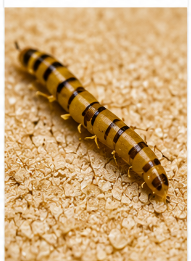
Lesser Mealworms (Alphitobius diaperinus) are small darkling beetles that are important pests in poultry houses, livestock facilities, feed-storage areas, and other places where large amounts of moist organic material accumulate. They are sometimes called Darkling Beetles or Litter Beetles in poultry-production environments.
Both the adult beetles and larvae live in litter, manure, spilled feed, and other organic debris. Their feeding on these materials is usually less important than the damage caused when mature larvae leave the litter and bore into insulation, wood, and other structural materials to pupate. In heavily infested poultry houses, repeated tunneling can substantially reduce the insulating value of wall panels and increase heating and cooling costs.
Lesser Mealworms are also important veterinary pests because they can carry microorganisms and parasites associated with poultry disease. Their ability to survive between flocks, hide deep within cracks and insulation, and rapidly recolonize fresh litter makes them difficult to eliminate once established.
Taxonomy and Classification
Lesser Mealworms belong to the order Coleoptera and the family Tenebrionidae, commonly known as darkling beetles. They are related to the Common Mealworm, Tenebrio molitor, but are smaller and much more strongly associated with poultry litter and animal-production facilities.
- Kingdom: Animalia
- Phylum: Arthropoda
- Class: Insecta
- Order: Coleoptera
- Family: Tenebrionidae
- Genus: Alphitobius
- Species: Alphitobius diaperinus
- Common Names: Lesser Mealworm, Darkling Beetle, Litter Beetle
They undergo complete metamorphosis, developing through egg, larval, pupal, and adult stages.
Physical Description
Adult Lesser Mealworms are small, oval beetles measuring approximately 1/4 inch long. They are usually shiny dark brown or black and have a compact, hardened body.
- Length: Approximately 5–7 millimeters
- Color: Dark brown to black
- Body: Oval, compact, and slightly flattened
- Surface: Smooth or slightly shiny
- Antennae: Short and segmented
Adults usually remain hidden in litter, manure, cracks, wall voids, or under equipment during daylight hours and become more active when disturbed or during darker periods.
Larval Identification
The larvae are elongated, cylindrical, and yellowish brown. They resemble small wireworms and become darker as they mature.
- Color: Yellowish brown to dark brown
- Body: Smooth, narrow, and segmented
- Length: Commonly around 1/2 inch when mature
- Legs: Three pairs of small legs near the head
- Location: Deep litter, manure, feed debris, insulation, and structural cracks
Mature larvae are especially important because they often leave the feeding area to find a protected location for pupation.
Distribution and Habitat
Lesser Mealworms are found throughout much of the world and are considered cosmopolitan pests. They thrive in warm environments containing abundant organic material and animal waste.
Common habitats include:
- Broiler houses
- Layer facilities
- Turkey houses
- Pig barns
- Dairy facilities
- Feed-storage areas
- Manure piles
- Deep-litter systems
- Animal bedding
Poultry houses provide especially favorable conditions because they offer warmth, moisture, food, manure, and numerous cracks or insulated surfaces that can be used for pupation.
Life Cycle
Female beetles lay eggs in litter, manure, feed, or protected cracks. Warm conditions can support continuous reproduction, allowing several generations to overlap.
Egg Stage
Eggs are small, pale, and usually hidden within litter or organic debris. They hatch into active larvae.
Larval Stage
Larvae feed on decaying organic matter, manure, spilled feed, feathers, dead insects, and other material in the litter. They molt several times as they grow.
Pupal Stage
When mature, larvae often migrate away from the litter and bore into insulation, wood, or other soft materials to create a pupation chamber.
Adult Stage
Adults emerge and return to feeding and breeding areas. They can survive for extended periods and may remain hidden between flock cycles.
Structural Damage
The most serious physical damage occurs when mature larvae tunnel into building materials.
Materials commonly affected include:
- Polystyrene insulation
- Polyurethane foam
- Fiberglass insulation
- Wooden framing
- Wall panels
- Insulated flooring
Repeated tunneling can create numerous holes and cavities. This reduces the R-value of insulation, allowing more heat to escape during cold weather and increasing cooling demands during hot weather.
Over time, energy costs can rise significantly, and damaged insulation may require replacement.
Disease and Veterinary Importance
Lesser Mealworms are important because they can carry microorganisms from contaminated litter and manure. Beetles may move between manure, feed, birds, equipment, and structural surfaces.
They have been associated with the mechanical carriage of organisms such as:
- Salmonella
- Escherichia coli
- Other bacteria associated with poultry production
- Certain viruses and parasites
The exact disease risk depends on the facility, pathogen, flock, and environmental conditions. Beetle control is therefore commonly included as part of broader poultry biosecurity and sanitation programs.
Impact on Poultry
Chickens may actively eat Lesser Mealworm larvae and adults. Although the insects provide some protein, heavy beetle populations are undesirable because they may expose birds to contaminated material or pathogens.
Large numbers of larvae and adults can also contribute to:
- Increased bird stress
- Contamination of feed
- Reduced sanitation
- Greater disease-management difficulty
- Higher structural-maintenance costs
Occasional reports of beetles or larvae biting young birds may occur in very high-density infestations, although structural and sanitation issues are usually more important.
Signs of an Infestation
Common signs include:
- Dark beetles crawling through litter
- Yellow-brown larvae beneath feeders
- Beetles clustered along walls
- Larvae inside insulation
- Small tunnels or holes in foam panels
- Accumulations of frass
- Large numbers appearing after litter disturbance
Pulling back litter near walls, feeders, water lines, and support posts may reveal concentrated populations.
Inspection and Monitoring
Monitoring should focus on locations where moisture, feed, and litter accumulate.
Inspect:
- Along wall edges
- Beneath feeders and drinkers
- Near support posts
- Under equipment
- Inside cracks and crevices
- Damaged insulation
- Areas containing wet litter
Commercial monitoring traps may also be used to compare beetle activity over time and evaluate whether management measures are working.
Management and Prevention
Effective Lesser Mealworm control requires an Integrated Pest Management (IPM) approach combining sanitation, structural modification, moisture management, monitoring, and carefully timed insecticide treatments.
Sanitation
Reducing food and breeding material is essential.
- Remove excessive manure and litter between flocks where practical.
- Clean spilled feed.
- Remove dead birds promptly.
- Repair leaking water systems.
- Allow facilities to dry thoroughly between production cycles.
Wet litter greatly increases the amount of suitable beetle habitat.
Structural Protection
Building materials should be designed or modified to reduce places where larvae can tunnel and hide.
- Seal cracks and joints.
- Protect exposed insulation with durable coatings.
- Repair damaged wall panels.
- Use beetle-resistant construction materials where practical.
- Eliminate gaps around floor-wall junctions.
Chemical Control
Residual insecticides may be used after litter removal or between flocks when surfaces are exposed. Treatments are often directed toward:
- Floor-wall junctions
- Cracks and crevices
- Support structures
- Areas beneath feeders
- Known beetle harborage sites
Insect growth regulators (IGRs) may also be incorporated into management programs to interfere with larval development and successful emergence.
Repeated use of the same chemical class may contribute to insecticide resistance, so commercial programs may rotate approved products according to professional guidance and label directions.
Biological Control
Research has explored the use of entomopathogenic fungi, nematodes, and other biological agents against Lesser Mealworms. These organisms may provide useful suppression under suitable temperature and moisture conditions.
Biological treatments are generally most effective as part of a broader IPM program rather than as the sole control method.
When to Call a Professional
Professional pest management is often appropriate in commercial poultry operations because infestations can involve large areas, hidden structural sites, and insecticide-resistance concerns.
A professional program may include:
- Population monitoring
- Structural inspection
- Sanitation recommendations
- Resistance-management planning
- Targeted residual treatments
- IGR applications
- Follow-up inspections
Conservation and Research
Lesser Mealworms are managed as high-priority veterinary, sanitation, and structural pests in animal-production systems. Research focuses on insecticide resistance, safer chemical treatments, biological controls, improved insulation materials, and management practices that reduce beetle survival between flocks.
Another major research goal is understanding how beetles interact with poultry pathogens so producers can improve biosecurity and reduce disease risk.
Conclusion
Lesser Mealworms (Alphitobius diaperinus) are persistent darkling beetles that thrive in poultry litter, manure, spilled feed, and other organic material. Their larvae are particularly damaging because they bore into insulation and structural materials before pupating, reducing energy efficiency and increasing maintenance costs.
They also create sanitation and veterinary concerns because beetles can move contaminated material throughout animal-production facilities. Successful management requires sanitation, moisture control, litter management, structural protection, monitoring, and carefully planned chemical or biological treatments. Because populations can survive in hidden areas and quickly rebound, long-term control depends on an ongoing IPM program rather than a single insecticide application.