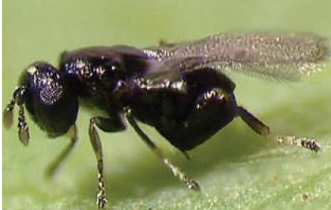
The Eucalyptus Gall Wasp (Leptocybe invasa) is a highly invasive pest that affects eucalyptus trees across many regions of the world. Native to Australia, this tiny wasp has spread rapidly to Asia, Africa, Europe, and the Americas, becoming a serious concern for both commercial forestry and ornamental plantings. Despite its small size, the Eucalyptus Gall Wasp causes significant damage by inducing abnormal plant growths known as galls, which interfere with normal tree development and reduce overall vigor.
Taxonomy and Classification
The Eucalyptus Gall Wasp belongs to the family Eulophidae, a large group of parasitic and gall-forming wasps within the order Hymenoptera. The species Leptocybe invasa is particularly notable for its ability to reproduce rapidly and colonize new environments with ease. Many populations consist almost entirely of females capable of reproducing through parthenogenesis, meaning they can produce offspring without mating.
Identification
Adult Eucalyptus Gall Wasps are extremely small, typically measuring only 1–1.5 mm in length, making them difficult to detect without magnification. They are dark brown to black in color with delicate wings.
The most visible sign of infestation is not the adult insect but the presence of galls on eucalyptus plants. These galls appear as swollen, rounded growths on leaves, stems, and petioles. They may be green, pink, or reddish when young and become woody and brown as they mature.
Life Cycle
The life cycle of the Eucalyptus Gall Wasp is closely tied to gall formation. Females lay eggs within the tissues of young eucalyptus leaves, stems, or buds. Upon hatching, larvae release chemicals that manipulate plant growth, causing the formation of protective galls.
Inside the gall, larvae develop safely, feeding on plant tissues. This protected environment shields them from many natural enemies and environmental hazards. After completing development, the wasp emerges from the gall through a small exit hole.
Under favorable conditions, multiple generations can occur each year, leading to rapid population growth and widespread infestation.
Damage and Economic Importance
The damage caused by Eucalyptus Gall Wasps is primarily due to the formation of galls, which disrupt normal plant growth. These galls can occur in large numbers, leading to distorted leaves, stunted shoots, and reduced photosynthesis.
In severe infestations, young trees may experience significant growth suppression, making them unsuitable for timber production. In ornamental settings, gall formation reduces aesthetic value and can weaken trees over time.
The economic impact is particularly pronounced in eucalyptus plantations, where reduced growth rates translate directly into lower yields and financial losses.
Signs of Infestation
- Swollen galls on leaves, stems, and petioles
- Distorted or curled foliage
- Reduced growth and stunted shoots
- Visible exit holes in mature galls
Management and Control (IPM)
- Monitoring: Regularly inspect young eucalyptus growth for early signs of gall formation.
- Resistant Varieties: Plant eucalyptus species or clones that show resistance to gall wasp infestation.
- Biological Control: Introduce natural enemies such as parasitoid wasps (e.g., Quadrastichus mendeli) that target gall wasp larvae.
- Cultural Practices: Maintain tree health through proper irrigation and fertilization to improve resilience.
- Pruning: Remove heavily infested plant parts to reduce population levels.
- Chemical Control: Generally limited in effectiveness due to larvae being protected داخل galls; rarely recommended except in nurseries.
Ecological Considerations
Because the larvae develop plant tissue, chemical control options are often ineffective and may harm beneficial insects. Biological control has proven to be the most sustainable and widely used method for managing this pest in large-scale forestry operations.
Introducing natural parasitoids has successfully reduced populations in several regions, highlighting the importance of ecological balance in pest management.
Conclusion
The Eucalyptus Gall Wasp is a highly invasive and damaging pest that poses a significant threat to eucalyptus trees worldwide. Its ability to reproduce rapidly and evade many control methods makes it particularly challenging to manage. However, through early detection, resistant plant selection, and biological control strategies, it is possible to mitigate its impact and protect valuable eucalyptus resources.