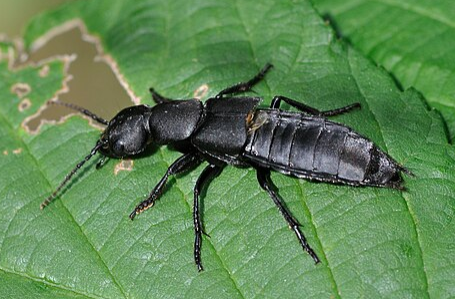
Devil’s Coach Horse Beetles (Ocypus olens) are large, predatory beetles belonging to the family Staphylinidae (rove beetles). Native to Europe and now established in parts of North America, these beetles are well known for their intimidating defensive posture, in which they raise their abdomen like a scorpion when threatened. Despite their fearsome appearance, they are generally beneficial insects that help control populations of garden pests.
Historically associated with folklore and superstition, the Devil’s Coach Horse Beetle was once believed to possess supernatural qualities. Today, it is recognized as an important predator in ecosystems, particularly in gardens, woodlands, and agricultural environments.
Taxonomy and Classification
- Common Name: Devil’s Coach Horse Beetle
- Scientific Name: Ocypus olens
- Order: Coleoptera
- Family: Staphylinidae
- Type: Predatory beetle
This species belongs to the large rove beetle family, which includes thousands of species worldwide. Members of this family are characterized by their short wing covers and elongated bodies. Devil’s Coach Horse Beetles undergo complete metamorphosis, progressing through egg, larva, pupa, and adult stages.
Physical Description
Devil’s Coach Horse Beetles are among the larger rove beetles and are easily recognizable.
- Size: Typically 20–32 mm in length
- Color: Matte black throughout the body
- Body Shape: Elongated with a flexible abdomen
- Wings: Short wing covers (elytra) exposing abdominal segments
A distinctive characteristic is their defensive posture:
- Raise the abdomen upward like a scorpion
- Open mandibles in a threatening display
Despite this display, they do not possess a stinger. However, they can deliver a mild bite and may emit a foul-smelling defensive secretion.
The larvae resemble smaller, darker versions of the adults:
- Elongated and segmented
- Dark brown to black
- Equipped with strong mandibles for predation
Distribution and Habitat
Originally native to Europe and North Africa, Devil’s Coach Horse Beetles have been introduced to other regions, including parts of North America and Australia.
They are commonly found in:
- Woodlands and forest edges
- Gardens and agricultural areas
- Hedgerows and grasslands
- Compost piles and leaf litter
They prefer moist, shaded environments and are typically found hiding under stones, logs, or debris during the day.
Behavior and Life Cycle
Devil’s Coach Horse Beetles are primarily nocturnal predators, becoming active at night to hunt for prey.
- Egg Stage: Eggs are laid in soil or organic matter
- Larval Stage: Larvae actively hunt small invertebrates
- Pupal Stage: Pupation occurs in soil chambers
- Adult Stage: Adults continue predatory behavior
The life cycle may take several months to complete, depending on environmental conditions.
When disturbed, adults exhibit their characteristic defensive posture and may release a strong odor to deter predators.
Feeding and Ecological Role
Devil’s Coach Horse Beetles are generalist predators that play an important role in controlling pest populations.
- Diet: Slugs, snails, worms, insect larvae, and other small invertebrates
- Hunting Behavior: Active pursuit and capture using strong mandibles
- Ecological Role: Natural pest control agent
Both larvae and adults are predatory, making them valuable allies in gardens and agricultural systems.
Interaction with Humans
Although they may appear threatening, Devil’s Coach Horse Beetles are generally harmless to humans.
- Bite: May deliver a mild bite if handled
- Defensive Secretion: Can emit a foul odor
- Aggression: Non-aggressive unless provoked
Their presence is typically beneficial, as they help reduce populations of pests such as slugs and other garden-damaging organisms.
Management and Conservation
Because of their beneficial role, Devil’s Coach Horse Beetles should be conserved rather than controlled.
| Strategy | Purpose | Benefit |
|---|---|---|
| Habitat Preservation | Maintain leaf litter and organic matter | Supports beetle populations |
| Reduce Pesticide Use | Avoid broad-spectrum insecticides | Protects beneficial insects |
| Garden Diversity | Encourage natural ecosystems | Enhances biological control |
Encouraging natural predators like these beetles can reduce reliance on chemical pest control methods.
Related Articles
Conclusion
Devil’s Coach Horse Beetles are striking and beneficial insects that contribute to ecological balance through their predatory habits. Despite their intimidating appearance, they pose little threat to humans and provide valuable natural pest control.
Protecting their habitats and minimizing pesticide use can help maintain healthy populations of these beetles, supporting sustainable gardening and agricultural practices.