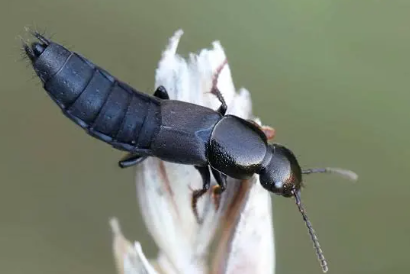
Rove Beetles (family Staphylinidae) are among the most diverse and widespread groups of beetles in the world. With more than 58,000 described species globally and approximately 3,000 species found in North America, rove beetles occupy a remarkable variety of habitats. Most species are considered highly beneficial predators, feeding on insects, mites, fly larvae, and other small invertebrates. They play an important ecological role by helping regulate pest populations and accelerating the decomposition of organic matter.
Despite their beneficial status, certain species—particularly members of the genus Paederus—can pose a public health concern. These beetles produce a potent toxin known as pederin, which can cause severe skin irritation and blistering when the insect is accidentally crushed against the skin. This condition is commonly referred to as Paederus dermatitis or dermatitis linearis.
Taxonomy and Classification
Rove beetles belong to the order Coleoptera, making them true beetles. They undergo complete metamorphosis, developing through egg, larval, pupal, and adult stages.
- Kingdom: Animalia
- Phylum: Arthropoda
- Class: Insecta
- Order: Coleoptera
- Family: Staphylinidae
The family Staphylinidae is one of the largest animal families on Earth, comprising thousands of genera and tens of thousands of species occupying virtually every terrestrial ecosystem.
Physical Description
Rove beetles vary considerably in size, ranging from approximately 1 millimeter to over 25 millimeters long depending on the species.
- Adult (Key ID): Elongated, slender body with very short wing covers (elytra) that expose much of the flexible abdomen.
- Behavior (Key ID): Many species hold their abdomen raised in a scorpion-like posture when disturbed, although they cannot sting.
- Toxic Species (Paederus Key ID): Often possess striking orange, red, and black coloration and are strongly attracted to lights at night.
- Damage ID: Linear skin lesions, redness, blistering, or severe irritation appearing 12 to 36 hours after contact.
- Conflict: Public Health (certain species only); otherwise Beneficial.
Because of their exposed abdomen and rapid movements, rove beetles are sometimes mistaken for earwigs or small scorpions.
Distribution and Habitat
Rove beetles occur on every continent except Antarctica and occupy an extraordinary range of habitats.
Common habitats include:
- Forests and woodlands
- Grasslands and prairies
- Leaf litter and compost piles
- Agricultural fields
- Wetlands and marshes
- Dung and decaying organic matter
- Fungi and mushroom colonies
- Under stones, bark, and logs
- Coastal habitats and mangroves
Most species prefer moist environments rich in organic material and prey.
Behavior and Ecology
The majority of rove beetles are active predators that consume a wide variety of soft-bodied insects and other invertebrates.
- Predation: Many species feed on fly larvae, aphids, mites, springtails, and other pest insects.
- Rapid Movement: Rove beetles are fast runners and often flee quickly when disturbed.
- Nocturnal Activity: Numerous species are active primarily at night.
- Decomposition: Some species feed on decaying organic material, fungi, or carrion, contributing to nutrient recycling.
Because of their predatory habits, many rove beetles are considered important biological control agents in agricultural systems.
Medical Importance of Paederus Species
Although most rove beetles are harmless, species within the genus Paederus possess a potent defensive chemical known as pederin.
Pederin is produced by symbiotic bacteria living within the beetle and is released only when the insect is crushed or crushed against exposed skin.
Typical symptoms of exposure include:
- Redness and burning sensations
- Linear or streak-like skin lesions
- Blister formation
- Intense itching or pain
- Delayed skin irritation appearing 12 to 36 hours after exposure
Contact with the eyes may result in severe irritation, sometimes referred to as “Nairobi eye.”
Emergence After Rain
Large numbers of rove beetles often emerge following periods of heavy rainfall, especially after extended dry conditions.
- Mass Emergence: Warm, humid conditions following rainfall may trigger sudden increases in beetle activity.
- Human Encounters: Beetles may fly toward lights and enter homes, landing on people, clothing, or bedding.
- Local Impact: Temporary swarms may interfere with outdoor activities and increase accidental contact with medically important species.
- Identification Challenge: Numerous species may emerge simultaneously, making precise identification difficult.
This seasonal phenomenon is particularly common in tropical and subtropical regions during rainy seasons.
Management and Prevention
Management of rove beetles focuses primarily on avoidance and exclusion, especially in areas where Paederus species occur.
Avoidance (Key Strategy)
- Never crush unknown beetles on exposed skin.
- Gently brush or blow beetles away instead.
- If accidental crushing occurs, immediately wash the area thoroughly with soap and water.
- Avoid rubbing affected skin, which can spread pederin.
Exclusion
- Reduce unnecessary outdoor lighting at night.
- Use yellow or sodium vapor lights instead of bright white lights.
- Install tight-fitting screens on windows and doors.
- Seal structural gaps and cracks.
Indoor Management
- Vacuum beetles rather than crushing them.
- Remove indoor beetles using paper or tissue without direct contact.
- Keep sleeping areas protected with screens or bed nets in high-risk regions.
Ecological Importance
Most rove beetles provide substantial ecological benefits by suppressing populations of agricultural pests and accelerating decomposition processes. Their presence in gardens, agricultural fields, compost piles, and natural ecosystems is generally considered beneficial.
Many species are actively conserved because of their importance as natural enemies of crop pests.
Research and Scientific Interest
Current research involving rove beetles focuses on:
- Biological control applications in agriculture
- The chemistry and biosynthesis of pederin
- Potential pharmaceutical uses of pederin, including anticancer research
- Biodiversity and ecosystem function
- Predator-prey relationships in natural systems
Conclusion
Rove Beetles are one of the most diverse and ecologically important beetle families on Earth. While a small number of species can cause medically significant skin reactions, the overwhelming majority are beneficial predators that contribute greatly to natural pest control and ecosystem health. Learning to recognize rove beetles can help people avoid accidental dermatitis while appreciating the valuable ecological services these remarkable insects provide.