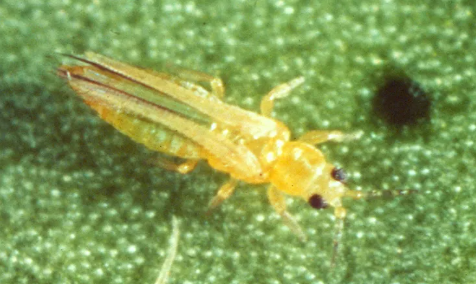
Citrus Thrips (Scirtothrips citri) are tiny, slender insects that cause significant damage to citrus crops by feeding on young fruit and foliage. These pests are especially problematic in warm, dry regions where citrus is widely grown, including the southwestern United States.
Unlike many pests that kill plants outright, citrus thrips primarily cause cosmetic and structural damage to fruit. Their feeding scars the rind, reducing market value and making fruit unsuitable for fresh sale, even though internal quality may remain unaffected.
Taxonomy and Classification
- Common Name: Citrus Thrips
- Scientific Name: Scirtothrips citri
- Order: Thysanoptera
- Family: Thripidae
- Type: Surface-feeding fruit pest
Citrus thrips undergo a gradual metamorphosis, progressing through egg, larval (nymph), pupal, and adult stages.
Identification
Citrus thrips are extremely small and often require magnification for proper identification.
- Adults: Slender, yellow to orange insects measuring approximately 0.6–0.8 mm long
- Wings: Narrow with fringed, feather-like edges
- Nymphs: Wingless, pale yellow to orange, and highly active feeders
Key identifying signs include:
- Silvery or bronze scarring on fruit and leaves
- Ring scarring around the stem end of fruit
- Distorted or thickened leaves
Thrips are often found on new growth or under the calyx of developing fruit.
Distribution and Habitat
Citrus thrips are commonly found in citrus-growing regions, particularly in:
- California
- Arizona
- Other warm, dry climates
They prefer:
- New leaf flush
- Young fruit surfaces
- Dry, dusty orchard environments
Populations increase rapidly during periods of active plant growth.
Behavior and Life Cycle
Citrus thrips reproduce quickly and produce multiple generations per year.
The lifecycle includes:
- Egg Stage: Eggs are inserted into plant tissue
- Nymph Stage: Active feeding occurs on leaves and fruit
- Pupal Stage: Pupation occurs in soil or leaf litter
- Adult Stage: Adults disperse and infest new growth
Rapid reproduction allows infestations to develop quickly if not monitored.
Feeding and Damage
Citrus thrips damage plants through rasping and sucking feeding behavior, which destroys surface cells.
- Ring Scarring: Feeding near the calyx creates permanent rings around fruit
- Silvering: Larger fruit may develop silvery or bronze patches
- Leaf Distortion: New leaves become thickened, curled, or misshapen
- Reduced Market Value: Fruit becomes unsuitable for fresh markets
While internal fruit quality may remain intact, external damage leads to significant economic losses.
Management and Control
Effective management focuses on protecting fruit during early development stages.
| Strategy | Purpose | Benefit |
|---|---|---|
| Petal Fall Monitoring | Inspect young fruit immediately after bloom | Determines need for early intervention |
| Biological Control | Encourage predatory mites such as Euseius tularensis | Provides natural suppression of thrips populations |
| Dust Management | Reduce dust levels in orchards | Improves predator effectiveness and reduces outbreaks |
| Targeted Treatments | Apply treatments during vulnerable growth stages | Protects fruit from early feeding damage |
Monitoring thresholds and timing treatments correctly are critical for effective control.
Prevention
- Monitor new growth and young fruit regularly
- Maintain clean orchard floors to disrupt pupation
- Encourage beneficial predators
- Reduce dust and environmental stress
- Apply treatments only when necessary
Preventative strategies help minimize population buildup and protect fruit quality.
Related Articles
Conclusion
Citrus thrips are economically significant pests that damage fruit through surface feeding, leading to reduced market value. Their rapid reproduction and preference for young plant tissue make early monitoring essential.
By implementing integrated pest management strategies, including biological control and careful timing of interventions, growers can effectively reduce damage and maintain high-quality citrus production.