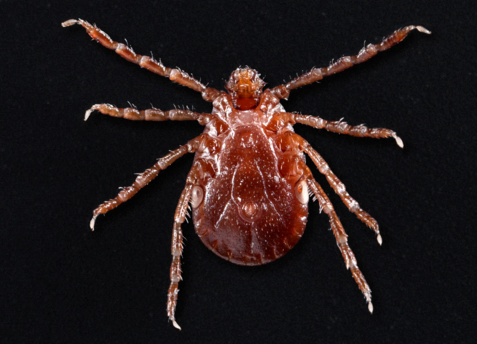
The Asian Longhorned Tick (Haemaphysalis longicornis) is an invasive tick species originally native to East Asia that has rapidly spread into multiple countries, including the United States, Australia, and New Zealand. This highly adaptable parasite is considered a major concern for agriculture, veterinary health, wildlife management, and public health because of its ability to reproduce rapidly and infest animals in enormous numbers.
Unlike many tick species, the Asian Longhorned Tick is capable of reproducing through parthenogenesis, meaning females can produce offspring without mating. This allows populations to expand extremely quickly once introduced into a new environment. Heavy infestations on livestock can lead to severe blood loss, stress, reduced weight gain, and even death in extreme cases.
The species is now closely monitored by agricultural agencies and public health officials because of its potential to spread pathogens affecting both animals and humans.
Quick Facts
- Common Name: Asian Longhorned Tick
- Scientific Name: Haemaphysalis longicornis
- Order: Ixodida
- Family: Ixodidae
- Origin: East Asia
- Main Hosts: Livestock, wildlife, pets, humans
- Primary Conflict: Blood feeding and disease transmission
- Habitat: Grasslands, forests, pastures
- Status: Invasive species
Taxonomy and Classification
Asian Longhorned Ticks belong to the class Arachnida, making them relatives of spiders, mites, and scorpions.
- Class: Arachnida
- Order: Ixodida
- Family: Ixodidae
- Species: Haemaphysalis longicornis
They are classified as hard ticks because they possess a hardened shield-like plate called a scutum on their back.
One of the most remarkable biological features of this species is its ability to reproduce asexually through parthenogenesis. A single unfed female can establish an entirely new population without the presence of males.
Physical Description
Asian Longhorned Ticks are relatively small but become dramatically larger after feeding.
Adult Appearance
- Approximately 2–4 mm long before feeding
- Reddish-brown to dark brown coloration
- Flattened oval body shape
- Eight legs as adults
- Short mouthparts compared to some tick species
After feeding, females can become greatly enlarged and grayish due to the volume of blood consumed.
Larvae and Nymphs
Immature stages are much smaller and difficult to detect.
- Larvae possess six legs
- Nymphs possess eight legs
- Young stages feed on small mammals and birds
Engorgement
Like other hard ticks, Asian Longhorned Ticks swell dramatically while feeding, increasing many times their original size.
Distribution and Habitat
Originally native to:
- China
- Japan
- Korea
- Eastern Russia
The tick has since spread to:
- United States
- Australia
- New Zealand
- Pacific islands
Habitat Preferences
- Pastures
- Grasslands
- Forest edges
- Brushy vegetation
- Livestock areas
- Wildlife corridors
- Moist shaded environments
They thrive in humid environments with dense vegetation where hosts regularly travel.
Hosts and Feeding
Asian Longhorned Ticks are aggressive blood-feeding parasites with an extremely broad host range.
Common Hosts
- Cattle
- Sheep
- Goats
- Horses
- Dogs
- Deer
- Birds
- Rodents
- Humans
Heavy infestations on livestock are especially dangerous.
Mass Infestation Behavior
Unlike many native ticks, Asian Longhorned Ticks can occur in extremely high densities.
- Thousands of ticks may infest a single animal
- Animals may suffer severe blood loss
- Stress and weakness are common
- Young livestock are especially vulnerable
Behavior and Ecology
Asian Longhorned Ticks spend much of their life waiting in vegetation for passing hosts.
Questing Behavior
Ticks climb vegetation and extend their front legs to latch onto nearby hosts.
- Triggered by body heat
- Respond to carbon dioxide
- Detect vibrations and movement
Life Cycle
The tick undergoes four major stages:
- Egg
- Larva
- Nymph
- Adult
Each active stage requires a blood meal before molting into the next stage.
Parthenogenesis
Many populations reproduce entirely without males.
- One female can produce thousands of eggs
- Rapid population growth occurs
- Colonization risk is extremely high
Medical and Veterinary Importance
Asian Longhorned Ticks are closely monitored because they can carry and transmit pathogens.
Animal Health Concerns
- Severe blood loss
- Reduced milk production
- Weight loss
- Anemia
- Stress-related illness
Human Health Concerns
Research continues into the pathogens this species may spread in newly invaded regions.
Potential concerns include:
- Bacterial pathogens
- Viral pathogens
- Protozoan parasites
The full disease transmission potential in North America is still under investigation.
Signs of Infestation
- Large numbers of ticks on livestock
- Ticks clustered around ears or neck
- Animals scratching excessively
- Weakness or anemia in animals
- Ticks found in grassy outdoor areas
- Reduced livestock productivity
Management and Prevention
Effective control requires integrated pest management combining habitat control, host treatment, and monitoring.
Vegetation Management
- Keep grass trimmed short
- Reduce brush and weeds
- Clear leaf litter
- Create dry buffer zones around structures
Ticks are vulnerable to dry, sunny environments.
Livestock Protection
- Inspect animals regularly
- Use approved tick-control products
- Rotate grazing areas
- Separate heavily infested animals
Pet Protection
- Use veterinarian-approved tick preventatives
- Check pets after outdoor activity
- Inspect around ears and paws
- Wash bedding regularly
Human Protection
- Wear long sleeves and pants
- Use EPA-approved repellents
- Perform tick checks after outdoor exposure
- Shower after spending time outdoors
Tick Removal
Ticks should be removed promptly using fine-tipped tweezers.
- Grip close to the skin
- Pull upward steadily
- Avoid crushing the tick
- Disinfect the bite area afterward
Interesting Facts About Asian Longhorned Ticks
- A single female can establish a new population.
- They can survive cold winters in some climates.
- Heavy infestations may contain thousands of ticks.
- They are highly invasive outside their native range.
- They are capable of infesting many host species.
- They are among the most closely monitored invasive ticks globally.
Conservation and Research
Asian Longhorned Ticks are considered invasive pests and a growing concern for agricultural biosecurity.
Research Areas
- Disease transmission potential
- Cold-weather survival
- Population spread modeling
- Improved livestock treatments
- Biological control methods
- Environmental risk assessment
Scientists and agricultural agencies continue monitoring their spread and evaluating strategies to reduce the economic and ecological impacts of this invasive tick species.