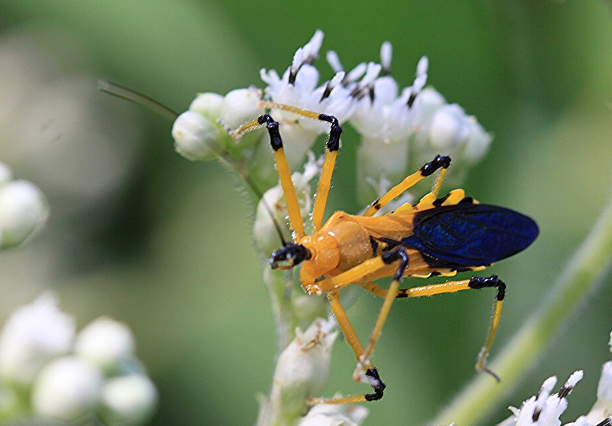
Assassin Bug (family Reduviidae) refers to a large group of predatory insects known for their ability to capture and consume other arthropods. Found worldwide, including throughout North America, assassin bugs are commonly encountered in gardens, agricultural fields, forests, and sometimes inside homes. They are recognized for their elongated bodies, narrow heads, and specialized mouthparts used to pierce and suck fluids from prey.
Most assassin bugs are considered beneficial insects because they help control pest populations. However, some species are capable of delivering a painful defensive bite if handled.
Taxonomy and Classification
- Common Name: Assassin Bug
- Family: Reduviidae
- Order: Hemiptera
- Type: Predatory true bug
The family Reduviidae includes over 7,000 species worldwide, with a wide range of forms and ecological roles. Most are predators, though a few, such as kissing bugs, are blood-feeding.
Identification and Physical Description
Assassin bugs vary in size and appearance depending on the species, but most measure between 0.5 and 1.5 inches in length.
Key identifying features include:
- Elongated body with a narrow, cone-shaped head
- Prominent, curved beak (rostrum) used for feeding
- Long legs adapted for grasping prey
- Varied coloration, often brown, black, or patterned for camouflage
Some species, such as the wheel bug, have distinctive structures (e.g., a cog-like crest), while others are more slender and inconspicuous.
Nymphs resemble smaller versions of adults but may lack fully developed wings.
Life Cycle
Assassin bugs undergo incomplete metamorphosis, progressing through egg, nymph, and adult stages.
Females lay eggs on plant surfaces or in protected areas. After hatching, nymphs begin hunting immediately and grow through several molts.
Development time varies depending on species and environmental conditions, but many complete their life cycle within a year.
Habitat and Distribution
Assassin bugs are widely distributed and occupy a variety of habitats, including:
- Gardens and agricultural fields
- Forests and woodlands
- Grasslands and shrublands
- Occasionally indoor environments
They are often found in areas where prey insects are abundant.
Behavior and Ecology
Assassin bugs are ambush predators. They typically wait for prey to come within reach before striking quickly with their beak.
Once captured, they inject digestive enzymes that immobilize and liquefy the prey’s internal tissues, which are then consumed.
Some species use camouflage or debris to conceal themselves, while others actively hunt.
They play a key role in controlling populations of pest insects, including aphids, caterpillars, and beetles.
Diet
Assassin bugs are carnivorous and feed on a wide range of insects, including:
- Aphids
- Caterpillars
- Beetles
- Flies
- Other arthropods
This diet makes them valuable natural pest control agents.
Benefits and Importance
Assassin bugs provide several ecological and agricultural benefits:
- Natural control of pest insect populations
- Reduction in pesticide use
- Support of integrated pest management (IPM)
- Contribution to ecosystem balance
They are widely regarded as beneficial insects in both natural and managed environments.
Human Interaction and Risks
While beneficial, assassin bugs can deliver a painful bite if handled or threatened. The bite is defensive and not aggressive.
Symptoms may include:
- Sharp, immediate pain
- Localized swelling or redness
Most bites are not medically significant, but they can be uncomfortable.
Some related species, such as kissing bugs, are capable of transmitting disease, but most assassin bugs do not pose such risks.
Management and Control
Control is generally not recommended due to their beneficial nature.
If necessary, management may include:
- Avoid handling to prevent bites
- Remove individuals from indoor areas
- Seal entry points to reduce indoor presence
Outdoor populations should be preserved whenever possible.
Prevention
Preventative measures for indoor encounters include:
- Sealing cracks and gaps in structures
- Reducing outdoor lighting that attracts insects
- Maintaining screens on windows and doors
These steps help limit accidental indoor entry.
Related Articles
Conclusion
Assassin bugs are highly effective predators that contribute significantly to natural pest control. While they can deliver a painful bite if disturbed, they are otherwise harmless and beneficial to humans.
Encouraging their presence in gardens and landscapes can help maintain ecological balance and reduce reliance on chemical pest control methods.