Overview
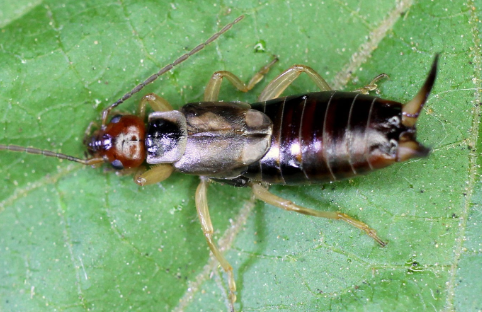
Vineyard Earwigs, most commonly represented by the European Earwig (Forficula auricularia), are omnivorous insects frequently found in vineyards throughout North America, Europe, Australia, and other grape-growing regions. Recognizable by the forceps-like pincers at the end of their abdomen, these insects occupy a unique position in vineyard ecosystems because they can function as both beneficial predators and occasional pests.
Unlike many vineyard pests that feed exclusively on plants, earwigs consume a wide variety of food sources, including aphids, mites, insect eggs, decaying organic matter, fungi, and plant material. Their dual role makes them an important consideration in integrated pest management programs. While moderate populations may provide biological control benefits, excessive numbers can damage grape clusters and contaminate harvested fruit.
Taxonomy and Classification
Vineyard earwigs belong to the order Dermaptera, a group of insects characterized by elongated bodies and distinctive abdominal pincers known as cerci.
- Kingdom: Animalia
- Phylum: Arthropoda
- Class: Insecta
- Order: Dermaptera
- Family: Forficulidae
- Common Species: Forficula auricularia (European Earwig)
The European earwig is the species most frequently associated with commercial vineyards and agricultural systems.
Physical Description
Adult vineyard earwigs typically measure between 10 and 15 millimeters in length.
- Color: Reddish-brown to dark brown.
- Body Shape: Flattened and elongated.
- Antennae: Long and segmented.
- Cerci: Prominent pincers at the end of the abdomen.
- Wings: Short leathery forewings covering folded hindwings.
Males possess noticeably curved pincers, while females typically have straighter cerci.
Although capable of flight, vineyard earwigs rarely fly and primarily move by crawling through vegetation, soil, and grape canopies.
Distribution and Habitat
Vineyard earwigs are widely distributed throughout temperate grape-growing regions.
Common habitats include:
- Commercial vineyards
- Backyard grape plantings
- Orchards
- Agricultural fields
- Mulched landscapes
- Areas with abundant ground cover
They prefer moist, sheltered environments where they can hide during daylight hours. Common hiding locations include bark crevices, soil cracks, leaf litter, irrigation equipment, and grape clusters.
Life Cycle
Egg Stage
Females lay eggs in underground chambers during fall or winter.
Unlike many insects, earwigs exhibit maternal care. Females protect, clean, and guard their eggs until they hatch.
Nymph Stage
Newly hatched nymphs resemble miniature adults without fully developed wings.
They pass through several molts before reaching maturity.
Adult Stage
Adults emerge during spring and early summer.
Most vineyard earwig populations complete one generation annually, although environmental conditions can influence development rates.
Behavior
Earwigs are primarily nocturnal insects.
During the day they hide in protected locations and emerge after sunset to feed.
Key behavioral characteristics include:
- Nocturnal activity: Feeding occurs primarily at night.
- Aggregation: Multiple individuals often gather in sheltered areas.
- Maternal care: Females guard eggs and young nymphs.
- Omnivorous feeding: Consumption of both plant and animal material.
Because they are active mainly after dark, infestations can go unnoticed until damage becomes apparent.
Feeding Habits
Vineyard earwigs consume a remarkably diverse diet.
Beneficial Feeding
- Aphids
- Mites
- Insect eggs
- Small caterpillars
- Scale insects
- Organic debris
These feeding habits can help suppress populations of harmful vineyard pests.
Plant Feeding
When prey becomes scarce, earwigs may feed on:
- Young grape leaves
- Tender shoots
- Flowers
- Ripening berries
- Damaged fruit
This shift toward plant feeding is usually responsible for economic losses.
Damage and Economic Importance
Leaf Feeding
Earwigs create irregular holes in grape leaves through chewing activity.
Young vines are particularly vulnerable because even moderate feeding can reduce plant vigor.
Fruit Injury
Earwigs may feed directly on grape berries, especially damaged or overripe fruit.
Injury can increase susceptibility to fungal infections and fruit rot.
Cluster Contamination
One of the most significant concerns is contamination.
Earwigs frequently hide inside grape clusters where they leave:
- Droppings (frass)
- Shed skins
- Dead insects
- Organic debris
These contaminants may reduce fruit quality and create problems during harvest and processing.
Harvest Concerns
Earwigs concealed within clusters can accidentally be harvested with grapes, creating quality-control concerns for commercial wineries.
Signs of Infestation
Common indicators include:
- Earwigs hiding within grape clusters.
- Chewed foliage.
- Damaged berries.
- Frass accumulation on fruit.
- Earwigs found under bark or debris.
- Increased nighttime insect activity.
Nighttime inspections with a flashlight often provide the most accurate assessment of population levels.
Management and Control (IPM)
Monitoring
Monitoring is the foundation of effective earwig management.
- Inspect clusters regularly.
- Use rolled cardboard traps.
- Monitor activity after dark.
- Track population trends throughout the season.
Habitat Modification
Reducing hiding places can significantly lower populations.
- Remove excess mulch.
- Reduce leaf litter.
- Eliminate debris near vines.
- Improve airflow within the canopy.
Trapping
Corrugated cardboard traps placed around vine trunks provide excellent monitoring and control.
Earwigs seek shelter inside the cardboard during daylight hours, allowing easy removal.
Mechanical Barriers
Sticky bands around vine trunks can prevent earwigs from climbing into the canopy and reaching grape clusters.
Biological Balance
Because earwigs often consume harmful insects, complete eradication is usually unnecessary.
Maintaining balanced populations often provides better long-term vineyard health than aggressive control measures.
Chemical Control
Chemical treatments are rarely required and should only be considered when populations reach economically damaging levels.
Ecological Importance
Vineyard earwigs contribute to ecosystem health by feeding on numerous pest insects. In many vineyards, they function as beneficial predators that help reduce aphid and mite populations.
Their presence often reflects a healthy and biologically diverse vineyard environment.
Conclusion
Vineyard Earwigs are unique insects that can function as both beneficial predators and occasional pests. While large populations may damage fruit and contaminate grape clusters, moderate numbers often provide valuable biological control services. Successful management focuses on monitoring, habitat modification, and maintaining ecological balance rather than immediate elimination. Understanding their dual role allows vineyard managers to make informed decisions that protect both crop quality and beneficial insect activity.