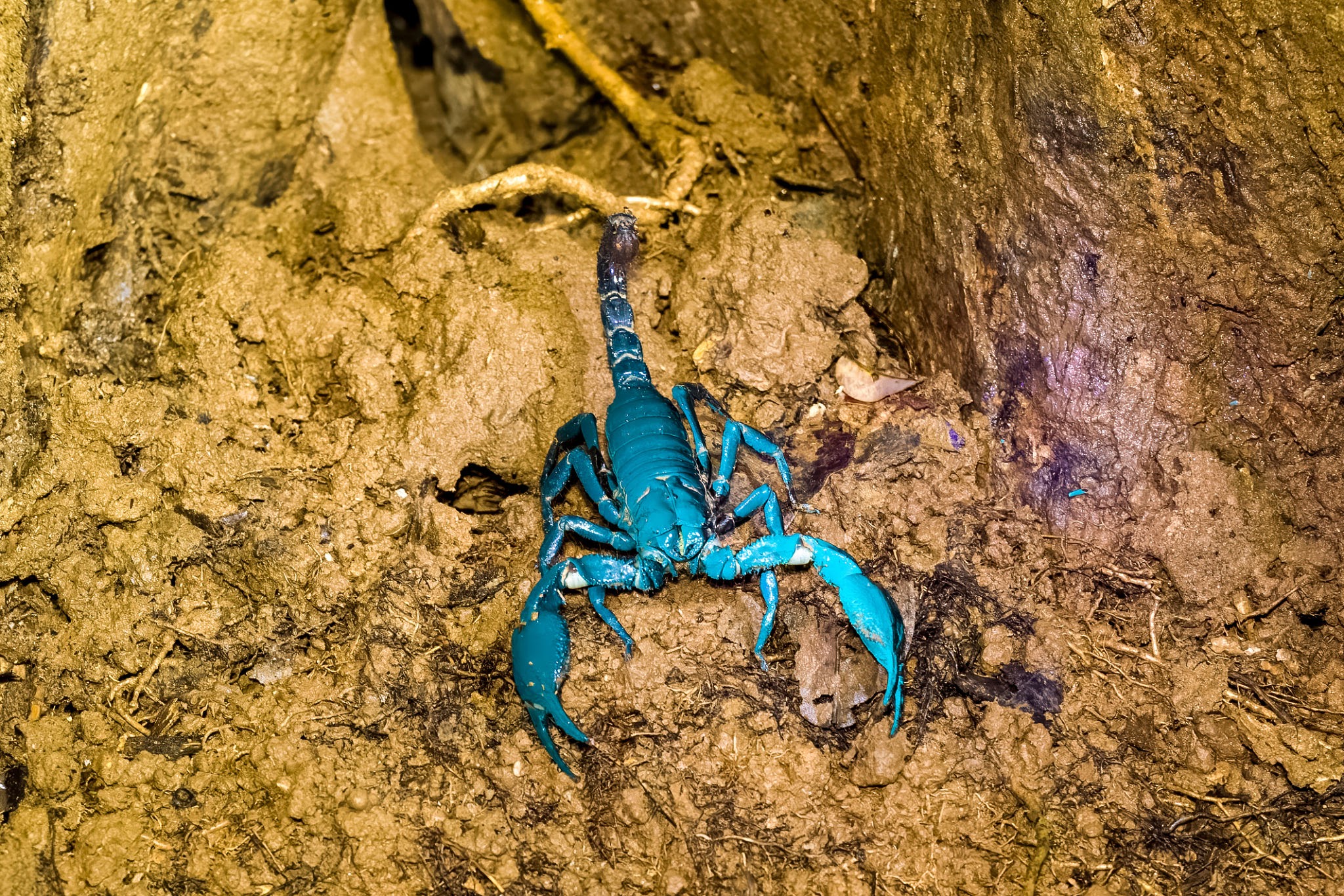
Overview
Velvet Scorpions is a common name sometimes applied to two unusual groups of arachnids: the Tailless Whip Scorpions (Order Amblypygi) and the Whip Scorpions or Vinegaroons (Order Thelyphonida). Despite their intimidating appearance, neither group is a true scorpion, and neither possesses a venomous stinger. These fascinating arachnids are harmless to humans and play important roles as nocturnal predators in natural ecosystems.
Their flattened bodies, long sensory appendages, and oversized grasping claws often cause alarm when encountered in garages, basements, crawl spaces, or gardens. However, Velvet Scorpions are beneficial predators that feed on insects, spiders, cockroaches, termites, and other small arthropods. Most conflicts arise from fear and misunderstanding rather than any actual threat.
Taxonomy and Classification
Velvet Scorpions belong to distinct arachnid orders separate from true scorpions.
- Kingdom: Animalia
- Phylum: Arthropoda
- Class: Arachnida
- Order: Amblypygi (Tailless Whip Scorpions)
- Order: Thelyphonida (Whip Scorpions or Vinegaroons)
Although related to spiders and scorpions, these arachnids evolved unique anatomical features that distinguish them from both groups.
Physical Description
General Appearance
Velvet Scorpions range from approximately 15 mm to more than 80 mm in body length depending on the species.
- Body: Flattened and heavily armored
- Color: Brown, reddish-brown, black, or dark gray
- Activity: Primarily nocturnal
- Movement: Fast and deliberate
- Habitat Preference: Moist, sheltered environments
Tailless Whip Scorpions (Amblypygi)
Amblypygids have a flattened spider-like body and large spiny pedipalps used to capture prey.
Their most distinctive feature is the first pair of legs, which are extremely long and thin. These specialized appendages function like antennae, allowing the animal to navigate in darkness.
- No tail
- No venom
- No stinger
- Large grasping pedipalps
- Extremely long sensory legs
Whip Scorpions (Thelyphonida)
Whip Scorpions, commonly called Vinegaroons, possess a stout body and a long whip-like tail used as a sensory organ.
Unlike true scorpions, the tail contains no stinger.
- Whip-like tail
- Large pincers
- Powerful front appendages
- Defensive vinegar spray
Distribution and Habitat
Velvet Scorpions are primarily found in tropical, subtropical, and arid regions throughout the world.
In the United States, they are most common in:
- Arizona
- Texas
- New Mexico
- Florida
- Southern California
Preferred habitats include:
- Under rocks
- Leaf litter
- Rotting logs
- Wood piles
- Caves
- Crawl spaces
- Garages
- Basements
- Garden debris
They require sheltered environments that provide protection from drying conditions and predators.
Life Cycle
Egg Stage
Females lay eggs in protected underground chambers or hidden retreats.
Unlike many arthropods, females actively guard their developing eggs.
Juvenile Stage
After hatching, young individuals often climb onto their mother’s back for protection.
This level of parental care is relatively rare among arachnids.
Adult Stage
As juveniles mature through a series of molts, they gradually develop adult characteristics and hunting abilities.
Many species can live several years under favorable conditions.
Behavior and Ecology
Nocturnal Predators
Velvet Scorpions spend daylight hours hidden beneath cover and emerge at night to hunt.
Their prey includes:
- Cockroaches
- Crickets
- Termites
- Spiders
- Beetles
- Moths
- Small insects
They help naturally regulate pest populations in both natural and urban environments.
Sensory Navigation
The elongated front legs of Amblypygids function as sophisticated sensory organs.
These appendages constantly probe the environment and can detect:
- Air movement
- Vibrations
- Chemical signals
- Obstacles
- Potential prey
This adaptation allows them to navigate effectively in complete darkness.
Defensive Behavior
Neither Tailless Whip Scorpions nor Vinegaroons are aggressive toward humans.
When threatened, they generally:
- Retreat quickly
- Hide beneath cover
- Raise defensive appendages
- Attempt escape rather than attack
Vinegaroon Defense Mechanism
Whip Scorpions possess a unique chemical defense.
When threatened, they can spray a fine mist containing acetic acid and other compounds.
This defensive secretion:
- Smells strongly like vinegar
- Repels predators
- May cause mild irritation
- Is not dangerous to humans
The spray cannot cause serious injury and is used only as a last resort.
Human Interactions
Fear and Misidentification
The majority of concerns involving Velvet Scorpions stem from their unusual appearance.
People often mistake them for:
- Dangerous scorpions
- Large spiders
- Venomous arachnids
- Exotic invasive pests
In reality, these animals pose little to no risk to people, pets, or structures.
Can They Bite or Sting?
Tailless Whip Scorpions cannot sting because they lack a stinger.
Vinegaroons also lack a venomous stinger.
Although they possess grasping appendages that may pinch if handled roughly, injuries are generally minor and uncommon.
Signs of Activity
Velvet Scorpions are secretive and rarely abundant indoors.
Signs of their presence may include:
- Occasional nighttime sightings
- Individuals hiding beneath debris
- Presence in garages or crawl spaces
- Increased activity during humid weather
Unlike termites or wood-boring insects, they do not damage structures or stored items.
Management and Control (IPM)
Exclusion
The most effective management strategy is preventing accidental entry into buildings.
- Seal foundation cracks
- Install door sweeps
- Repair window screens
- Close utility gaps
- Reduce entry points
Habitat Modification
Reducing outdoor harborage areas can lower encounters around homes.
- Remove wood piles
- Reduce landscape debris
- Trim dense vegetation
- Store materials away from foundations
- Improve drainage
Relocation
Because these arachnids are beneficial predators, relocation is preferred over extermination.
Individuals found indoors can be gently captured and released outdoors in suitable habitat.
Chemical Control
Chemical treatment is rarely necessary and generally not recommended.
Most infestations consist of isolated individuals rather than breeding populations.
Ecological Importance
Velvet Scorpions are valuable predators that contribute to ecosystem balance.
By feeding on insects and other arthropods, they help suppress populations of nuisance and pest species.
Their presence often indicates a healthy and diverse environment.
Research and Scientific Interest
Scientists study Amblypygids and Vinegaroons for several reasons.
- Advanced sensory systems
- Navigation in darkness
- Arachnid evolution
- Predatory behavior
- Parental care strategies
Research has revealed that some species possess surprisingly complex behaviors and learning abilities compared to many other arachnids.
Conclusion
Velvet Scorpions, including Tailless Whip Scorpions and Vinegaroons, are fascinating arachnids that often inspire fear due to their unusual appearance. Despite their intimidating claws, long sensory legs, and defensive postures, they are harmless to humans and provide valuable pest control services. Their nocturnal habits, beneficial predatory behavior, and unique adaptations make them important members of many ecosystems. In most situations, simple exclusion and respectful relocation are the best approaches when these remarkable arachnids are encountered around homes or gardens.