Overview
Uraba Skeletonizer Caterpillars (Uraba lugens), commonly known as gum leaf skeletonizers or mad hatter caterpillars, are destructive defoliators that primarily attack eucalyptus trees. Native to Australia, this species has become an important invasive pest in regions where eucalyptus is cultivated as an ornamental, forestry, or landscape tree.
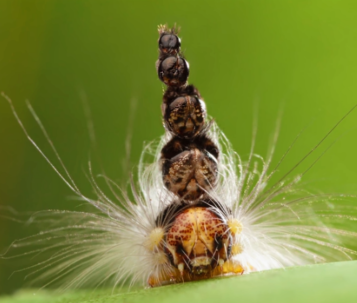
The caterpillars are famous for their unusual appearance. As they molt, they retain their old head capsules and stack them on top of their current head, creating a distinctive tower-like structure that resembles a miniature hat. This unique characteristic makes them one of the easiest caterpillar pests to identify.
While moderate infestations may only cause cosmetic damage, severe outbreaks can result in extensive defoliation, reduced tree vigor, slower growth, and increased susceptibility to environmental stress and secondary pests.
Taxonomy and Classification
Uraba skeletonizers belong to the order Lepidoptera and family Nolidae.
- Kingdom: Animalia
- Phylum: Arthropoda
- Class: Insecta
- Order: Lepidoptera
- Family: Nolidae
- Genus: Uraba
- Species: Uraba lugens
This species is closely associated with eucalyptus trees and is considered one of the most recognizable foliage-feeding caterpillars due to its unusual head-capsule stacking behavior.
Identification
Larvae
Larvae are slender caterpillars that undergo several developmental stages before pupation.
- Length: 20–25 mm when mature
- Color: Yellow-green, gray-green, or brownish
- Markings: Dark stripes and spots along the body
- Head: Stacked shed head capsules forming a distinctive “hat”
- Body: Covered with fine hairs
The stacked head capsules become more noticeable as larvae mature and may consist of several layers.
Adult Moths
Adult moths are considerably less conspicuous than the caterpillars.
- Color: Gray to gray-brown
- Wingspan: Approximately 25–30 mm
- Activity: Primarily nocturnal
- Behavior: Often rests on bark where coloration provides camouflage
Distribution and Habitat
Native to Australia, Uraba lugens has spread to other regions where eucalyptus trees are grown.
Common habitats include:
- Eucalyptus plantations
- Urban landscapes
- Parks and gardens
- Roadside plantings
- Commercial forestry operations
- Windbreaks and shelterbelts
The pest is most successful in warm climates that support year-round or extended periods of host plant growth.
Host Plants
Eucalyptus species are the primary hosts of Uraba skeletonizer caterpillars.
Commonly attacked hosts include:
- Eucalyptus species
- Corymbia species
- Other members of the Myrtaceae family
Young foliage is often preferred, although heavy infestations may affect leaves throughout the canopy.
Life Cycle
Egg Stage
Females deposit clusters of eggs on eucalyptus leaves. Eggs are usually laid on the undersides of foliage where they are somewhat protected from environmental conditions.
Larval Stage
After hatching, young caterpillars feed together in groups. Initially, they scrape surface tissues from leaves, leaving the network of veins intact.
As larvae mature, feeding intensity increases and larger portions of foliage are consumed. During successive molts, old head capsules remain attached and accumulate into the characteristic stack.
Pupal Stage
Mature larvae pupate within cocoons located in protected areas such as bark crevices, leaf litter, or sheltered branches.
Adult Stage
Adults emerge, mate, and begin a new generation. Multiple generations may occur each year under favorable environmental conditions.
Damage and Economic Importance
Leaf Skeletonization
The most recognizable symptom is skeletonized foliage. Larvae consume soft leaf tissue while leaving veins behind, creating a lace-like appearance.
Defoliation
Heavy infestations can remove substantial portions of the tree canopy, reducing photosynthetic capacity and overall vigor.
Growth Reduction
Repeated defoliation may slow tree growth and reduce ornamental or commercial value.
Tree Stress
Defoliated trees become more vulnerable to:
- Drought stress
- Wood-boring insects
- Fungal pathogens
- Environmental extremes
Forestry Impacts
In commercial eucalyptus production, severe infestations can reduce timber yield and increase management costs.
Signs of Infestation
- Skeletonized eucalyptus leaves
- Clusters of feeding caterpillars
- Visible stacks of head capsules on larvae
- Leaf browning and canopy thinning
- Defoliation of branch tips
- Cocoons attached to bark or branches
The presence of “mad hatter” caterpillars is often sufficient to confirm identification.
Management and Control (IPM)
Monitoring
Inspect eucalyptus foliage regularly, especially during periods of active growth.
Early detection allows intervention before extensive damage develops.
Mechanical Control
- Remove heavily infested branches
- Hand-pick caterpillar clusters when practical
- Destroy larvae and cocoons
Biological Control
Natural enemies can significantly reduce populations.
- Parasitic wasps
- Predatory insects
- Birds
- Naturally occurring pathogens
Microbial Control
Bacillus thuringiensis (Bt) is highly effective against young larvae and is widely recommended for environmentally responsible management.
Chemical Control
Where necessary, labeled insecticides may be applied to target early larval stages before significant defoliation occurs.
Environmental Considerations
In their native range, populations are naturally regulated by predators, parasites, and environmental conditions. In introduced regions, the absence of these natural controls may allow outbreaks to develop more rapidly.
Integrated pest management programs that emphasize monitoring and biological control generally provide the most sustainable long-term results.
Conclusion
Uraba Skeletonizer Caterpillars are highly distinctive defoliators of eucalyptus trees known for their unusual stacked head capsules and characteristic leaf skeletonization damage. While moderate infestations may be tolerated by healthy trees, severe outbreaks can result in substantial defoliation and reduced tree vigor. Regular monitoring, biological control, and timely intervention remain the most effective strategies for protecting valuable eucalyptus plantings.