Overview
Uca Crabs, commonly known as Fiddler Crabs, are small coastal crustaceans found in marshes, mudflats, mangrove forests, and estuarine habitats throughout tropical and temperate regions of the world. Traditionally classified within the genus Uca, many species have since been reassigned to related genera such as Leptuca and Minuca, although the common name “fiddler crab” remains widely used.
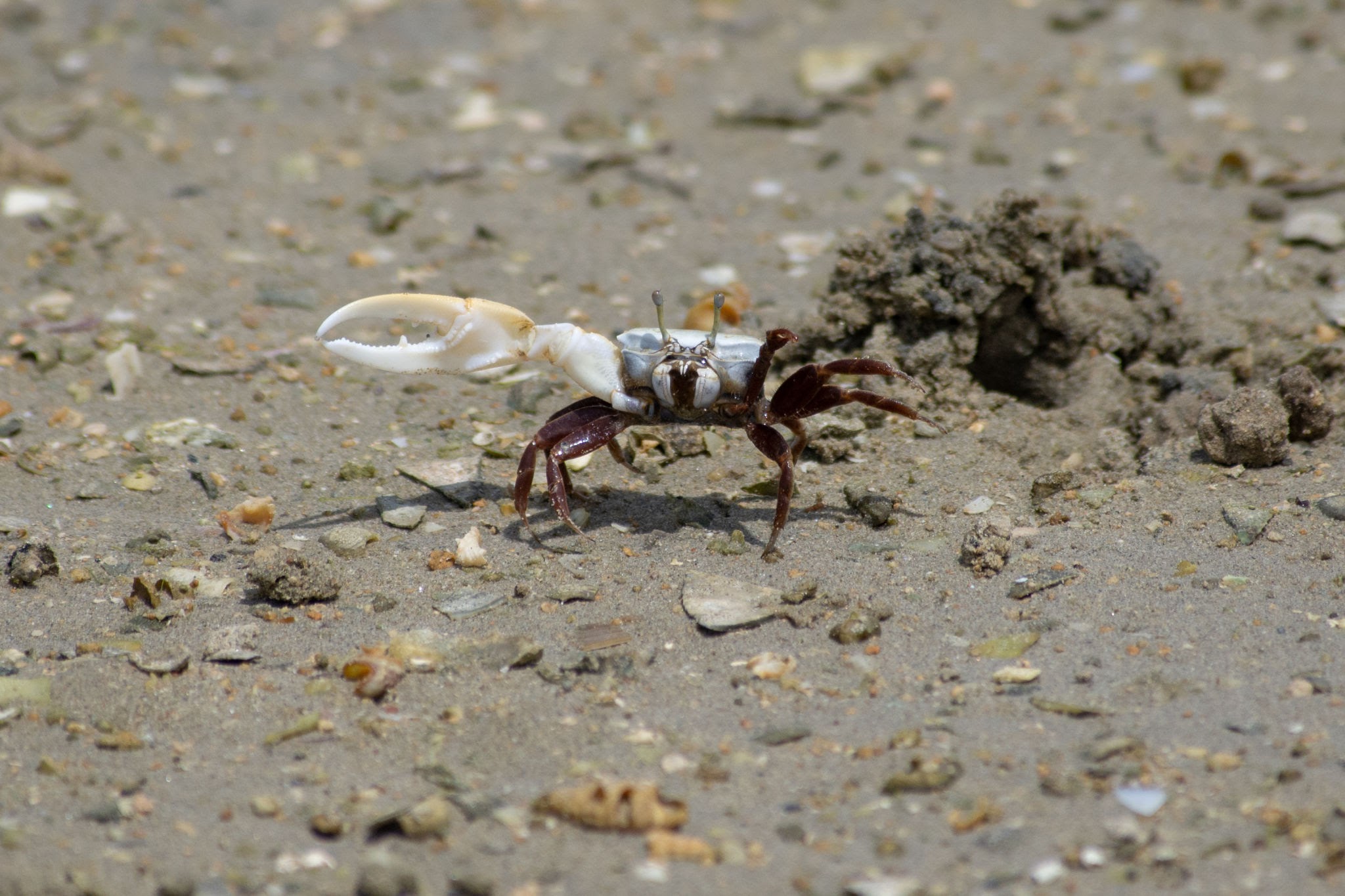
These crabs are best known for the oversized claw possessed by males, which resembles a violin or fiddle and is used in courtship displays and territorial communication. Females possess two small feeding claws and are generally less conspicuous.
Unlike many pests featured on Pestipedia, fiddler crabs are primarily considered beneficial members of coastal ecosystems. However, their extensive burrowing activity can occasionally create nuisance conditions in managed coastal environments such as golf courses, levees, seawalls, embankments, marinas, lawns, and landscaped waterfront properties.
In natural habitats, Uca Crabs provide valuable ecological services by aerating soils, improving nutrient cycling, and serving as prey for fish, birds, reptiles, and mammals. Their presence is often considered an indicator of a healthy coastal ecosystem.
Taxonomy and Classification
- Kingdom: Animalia
- Phylum: Arthropoda
- Subphylum: Crustacea
- Class: Malacostraca
- Order: Decapoda
- Family: Ocypodidae
- Genus: Uca and related genera
Fiddler crabs belong to a diverse group of shoreline crabs adapted to life in intertidal habitats. More than 100 species have been described worldwide, with numerous species occurring along the Atlantic, Gulf, and Pacific coasts.
Physical Description
Adult fiddler crabs are relatively small, typically measuring between 2 and 5 centimeters across the carapace.
- Male Identification: Possess one dramatically enlarged claw used for communication and mating displays.
- Female Identification: Have two similarly sized feeding claws.
- Coloration: Brown, gray, tan, blue-gray, orange, or reddish depending on species and habitat.
- Eyes: Elevated on stalks, providing excellent visibility.
- Body Shape: Compact, square-shaped carapace adapted for life on muddy shorelines.
The enlarged claw of males may account for nearly half of the crab’s total body weight. Although impressive in appearance, it is not used primarily for feeding and serves mainly as a signaling structure.
Distribution and Habitat
Fiddler crabs occur throughout coastal regions around the world and are especially abundant in estuaries, salt marshes, and mangrove systems.
Common habitats include:
- Salt marshes
- Mudflats
- Mangrove forests
- Tidal creeks
- Estuarine shorelines
- Coastal wetlands
- Protected bays
- Brackish-water environments
They prefer moist, soft sediments that allow easy excavation of burrows while providing protection from predators and environmental extremes.
Life Cycle
Fiddler crabs undergo a complex life cycle involving aquatic larval stages and terrestrial adult stages.
- Egg Stage: Females carry fertilized eggs beneath the abdomen.
- Larval Stage: Eggs hatch into free-swimming larvae released into tidal waters.
- Megalopa Stage: Intermediate developmental stage before settlement.
- Juvenile Stage: Young crabs establish burrows in suitable habitats.
- Adult Stage: Mature crabs reproduce and maintain territories.
Reproduction is often synchronized with tidal cycles, maximizing larval survival and dispersal opportunities.
Behavior
Fiddler crabs are highly active during low tide when they emerge from their burrows to feed, interact, and defend territories.
Claw Waving Displays
Male fiddler crabs perform elaborate claw-waving displays to attract females and discourage rival males. These displays vary among species and are an important part of mating behavior.
Territoriality
Males often defend burrows and surrounding areas from competitors. Physical confrontations may occur, though visual displays usually resolve disputes.
Burrow Construction
Each crab maintains a burrow that serves as shelter from predators, temperature extremes, and high tides.
Feeding Habits
Fiddler crabs are deposit feeders that obtain nutrition from organic matter contained within sediments.
Using their smaller claw, they collect mud or sand and separate edible material from inorganic particles.
Their diet commonly includes:
- Algae
- Decaying plant material
- Bacteria
- Microscopic organisms
- Organic detritus
After extracting nutrients, the remaining sediment is discarded as small pellets around the burrow entrance.
Burrowing Activity and Conflict
The primary conflict associated with Uca Crabs involves their extensive burrowing behavior.
A single area may contain hundreds or even thousands of burrows per acre. While beneficial in natural ecosystems, this activity can create localized problems in managed environments.
Potential concerns include:
- Soil destabilization
- Erosion of embankments
- Weakening of levees
- Damage to turf aesthetics
- Undermining of shoreline structures
- Reduced stability around docks and seawalls
Most impacts occur in coastal properties where engineered structures depend on compacted soil integrity.
Ecological Importance
Despite occasional nuisance concerns, fiddler crabs are considered highly beneficial organisms.
Their ecological contributions include:
- Soil aeration
- Nutrient recycling
- Improved sediment drainage
- Enhanced microbial activity
- Support of food webs
- Maintenance of marsh health
Many coastal birds, fish, and mammals depend upon fiddler crabs as an important food source.
Signs of Activity
Property owners can identify fiddler crab activity through several obvious indicators:
- Numerous round holes in mud or soil
- Small sediment pellets around burrow entrances
- Visible crab activity during low tide
- Waving males near burrow openings
- Honeycomb-like patterns of burrows
- Soft or disturbed shoreline soils
Management and Prevention
Management should focus on protecting sensitive structures while preserving the ecological value of fiddler crab populations.
Habitat Modification
- Improve shoreline stabilization.
- Maintain healthy marsh vegetation.
- Reduce erosion-prone areas.
Physical Barriers
- Install riprap along vulnerable shorelines.
- Use geotextile fabrics where appropriate.
- Protect seawalls and embankments.
Natural Predators
Numerous predators help regulate fiddler crab populations, including:
- Herons
- Egrets
- Shorebirds
- Fish
- Raccoons
- Other crabs
Chemical Control
Chemical control is generally not recommended. Fiddler crabs are important components of coastal ecosystems, and pesticide applications may negatively impact non-target wildlife and protected habitats.
Research and Conservation
Scientists continue studying fiddler crabs because of their importance to coastal ecosystems and their sensitivity to environmental changes. Research focuses on habitat conservation, climate change impacts, sea-level rise, sediment dynamics, and ecosystem restoration.
Because they are closely tied to marsh health, fiddler crabs are frequently used as biological indicators of environmental quality.
Conclusion
Uca Crabs, commonly known as Fiddler Crabs, are distinctive coastal crustaceans recognized by the oversized claw of the male and their extensive burrowing behavior. While they may occasionally create nuisance conditions around coastal infrastructure and managed landscapes, they provide tremendous ecological benefits through soil aeration, nutrient cycling, and support of coastal food webs.
In most situations, management should emphasize coexistence and habitat protection rather than eradication. Their presence remains one of the hallmarks of a healthy salt marsh or estuarine ecosystem.