Overview
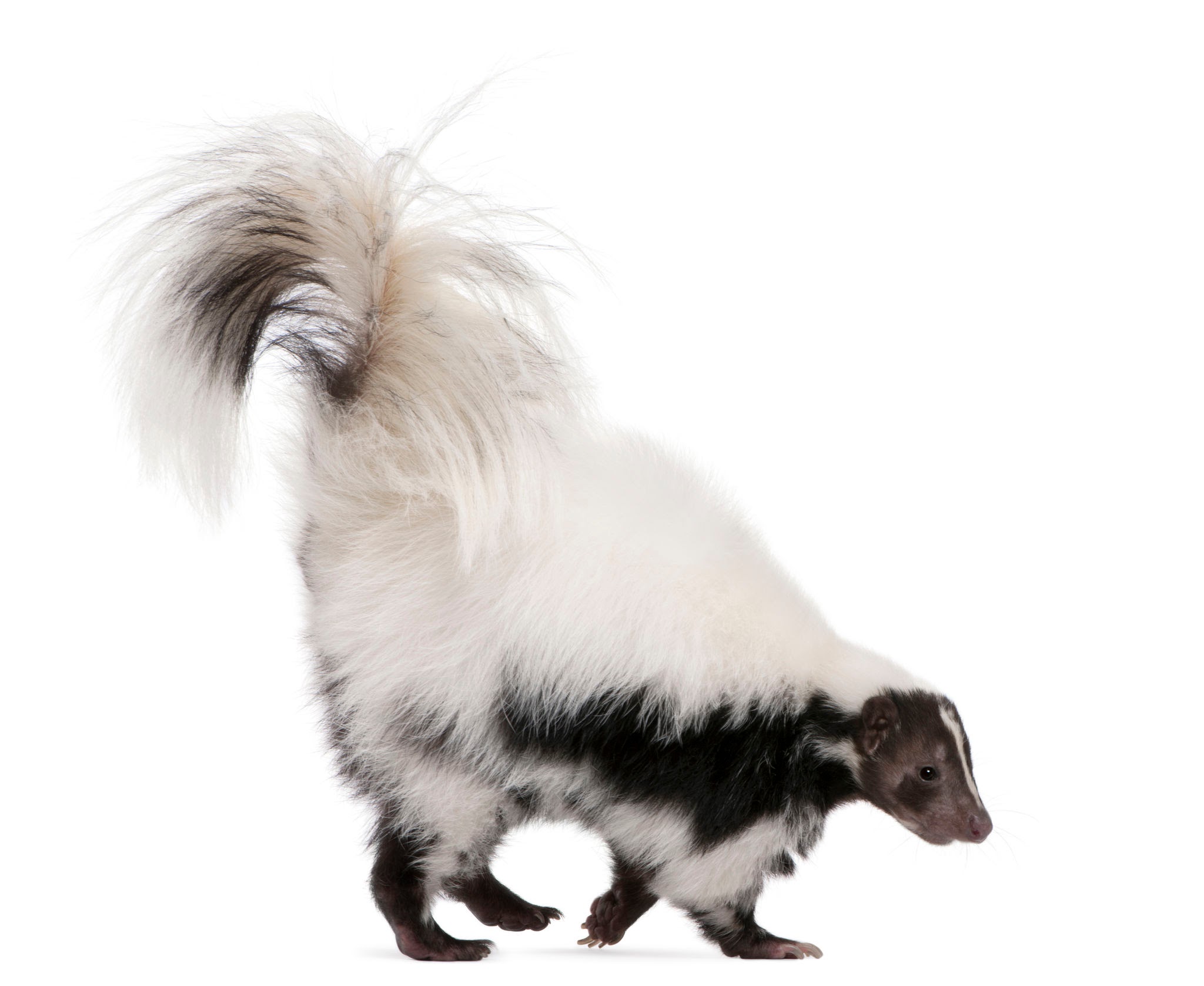
Skunks are medium-sized mammals belonging to the family Mephitidae and are among the most recognizable wildlife species in North America. Best known for their powerful defensive spray, skunks are nocturnal omnivores that frequently live near human developments, including suburban neighborhoods, farms, parks, and urban green spaces.
While skunks provide ecological benefits by consuming insects, grubs, rodents, and other pests, they are often considered nuisance wildlife because of their strong odor, digging behavior, and potential to carry diseases such as rabies. Most conflicts occur when skunks establish dens beneath structures, forage in lawns, or spray pets and people that accidentally approach them.
Although skunks are generally shy and non-aggressive, understanding their behavior and implementing preventative measures can significantly reduce human-wildlife conflicts.
Taxonomy and Classification
- Kingdom: Animalia
- Phylum: Chordata
- Class: Mammalia
- Order: Carnivora
- Family: Mephitidae
- Common Species: Mephitis mephitis (Striped Skunk), Spilogale putorius (Eastern Spotted Skunk), Conepatus leuconotus (Hog-nosed Skunk)
Skunks were once classified within the weasel family but are now recognized as their own distinct family due to unique anatomical and genetic characteristics. Their famous scent glands are among the most specialized defensive adaptations found in mammals.
Identification
Adult skunks are roughly cat-sized mammals with stocky bodies, short legs, and bushy tails.
- Length: 20 to 30 inches including the tail.
- Weight: 6 to 14 pounds.
- Color: Primarily black with bold white stripes or patches.
- Tail: Large, fluffy, and often carried upright when alarmed.
- Movement: Slow, deliberate gait with excellent digging ability.
Key Identification Signs
- Strong musky odor.
- Distinctive black-and-white coloration.
- Small cone-shaped holes in lawns.
- Tracks showing five toes on both front and rear feet.
- Evidence of denning beneath structures.
The striped skunk is the species most commonly encountered throughout the United States and Canada.
Distribution and Habitat
Skunks are widespread throughout North America and can adapt to a variety of environments.
Common habitats include:
- Woodlands
- Grasslands
- Agricultural areas
- Parks and golf courses
- Suburban neighborhoods
- Urban green spaces
Skunks frequently establish dens beneath:
- Porches
- Decks
- Sheds
- Woodpiles
- Rock piles
- Abandoned animal burrows
They prefer sheltered locations that provide protection from predators and harsh weather.
Life Cycle and Reproduction
Breeding typically occurs during late winter.
Mating Season
Most breeding activity occurs between February and March.
Gestation
Pregnancy lasts approximately 60 to 75 days.
Young
Females typically give birth to 4–7 kits during spring.
The young remain in the den for several weeks before gradually accompanying the mother during nighttime foraging trips.
Maturity
Juveniles generally become independent by late summer or early autumn.
Most skunks live two to four years in the wild, although some survive considerably longer under favorable conditions.
Behavior and Conflict
Skunks are primarily nocturnal and spend most of their active time searching for food.
Diet
They are opportunistic omnivores that consume:
- White grubs
- Beetles
- Cutworms
- Mole crickets
- Earthworms
- Small rodents
- Bird eggs
- Fruits and berries
- Pet food
- Garbage
This diet makes skunks valuable natural predators of many common lawn and garden pests.
Defensive Behavior
Before spraying, skunks usually provide several warning signals:
- Foot stomping
- Tail raising
- Turning their back toward the threat
- Hissing or growling
If warnings are ignored, they can accurately spray a sulfur-based liquid up to 10 feet away.
The spray contains thiols and related sulfur compounds that produce an extremely persistent odor capable of lingering for days or weeks.
Damage and Economic Importance
Odor Problems
The most common complaint involving skunks is their defensive spray.
Pets frequently trigger spraying incidents, leading to odors that can spread into homes, vehicles, and outdoor living spaces.
Lawn Damage
Skunks dig small cone-shaped holes while searching for insects and grubs.
- Typically 2–4 inches deep.
- Scattered across turfgrass.
- Most common during late summer and autumn.
While individual holes are minor, repeated digging can create unsightly lawn damage.
Denning Issues
Skunks commonly establish dens beneath buildings and other structures.
Denning can result in:
- Persistent odors.
- Noise beneath floors or decks.
- Potential property damage.
- Increased encounters with pets.
Health Concerns
Although relatively uncommon, skunks are recognized carriers of rabies in many regions.
Any skunk exhibiting unusual behavior should be avoided and reported to local animal control authorities.
Management and Prevention (IPM)
Exclusion
The most effective long-term management strategy is preventing access to potential den sites.
- Seal openings beneath decks and porches.
- Install buried hardware cloth barriers.
- Repair damaged foundations.
- Close gaps around sheds.
Always verify that animals have left before sealing an entry point.
Reduce Food Sources
- Secure garbage containers.
- Bring pet food indoors at night.
- Remove fallen fruit.
- Reduce grub populations in lawns.
- Clean outdoor cooking areas.
Habitat Modification
- Remove brush piles.
- Reduce dense vegetation.
- Organize lumber and firewood stacks.
- Eliminate potential shelter sites.
Deterrents
- Motion-activated sprinklers.
- Motion-sensitive lighting.
- Temporary exclusion fencing.
- Ultrasonic wildlife deterrents in some situations.
Ecological Benefits
Despite their nuisance reputation, skunks provide valuable ecosystem services.
- Control grub populations.
- Reduce numbers of agricultural pests.
- Consume rodents and insects.
- Help maintain ecological balance.
Many lawns damaged by skunk digging actually have underlying grub infestations that would otherwise remain undetected.
Research and Conservation
Modern wildlife management increasingly focuses on coexistence strategies that reduce conflicts while preserving the ecological benefits skunks provide.
Research continues to improve exclusion techniques, understand urban wildlife behavior, and develop humane methods for preventing denning beneath structures.
Conclusion
Skunks are adaptable and beneficial wildlife species that occasionally become nuisance pests when they den near homes, dig in lawns, or spray pets and people. While their defensive odor makes them one of the most notorious mammals in North America, they also provide important natural pest control services. Through exclusion, habitat modification, and removal of attractants, most skunk-related conflicts can be effectively prevented without harming the animals.