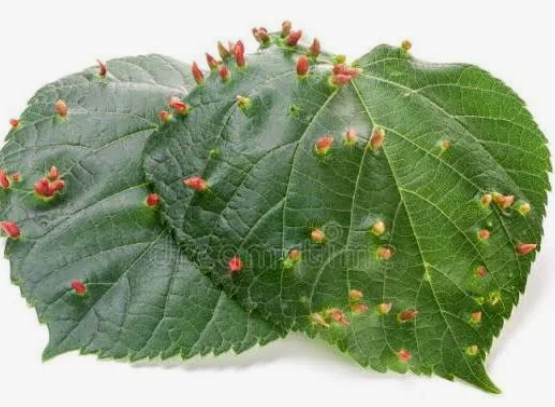
Rust Mites are microscopic plant-feeding mites that attack a wide variety of fruit trees, vegetables, ornamentals, and agricultural crops. Most economically important rust mites belong to the family Eriophyidae, a group of extremely small, elongated mites that includes citrus rust mites, tomato russet mites, apple rust mites, pear rust mites, and related species. Their feeding damages the outer cells of leaves, stems, and fruit, producing characteristic bronzing, russeting, discoloration, curling, and reduced plant vigor. Because the mites are nearly impossible to see without magnification, infestations are usually recognized by plant symptoms rather than by seeing the pests themselves.
Rust mites can range from relatively harmless inhabitants of plants to serious commercial pests. On fruit crops, even superficial feeding may reduce market value by producing rough or discolored fruit. On vegetables such as tomatoes, heavy infestations can cause extensive bronzing of stems and leaves, premature leaf death, and reduced yields.
Taxonomy and Classification
Most mites commonly described as Rust Mites belong to the class Arachnida, subclass Acari, and family Eriophyidae. They are related to other mites and ticks but differ dramatically in body shape and size.
Common examples include:
- Citrus Rust Mite (Phyllocoptruta oleivora) – an important pest of oranges, grapefruit, lemons, and other citrus.
- Tomato Russet Mite (Aculops lycopersici) – attacks tomatoes and other plants in the nightshade family.
- Apple Rust Mite (Aculus schlechtendali) – commonly associated with apple foliage and fruit.
- Pear Rust Mite (Epitrimerus pyri) – feeds on pear leaves and fruit.
Unlike most adult arachnids, which possess four pairs of legs, eriophyid mites have only two pairs of functional legs, both positioned near the front of the body. This unusual anatomy is one of the defining characteristics of the group.
Physical Description
Rust Mites are among the smallest arthropod pests encountered on plants. Adults are generally around 0.1 to 0.2 millimeters long and cannot be reliably identified with the unaided eye.
- Body Shape: Elongated, tapered, worm-like, or carrot-shaped rather than round like many spider mites.
- Color: Usually translucent white, pale yellow, cream, tan, or orange depending on the species and developmental stage.
- Legs: Only two pairs, concentrated near the head end of the body.
- Size: Generally requires a strong hand lens or microscope for proper observation.
- Webbing: Rust mites do not normally produce the obvious silk webbing associated with heavy spider mite infestations.
Because the mites themselves are so difficult to observe, growers commonly detect infestations through the characteristic changes they produce in plant tissue.
Signs of Rust Mite Damage
The word “rust” describes the rusty, bronze, brown, or roughened appearance that often develops after large numbers of mites feed on plant surfaces. Exact symptoms vary considerably according to the mite species and host plant.
- Bronzing: Leaves, stems, or fruit develop a bronze, reddish-brown, or rusty coloration.
- Russeting: Fruit surfaces become rough, dull, corky, or brown.
- Leaf Curling: Young leaves may curl, distort, or become unusually narrow.
- Yellowing: Feeding can produce pale or yellow foliage before tissue eventually turns brown.
- Stem Damage: Some species cause stems to develop a bronze or rusty appearance beginning near the lower portions of the plant.
- Reduced Fruit Quality: Cosmetic damage can make commercially grown fruit unsuitable for the fresh market even when the interior remains edible.
- Plant Decline: Severe infestations may cause leaf drop, stunting, reduced photosynthesis, and lower yields.
Distribution and Habitat
Rust Mites occur throughout much of the world wherever suitable host plants are grown. Different species are associated with particular crops and climatic regions. They can be found in orchards, citrus groves, vegetable fields, greenhouses, nurseries, gardens, and residential landscapes.
Individual mites commonly shelter on the undersides of leaves, around buds, beneath leaf hairs, along stems, or in protected depressions on fruit. Their tiny size allows them to occupy spaces that are inaccessible to many larger predators.
Rust mites can disperse between plants by crawling, but their extremely low body weight also allows them to be transported by wind currents. Infested plants, cuttings, tools, clothing, and other plant material may contribute to movement between growing areas.
Life Cycle
Rust Mites can reproduce rapidly under favorable conditions. Females deposit microscopic eggs on plant surfaces or in protected areas near feeding sites. The immature mites resemble smaller versions of the adults and begin feeding soon after emergence.
Development from egg to reproductive adult may occur rapidly during suitable temperatures, allowing numerous generations to overlap during a growing season. This means a population that initially causes no obvious symptoms can become damaging before the infestation is noticed.
Depending on species and climate, rust mites may survive unfavorable seasons as adults, immature stages, or specialized overwintering females concealed around buds, bark crevices, leaf scars, or other protected plant structures. Activity increases again when temperatures and new plant growth become favorable.
Feeding and Plant Damage
Rust Mites possess specialized piercing mouthparts that puncture individual plant cells and remove their contents. Thousands of microscopic feeding injuries eventually produce visible discoloration and tissue damage.
On citrus, rust mite feeding can produce extensive russeting or bronzing of the fruit surface. Although this may not destroy the fruit internally, its appearance can significantly reduce commercial value.
On tomatoes, Tomato Russet Mites may initially attack lower stems and leaves. Affected tissue develops a greasy bronze or rusty appearance, followed by drying and leaf death. The infestation can gradually progress upward through the plant.
On apples and pears, feeding can affect foliage and developing fruit. Damage may range from minor discoloration to commercially important fruit russeting. However, low populations of certain rust mites may sometimes be tolerated because they can provide food for predatory mites that also attack more destructive pests.
Rust Mites vs. Spider Mites
Rust Mites are frequently confused with Spider Mites, but the two groups have important differences. Spider mites are generally larger, have four pairs of legs as adults, and many species produce visible webbing when populations become high. Rust mites are considerably smaller, elongated rather than broadly oval, have only two pairs of legs, and normally produce no conspicuous webbing.
Plant symptoms can also differ. Spider mites frequently cause fine stippling across leaves, while Rust Mites are more strongly associated with bronzing, russeting, corking, and distorted new growth. Magnification may be necessary for a reliable diagnosis.
Management and Control
Rust Mite management should follow an Integrated Pest Management (IPM) approach. Treatment decisions should be based on the host plant, mite species, level of damage, and whether populations are increasing enough to threaten plant health or crop quality.
- Inspect Plants: Examine bronzed or distorted foliage with magnification to confirm mites before treating.
- Remove Heavily Infested Material: Prune badly affected leaves or stems when practical and dispose of them away from susceptible plants.
- Control Weeds: Some rust mite species survive on weeds and alternate host plants surrounding gardens and production areas.
- Avoid Moving Infested Plants: Inspect nursery plants, seedlings, and cuttings before introducing them into greenhouses or gardens.
- Protect Natural Enemies: Predatory mites and other beneficial arthropods can help suppress pest mite populations.
- Avoid Unnecessary Broad-Spectrum Insecticides: Repeated insecticide use may kill natural predators and contribute to secondary mite outbreaks.
Chemical and Biological Control
When populations exceed acceptable levels, a product specifically labeled for the host plant and target mite may be appropriate. Depending on the crop and species, management programs may use horticultural oils, sulfur products, or registered miticides. Timing and coverage are particularly important because Rust Mites are tiny and frequently shelter in protected plant tissues.
Commercial growers commonly use regular scouting and established treatment thresholds rather than spraying automatically. This is especially important because some pesticide applications can disrupt populations of predatory mites and other natural enemies, potentially allowing pest mites to rebound rapidly.
Are Rust Mites Dangerous to People?
Plant-feeding Rust Mites are not human parasites. They do not infest homes in the same manner as dust mites or stored-product mites, and they are not considered biting pests of people or pets. Their importance comes from their effects on plants and agricultural production.
If microscopic mites are associated with unexplained bites or irritation inside a home, another type of mite should be considered rather than assuming that plant-feeding Rust Mites are responsible.
Ecological Importance
Not every Rust Mite population requires control. Eriophyid mites are part of complex plant-based food webs and serve as prey for predatory mites and other small arthropods. Some species cause little measurable plant injury, while others become economically significant only when environmental conditions favor rapid population growth.
For gardeners and growers, the most effective approach is therefore accurate identification, regular monitoring, protection of beneficial organisms, and treatment only when necessary. Catching an infestation early can prevent the extensive bronzing, russeting, and plant decline associated with severe Rust Mite outbreaks.