Overview
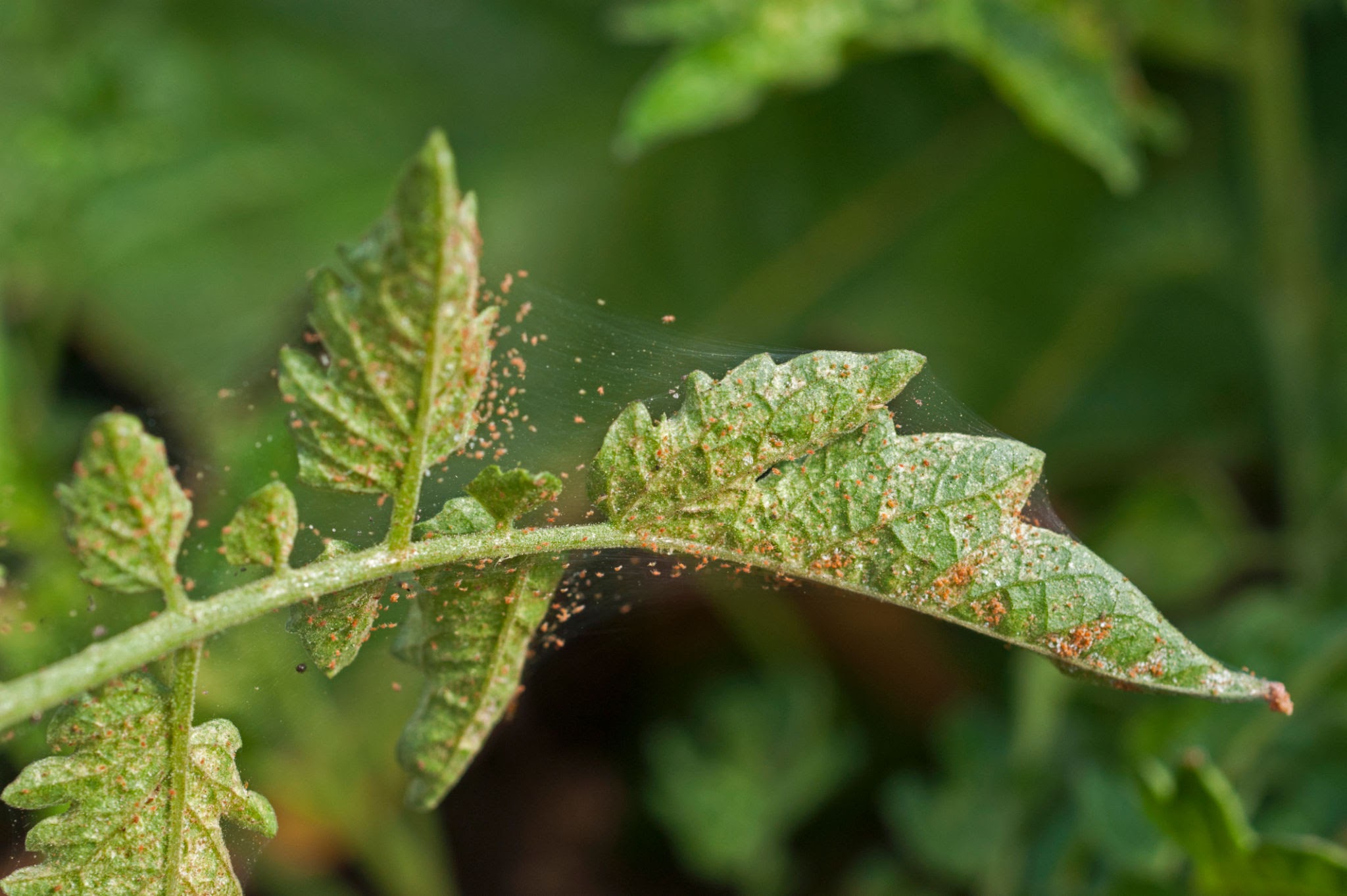
Spider Mites (Family Tetranychidae) are among the most destructive and widespread plant-feeding arachnids in the world. Although commonly mistaken for insects, spider mites are more closely related to spiders, ticks, and other mites. These microscopic pests attack hundreds of species of agricultural crops, ornamental plants, fruit trees, vegetables, houseplants, and landscape shrubs.
Spider mites are notorious for their rapid reproductive rates, resistance to pesticides, and ability to thrive during hot, dry weather. Their feeding activity damages plant cells, causing characteristic stippling, yellowing, bronzing, leaf drop, and reduced plant vigor. Severe infestations can weaken plants significantly and may even result in plant death.
One of the most recognizable signs of an infestation is the production of fine silk webbing that covers leaves, stems, flowers, and fruit during heavy outbreaks.
Taxonomy and Classification
- Kingdom: Animalia
- Phylum: Arthropoda
- Class: Arachnida
- Subclass: Acari
- Order: Trombidiformes
- Family: Tetranychidae
The family Tetranychidae contains more than 1,200 described species worldwide. Several species are major agricultural pests.
Important species include:
- Two-Spotted Spider Mite (Tetranychus urticae)
- Red Spider Mite (Tetranychus cinnabarinus)
- European Red Mite (Panonychus ulmi)
- Southern Red Mite (Oligonychus ilicis)
- Spruce Spider Mite (Oligonychus ununguis)
Among these, the Two-Spotted Spider Mite is considered one of the most economically important plant pests worldwide.
Physical Description
Spider mites are extremely small, usually measuring less than 1 millimeter in length.
- Size: Approximately 0.2–0.8 mm long.
- Body Shape: Oval and slightly rounded.
- Legs: Eight legs as adults.
- Color: Green, yellow, orange, red, brown, or black depending on species and season.
- Eyes: Simple eyes capable of detecting light and movement.
The Two-Spotted Spider Mite is especially recognizable because of the two dark spots visible through its translucent body.
Because of their tiny size, infestations often go unnoticed until plant damage becomes obvious.
Distribution and Habitat
Spider mites occur on every continent except Antarctica and are found in virtually every agricultural and horticultural region of the world.
Common habitats include:
- Vegetable gardens
- Greenhouses
- Fruit orchards
- Agricultural fields
- Landscape plantings
- Nurseries
- Indoor houseplants
- Flower gardens
Spider mites thrive in:
- Hot temperatures
- Low humidity
- Drought-stressed plants
- Dusty environments
- Protected greenhouse conditions
Populations often explode during summer heat waves when natural predators become less effective.
Life Cycle
Spider mites undergo several developmental stages:
- Egg
- Larva
- Protonymph
- Deutonymph
- Adult
Egg Stage
Females deposit tiny spherical eggs on leaf undersides, often protected within webbing.
A single female may lay 50 to 200 eggs during her lifetime.
Larval Stage
Newly hatched larvae possess only six legs and begin feeding almost immediately.
Nymphal Stages
After molting, nymphs develop eight legs and continue feeding aggressively.
Adult Stage
Adults reproduce rapidly, particularly during warm weather.
Under ideal conditions, a complete life cycle may be completed in as little as 5 to 10 days, allowing multiple generations each month.
This rapid development explains why populations can suddenly explode from a few individuals to thousands in a short period.
Behavior and Feeding
Spider mites feed using specialized piercing-sucking mouthparts.
Rather than consuming entire leaves, they puncture individual plant cells and extract their contents.
This feeding causes:
- Loss of chlorophyll
- Reduced photosynthesis
- Cell destruction
- Water stress
- Premature aging of leaves
As infestations grow, mites spin fine silk webbing that serves several purposes:
- Protection from predators
- Shelter from environmental conditions
- Movement between leaves
- Protection of eggs
Heavy webbing is often the most obvious indicator of a severe infestation.
Damage and Economic Importance
Spider mites are among the most economically damaging pests in agriculture and horticulture.
Leaf Stippling
Early infestations produce tiny white or yellow spots known as stippling.
This speckled appearance results from individual cells being destroyed.
Leaf Bronzing
As feeding continues, leaves may develop a bronze, copper, or scorched appearance.
Premature Leaf Drop
Heavily damaged plants often shed leaves early.
Reduced Yield
Crop plants may produce fewer flowers, fruits, or vegetables.
Plant Death
Severe infestations can kill seedlings, ornamentals, and stressed plants.
Commonly attacked plants include:
- Tomatoes
- Beans
- Cucumbers
- Strawberries
- Peppers
- Roses
- Marigolds
- Azaleas
- Boxwoods
- Houseplants
- Fruit trees
Management and Control (IPM)
Successful management requires an Integrated Pest Management (IPM) approach.
Monitoring
- Inspect leaf undersides regularly.
- Look for stippling and webbing.
- Use a hand lens to confirm mite presence.
- Monitor vulnerable plants during hot weather.
Cultural Controls
- Maintain proper irrigation.
- Reduce plant stress.
- Increase humidity when possible.
- Avoid excessive nitrogen fertilization.
- Minimize dust around plants.
Physical Controls
Strong streams of water can remove large numbers of mites from plants.
Repeated washing is often effective for ornamentals and houseplants.
Biological Control
Numerous natural enemies feed on spider mites.
- Predatory Mites (Phytoseiulus persimilis)
- Lady Beetles
- Lacewings
- Minute Pirate Bugs
- Predatory Thrips
Conserving these beneficial organisms can significantly reduce mite populations.
Chemical Control
Spider mites frequently develop resistance to pesticides, making chemical management challenging.
When treatment becomes necessary:
- Use insecticidal soaps.
- Apply horticultural oils.
- Use labeled miticides or acaricides.
- Rotate products to reduce resistance.
Avoid unnecessary broad-spectrum insecticides, which often kill beneficial predators and worsen mite outbreaks.
Research and Conservation
Spider mites remain one of the most studied agricultural pests due to their economic importance and remarkable ability to develop pesticide resistance.
Current research focuses on:
- Biological control programs
- Predatory mite effectiveness
- Pesticide resistance management
- Climate change impacts
- Host plant resistance
- Improved monitoring methods
Researchers continue developing sustainable solutions that reduce chemical dependence while preserving beneficial insects and environmental health.
Conclusion
Spider mites are among the most destructive plant-feeding arachnids found in gardens, greenhouses, agricultural fields, and landscapes worldwide. Their rapid reproduction, ability to thrive in hot and dry conditions, and resistance to many pesticides make them particularly challenging pests. Early detection, proper plant care, biological control, and integrated pest management strategies remain the most effective methods for preventing severe infestations and protecting plant health.