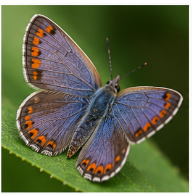
The Purplish Copper Butterfly (Lycaena helloides) is one of North America’s most vibrant native butterflies. Named for the iridescent purplish sheen displayed on portions of its wings, this attractive member of the copper butterfly family is commonly found in wetlands, marshes, meadows, and riparian habitats throughout much of the United States and Canada. Although small in size, the Purplish Copper plays an important ecological role as both a pollinator and a valuable component of healthy wetland ecosystems.
Unlike agricultural pests, the Purplish Copper Butterfly causes little to no economic damage. Its caterpillars feed primarily on wild plants in the knotweed family, while adults visit a wide variety of flowering plants for nectar. Because its populations are closely tied to healthy wetlands and native vegetation, this butterfly is often considered an indicator of high-quality natural habitats.
Taxonomy and Classification
The Purplish Copper Butterfly belongs to the family Lycaenidae, which includes coppers, hairstreaks, and blues. This family contains many of the world’s smallest and most colorful butterflies.
- Order: Lepidoptera
- Family: Lycaenidae
- Genus: Lycaena
- Species: Lycaena helloides
- Common Name: Purplish Copper Butterfly
The species is closely related to other North American copper butterflies, many of which occupy specialized habitats associated with wetlands or native grasslands.
Physical Description
The Purplish Copper is a medium-sized butterfly with brilliant coloration that makes it easy to recognize.
- Wingspan: 25–35 mm
- Upper Wings: Bright orange with black spots and a distinctive purplish iridescent border, particularly in females
- Underside: Light gray to tan with black spots and orange markings
- Body: Slender and covered with fine hairs
- Antennae: Black-and-white banded with clubbed tips
Males often display brighter orange coloration, while females usually exhibit more extensive dark borders with a noticeable purple sheen.
Distribution and Habitat
The Purplish Copper Butterfly is widely distributed across western and central North America, extending into portions of Canada and the northern United States.
Preferred habitats include:
- Wetlands
- Marshes
- Stream corridors
- Riparian areas
- Wet meadows
- Prairie grasslands
- Roadside ditches
- Open fields with native flowering plants
Moist environments containing abundant host plants are essential for successful reproduction.
Life Cycle
Like all butterflies, the Purplish Copper undergoes complete metamorphosis.
- Egg: Females lay individual eggs on host plants.
- Larva: Green caterpillars feed on leaves of knotweed and dock species.
- Pupa: Pupation occurs among vegetation or leaf litter.
- Adult: Adults emerge during spring and summer, with multiple generations occurring in warmer regions.
Depending on climate, two to four broods may be produced each year.
Behavior and Ecology
Adult Purplish Copper Butterflies are active during sunny weather, frequently visiting flowers to feed on nectar. Males often patrol territories near wetlands while searching for receptive females.
The caterpillars feed primarily on plants in the buckwheat family (Polygonaceae), including:
- Smartweeds (Persicaria)
- Docks (Rumex)
- Knotweeds
- Other native wetland plants
Adults nectar on a wide variety of flowering species, contributing to the pollination of native wildflowers throughout their range.
Ecological Importance
The Purplish Copper Butterfly provides several ecological benefits.
- Pollination: Visits numerous native flowering plants.
- Supports Biodiversity: Important member of wetland insect communities.
- Wildlife Food Source: Eggs, caterpillars, and adults provide food for birds, spiders, and predatory insects.
- Habitat Indicator: Healthy populations often indicate high-quality wetlands and native plant communities.
Because its larvae feed primarily on wild native plants, the species rarely comes into conflict with agriculture.
Management and Conservation
No control measures are recommended because the Purplish Copper Butterfly is a beneficial native species.
- Protect wetlands and riparian habitats.
- Preserve native host plants.
- Plant nectar-producing wildflowers.
- Avoid unnecessary insecticide applications.
- Maintain diverse native landscapes that support butterflies and other pollinators.
Habitat conservation is the most effective way to ensure healthy populations.
Conservation and Research
Researchers study the Purplish Copper Butterfly to better understand wetland ecology, butterfly migration, plant specialization, and pollinator conservation. Because the species depends on healthy native vegetation, changes in its distribution can help scientists monitor habitat degradation and the impacts of climate change on wetland ecosystems.
Conclusion
The Purplish Copper Butterfly (Lycaena helloides) is a beautiful native pollinator that brightens wetlands, marshes, and meadows across much of North America. Its striking orange and purplish wings, specialized caterpillars, and important ecological role make it an excellent representative of healthy wetland environments. Rather than being considered a pest, this butterfly is an important contributor to biodiversity and an indicator of thriving natural ecosystems.