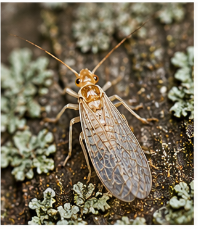
Barklice, traditionally classified in the order Psocoptera (now included within Psocodea), are small, soft-bodied insects commonly found on tree bark, branches, rocks, fences, and other outdoor surfaces. Unlike their indoor relatives, the booklice, barklice live almost exclusively outdoors where they feed on algae, fungi, lichens, pollen, and other microscopic organic material. Although they are sometimes mistaken for pests because they gather in large numbers, barklice are completely harmless to trees, structures, humans, and pets. In fact, they serve as beneficial scavengers that help clean bark surfaces and contribute to healthy forest ecosystems.
Some barklice species are well known for producing delicate silk webbing that covers sections of tree trunks or branches. These communal webs often surprise homeowners, but they do not harm the tree and disappear naturally as the insects mature.
Taxonomy and Classification
Barklice belong to a primitive group of insects closely related to booklice and parasitic lice. Modern classification places them within the order Psocodea, although the name Psocoptera remains widely used in field guides and pest literature.
- Order: Psocodea (formerly Psocoptera)
- Common Name: Barklice
- Related Groups: Booklice and parasitic lice
Thousands of barklice species occur worldwide, with hundreds found throughout North America.
Physical Description
Barklice are tiny insects that are easily overlooked unless large colonies are present.
- Length: 1–6 mm
- Color: Pale gray, tan, brown, or translucent
- Body: Soft-bodied and slender
- Antennae: Long, thread-like antennae
- Eyes: Large compound eyes relative to body size
- Wings: Some species are winged, while others are wingless
When disturbed, barklice move quickly across bark surfaces but are weak fliers.
Distribution and Habitat
Barklice occur on every continent except Antarctica and thrive wherever moisture supports algae, fungi, and lichens.
Common habitats include:
- Tree trunks and branches
- Forest canopies
- Woodland edges
- Parks
- Gardens
- Shrubs
- Wooden fences
- Humid outdoor environments
They are especially common during warm, humid weather when microbial growth is abundant.
Life Cycle
Barklice undergo simple metamorphosis, developing gradually from egg to adult.
- Egg: Females deposit eggs on bark, leaves, or other protected outdoor surfaces.
- Nymph: Young barklice resemble miniature adults and molt several times as they grow.
- Adult: Mature insects continue feeding and reproducing throughout favorable weather conditions.
Several generations may occur each year in warm climates.
Behavior and Ecology
Barklice are scavengers rather than plant feeders. Instead of chewing living plant tissue, they graze on microscopic organisms growing on bark and foliage.
Their diet includes:
- Algae
- Lichens
- Fungal spores
- Molds
- Pollen
- Dead organic matter
- Microbial films
Some species live in surprisingly large colonies connected by thin sheets of silk. These communal silk coverings protect the insects while they feed across the bark surface and are sometimes mistaken for spider webs.
Benefits and Ecological Importance
Barklice perform several valuable ecological functions.
- Clean Tree Bark: Remove algae, molds, fungi, and organic debris.
- Nutrient Cycling: Help recycle microscopic organic material.
- Support Biodiversity: Serve as food for spiders, birds, predatory insects, and other wildlife.
- Natural Surface Maintenance: Graze harmlessly without injuring living bark.
- Environmental Indicators: Often associated with healthy, humid forest ecosystems.
Unlike bark beetles or wood-boring insects, barklice do not tunnel into wood or damage living trees.
Management and Prevention
Barklice require no control and should generally be left undisturbed.
- Do not apply insecticides to trees because of barklice.
- Allow colonies to disperse naturally.
- Recognize silk webbing as harmless.
- Preserve healthy tree habitats.
- Avoid unnecessary pesticide use that may harm beneficial insects.
If silk webbing is considered unsightly, it can simply be washed away with water without harming the tree.
Conservation and Research
Entomologists study barklice because of their unique social behavior, silk production, and role in maintaining healthy forest ecosystems. Their feeding habits help regulate microbial growth on bark, while their sensitivity to humidity and habitat disturbance makes them useful indicators of environmental conditions. Research continues to improve understanding of their evolutionary relationship with booklice and other members of the order Psocodea.
Conclusion
Barklice are harmless outdoor insects that quietly contribute to healthier forests by feeding on algae, fungi, lichens, and organic debris covering tree bark. Despite occasionally forming large colonies or producing silky webs, they pose no threat to trees, homes, or people. Their presence is generally a sign of a healthy, biologically active environment, making them valuable members of North America’s native insect community.