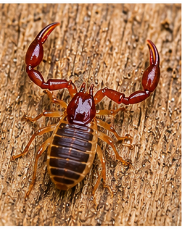
Pseudoscorpions are tiny arachnids that resemble miniature scorpions but lack the long tail and venomous stinger associated with true scorpions. Despite their intimidating appearance, these fascinating creatures are completely harmless to humans and are considered highly beneficial predators. They prey on mites, booklice, springtails, small flies, and other tiny arthropods, making them valuable natural pest controllers in forests, gardens, homes, libraries, and agricultural settings.
Often overlooked because of their small size, pseudoscorpions are among the oldest groups of arachnids, with ancestors dating back more than 380 million years. They spend their lives hidden beneath bark, in leaf litter, beneath stones, inside soil, and occasionally within homes where they quietly hunt microscopic pests.
Taxonomy and Classification
Pseudoscorpions belong to the class Arachnida, making them close relatives of spiders, scorpions, ticks, mites, and harvestmen. Unlike insects, they possess eight legs as adults and lack wings and antennae.
- Kingdom: Animalia
- Phylum: Arthropoda
- Class: Arachnida
- Order: Pseudoscorpiones
- Common Name: Pseudoscorpions or False Scorpions
More than 3,500 species have been described worldwide, with numerous species occurring throughout North America.
Physical Description
Pseudoscorpions closely resemble true scorpions but are much smaller and lack the distinctive tail.
- Length: 2–8 mm
- Color: Brown, reddish-brown, tan, or amber
- Body: Flattened and oval
- Pincers: Large pedipalps equipped with venom glands used to capture prey
- Tail: None
- Legs: Eight walking legs
- Eyes: Usually two to four simple eyes, although some cave species lack eyes entirely
Their oversized pincers give them a scorpion-like appearance, but without a stinger they pose absolutely no danger to people or pets.
Distribution and Habitat
Pseudoscorpions have a worldwide distribution and occupy a remarkable variety of habitats.
Common habitats include:
- Leaf litter
- Forest soils
- Under tree bark
- Beneath rocks and logs
- Caves
- Bird nests
- Animal burrows
- Compost piles
- Libraries and book collections
- Basements and crawl spaces
Indoors they are most often encountered in damp locations where prey such as booklice and mites are abundant.
Life Cycle
Pseudoscorpions undergo a gradual developmental process without complete metamorphosis.
- Egg: Females carry developing eggs inside a brood pouch attached beneath the abdomen.
- Juveniles: Young pseudoscorpions resemble miniature adults and molt several times as they grow.
- Adult: Mature individuals continue hunting and reproducing for several years.
Many species may live between two and four years, considerably longer than many similarly sized arthropods.
Behavior and Ecology
Pseudoscorpions are active predators that rely on stealth rather than webs or traps. Using their powerful pincers, they seize prey before injecting a mild venom that quickly immobilizes it. Digestive enzymes are then used to liquefy the prey’s tissues for consumption.
Their diet commonly includes:
- Booklice (Psocids)
- Mites
- Springtails
- Small flies
- Aphids
- Tiny beetle larvae
- Thrips
- Other microscopic arthropods
One of their most fascinating behaviors is phoresy, a form of hitchhiking. Pseudoscorpions grasp the legs of flies, beetles, bees, or other insects with their pincers and ride them to new habitats without harming their temporary host.
Benefits and Ecological Importance
Pseudoscorpions provide valuable natural pest control in both natural and human environments.
- Control Mites: Reduce populations of household and stored-product mites.
- Consume Booklice: Help suppress booklice in homes, museums, and libraries.
- Reduce Small Pest Populations: Feed on numerous nuisance arthropods.
- Support Biodiversity: Important predators within soil and leaf litter ecosystems.
- Indicators of Healthy Habitats: Their presence often reflects diverse, undisturbed environments.
Because they prey upon many nuisance insects, they are considered beneficial rather than pests.
Management and Prevention
Pseudoscorpions require no control and should be preserved whenever possible.
- Leave individuals undisturbed if found indoors.
- Avoid unnecessary pesticide applications.
- Reduce excessive indoor moisture if they become common.
- Maintain healthy outdoor habitats that support beneficial predators.
- Recognize them as harmless allies rather than household pests.
If one is discovered inside a home, simply relocating it outdoors is usually the best option.
Conservation and Research
Pseudoscorpions continue to attract scientific interest because of their unique hunting behavior, venom chemistry, silk production, and remarkable hitchhiking strategy. Researchers are also studying their potential role as natural biological control agents against stored-product pests and household nuisance insects. Despite their ecological importance, many species remain poorly documented due to their secretive lifestyle and microscopic size.
Conclusion
Pseudoscorpions are tiny but highly beneficial arachnids that quietly help control mites, booklice, springtails, and other small pests in forests, gardens, and even homes. Although they resemble miniature scorpions, they lack both a stinger and any ability to harm humans. Their fascinating biology, including their famous hitchhiking behavior and efficient predatory lifestyle, makes them one of nature’s most overlooked yet valuable allies.