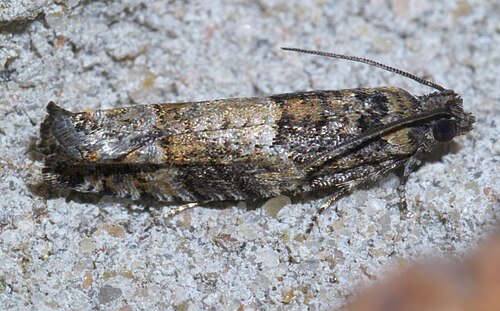
Pseudexentera moths are a diverse group of small leaf-rolling moths belonging to the genus Pseudexentera in the family Tortricidae. Native to North America, these moths are commonly found in forests, woodlands, parks, and ornamental landscapes where their caterpillars feed on the leaves of deciduous trees and shrubs. The larvae are well known for their habit of rolling or folding leaves together with silk to create protective shelters where they feed safely away from predators.
Most Pseudexentera species are considered minor forest insects and rarely cause significant economic damage. However, localized outbreaks may result in noticeable defoliation of ornamental trees or woodland vegetation. Their populations are usually kept in balance by birds, predatory insects, spiders, and numerous parasitic wasps.
Taxonomy and Classification
Pseudexentera belongs to the family Tortricidae, commonly called leaf roller moths. This family contains thousands of species worldwide, many of which are economically important pests of fruit trees, ornamental plants, and forests.
- Order: Lepidoptera
- Family: Tortricidae
- Genus: Pseudexentera
- Common Name: Pseudexentera Leaf Roller Moths
Several species occur throughout eastern and central North America, with many specializing on particular host trees such as oaks, maples, birches, and other hardwoods.
Physical Description
Pseudexentera moths are small, well-camouflaged insects that blend easily into tree bark and dead leaves.
- Wingspan: 15–22 mm
- Color: Brown, gray, tan, or reddish-brown with subtle bands and mottled markings
- Body: Compact with folded wings held roof-like over the abdomen
- Larvae: Slender green or pale caterpillars with a brown head capsule
- Pupae: Brown and enclosed within rolled leaves
Their cryptic coloration provides excellent camouflage while resting on bark, twigs, and dried foliage.
Distribution and Habitat
Pseudexentera moths are native to North America and occur throughout much of the eastern United States and southern Canada.
Preferred habitats include:
- Deciduous forests
- Mixed woodlands
- Forest edges
- Parks
- Residential landscapes
- Botanical gardens
- Tree nurseries
- Urban green spaces
Most species are closely associated with mature hardwood trees that provide food for developing caterpillars.
Life Cycle
Pseudexentera moths undergo complete metamorphosis, progressing through four life stages.
- Egg: Females deposit eggs on twigs, buds, or leaves of host plants.
- Larva: Caterpillars hatch and immediately begin rolling leaves together with silk to form protective feeding shelters.
- Pupa: Pupation occurs inside the rolled leaf or another protected location.
- Adult: Adult moths emerge during spring or early summer to mate and begin the next generation.
Most species complete one generation per year, although development varies with climate and location.
Behavior and Damage
The caterpillars are responsible for virtually all plant injury associated with Pseudexentera moths.
Typical feeding behavior includes:
- Rolling leaves together with silk
- Feeding within protected leaf shelters
- Consuming developing buds
- Skeletonizing young foliage
- Occasionally feeding on flowers or tender shoots
While individual leaf rolls are generally harmless, large populations may produce noticeable defoliation on ornamental or forest trees. Fortunately, healthy trees usually recover quickly without long-term effects.
Host Plants
Different Pseudexentera species feed on various deciduous trees and shrubs.
Common host plants include:
- Oak
- Maple
- Birch
- Beech
- Cherry
- Hawthorn
- Apple
- Numerous ornamental shrubs
Many species specialize on only one or a few closely related host plants.
Management and Prevention
Integrated Pest Management (IPM) provides effective control when populations become problematic.
- Inspect Trees: Monitor young leaves during spring for rolled foliage.
- Prune Infested Leaves: Remove and destroy rolled leaves containing caterpillars.
- Encourage Natural Enemies: Birds, spiders, predatory insects, and parasitic wasps naturally suppress populations.
- Maintain Tree Health: Healthy trees tolerate minor feeding with little lasting damage.
- Target Young Larvae: Biological controls such as Bacillus thuringiensis (Bt) may be effective if treatment becomes necessary.
Broad-spectrum insecticides are rarely justified because natural predators typically provide excellent long-term control.
Conservation and Research
Pseudexentera moths continue to be studied because of their specialized host relationships, leaf-rolling behavior, and interactions with forest ecosystems. Researchers use these moths to better understand forest biodiversity, plant-insect relationships, and the role of natural enemies in controlling native leaf roller populations.
Conclusion
Pseudexentera moths are native North American leaf roller moths whose caterpillars create distinctive rolled-leaf shelters while feeding on deciduous trees and shrubs. Although occasional outbreaks can cause temporary defoliation, these insects rarely threaten healthy trees and are usually controlled naturally by predators and parasitoids. Their unique feeding behavior and close association with forest ecosystems make them an important component of North America’s native insect fauna.