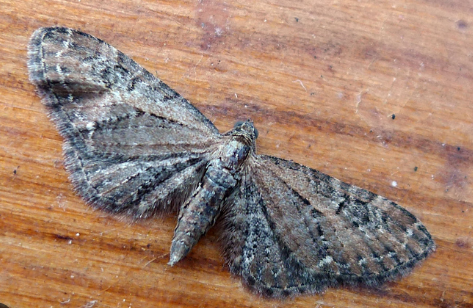
Pug Moths are a remarkably diverse group of small geometer moths belonging to the genus Eupithecia. With more than 1,400 described species worldwide, they represent one of the largest genera of moths on Earth. Although individually small and often overlooked, pug moths play important ecological roles as herbivores, pollinators, and food sources for birds, bats, spiders, and predatory insects. Their larvae, commonly known as inchworms or loopers, feed on a wide variety of flowers, leaves, buds, seeds, and developing fruits, with many species specializing on only one or a few host plants.
Most Eupithecia species are harmless and occur in low numbers, causing little noticeable damage to their host plants. However, their incredible diversity and highly specialized feeding habits have made them an important group for scientists studying evolution, ecology, and plant-insect relationships.
Taxonomy and Classification
Pug moths belong to the family Geometridae, commonly known as geometer moths. Their caterpillars are famous for their distinctive looping movement, which results from having fewer abdominal prolegs than most caterpillars.
- Order: Lepidoptera
- Family: Geometridae
- Subfamily: Larentiinae
- Genus: Eupithecia
- Common Name: Pug Moths
North America alone is home to hundreds of Eupithecia species, many of which are difficult to distinguish without microscopic examination.
Physical Description
Pug moths are among the smallest members of the geometer moth family and rely heavily on camouflage.
- Wingspan: 12–25 mm
- Color: Gray, brown, tan, olive, or cream with fine wavy crosslines
- Body: Slender with narrow forewings
- Antennae: Thread-like, with males often possessing slightly feathered antennae
- Larvae: Thin inchworms that closely resemble twigs or flower stems
The subtle wing markings allow adults to blend almost perfectly into bark, leaves, and lichen-covered surfaces during the day.
Distribution and Habitat
Pug moths have an almost worldwide distribution and occupy an extraordinary range of habitats.
Common habitats include:
- Deciduous forests
- Conifer forests
- Woodland edges
- Gardens
- Shrublands
- Meadows
- Prairies
- Mountain ecosystems
- Urban parks
Individual species are often closely associated with the distribution of their preferred host plants.
Life Cycle
Pug moths undergo complete metamorphosis, progressing through egg, larva, pupa, and adult stages.
- Egg: Females deposit tiny eggs on suitable host plants.
- Larva: Inchworm caterpillars feed on flowers, leaves, buds, seeds, or developing fruit depending on the species.
- Pupa: Pupation typically occurs in leaf litter or shallow soil.
- Adult: Adults emerge during spring, summer, or autumn depending on the species and climate.
Many species produce one generation each year, while others may have multiple broods in warmer regions.
Behavior and Ecology
Pug moth caterpillars display remarkable ecological diversity. While many species feed on foliage, others specialize on flowers, seed heads, or developing fruits. A few unusual species are even known to prey on small insects instead of feeding on plants.
Common food sources include:
- Wildflowers
- Shrubs
- Trees
- Herbaceous plants
- Seed heads
- Flower buds
- Developing fruits
Adult moths are primarily nocturnal and frequently visit flowers or artificial lights after dark.
Economic Importance
Most pug moths are considered minor herbivores with little economic significance.
- Generally Harmless: Most species occur at low population densities.
- Occasional Ornamentals: Some larvae may feed on ornamental shrubs and flowers.
- Specialized Feeders: Many species rely on only one or a few native plants.
- Wildlife Value: Caterpillars provide food for birds and beneficial insects.
Significant outbreaks are uncommon, and healthy plants usually tolerate minor feeding without lasting damage.
Management and Prevention
Control is rarely necessary because most species are beneficial components of natural ecosystems.
- Monitor valuable ornamental plants if feeding becomes noticeable.
- Hand-remove caterpillars when practical.
- Encourage birds and beneficial insects that naturally regulate populations.
- Avoid unnecessary insecticide applications.
- Maintain diverse native landscapes that support ecological balance.
Natural predators and parasitoids usually prevent populations from reaching damaging levels.
Conservation and Research
Pug moths are among the most intensively studied geometer moths because of their enormous species diversity and highly specialized host relationships. Scientists continue to investigate their evolution, camouflage, genetics, plant specialization, and adaptation to changing habitats. Their sensitivity to environmental changes also makes some species useful indicators of ecosystem health.
Conclusion
Pug moths (Eupithecia spp.) are small but extraordinarily diverse geometer moths found throughout much of the world. Their cryptic appearance, specialized caterpillars, and close relationships with native plants make them fascinating members of forest and garden ecosystems. Although a few species occasionally feed on ornamental plants, the vast majority are harmless and contribute to biodiversity while serving as important components of natural food webs.