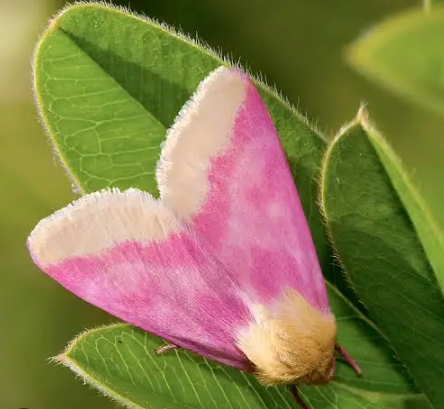
The Primrose Moth (Schinia florida) is one of North America’s most colorful native moths, admired for its vivid pink, white, and yellow wing patterns that closely resemble the blossoms of evening primrose flowers. Unlike many moths that rely solely on camouflage, the Primrose Moth spends much of the day resting inside the flowers of its host plant, where its brilliant coloration blends remarkably well with the petals. Although its caterpillars feed on evening primrose plants, they rarely occur in numbers large enough to cause significant damage, making this species an interesting component of native meadow ecosystems rather than an important agricultural pest.
The Primrose Moth belongs to a fascinating group of flower moths in the genus Schinia, many of which have evolved close relationships with specific flowering plants. Their specialized lifestyles make them valuable subjects for ecological and evolutionary research.
Taxonomy and Classification
The Primrose Moth belongs to the family Noctuidae, one of the largest families of moths. Within this family, Schinia species are commonly known as flower moths because many spend much of their adult lives on the blossoms of their preferred host plants.
- Order: Lepidoptera
- Family: Noctuidae
- Genus: Schinia
- Species: Schinia florida
- Common Name: Primrose Moth
The genus contains more than 100 North American species, many of which specialize on only one or a few closely related flowering plants.
Physical Description
The Primrose Moth is widely regarded as one of the most attractive native moths in eastern North America.
- Wingspan: 25–30 mm
- Color: Bright pink, yellow, white, and olive-green markings
- Body: Slender with narrow forewings
- Antennae: Thread-like, typical of noctuid moths
- Camouflage: Wing coloration closely matches evening primrose blossoms.
When resting inside flowers during daylight hours, the moth can be remarkably difficult to detect despite its brilliant colors.
Distribution and Habitat
The Primrose Moth occurs throughout much of eastern and central North America wherever its host plants are abundant.
Typical habitats include:
- Native meadows
- Prairies
- Roadsides
- Old fields
- Open woodland edges
- Pollinator gardens
- Areas containing evening primrose (Oenothera) species
The moth is most commonly encountered during the summer blooming season of its host plants.
Behavior and Ecology
Primrose Moths have evolved an unusually close relationship with evening primrose plants. Adults spend much of the day resting inside open flowers, where their coloration provides excellent camouflage from birds and other predators.
At night, they become active and visit blossoms while searching for mates and suitable egg-laying sites.
Females deposit eggs directly on host plants so that newly hatched caterpillars immediately have access to food.
Life Cycle
Like all moths, the Primrose Moth undergoes complete metamorphosis.
- Egg: Eggs are laid on flower buds and host foliage.
- Larva: Caterpillars feed on flower buds, flowers, seed capsules, and foliage of evening primrose plants.
- Pupa: Pupation occurs in the soil or leaf litter.
- Adult: Adults emerge during the flowering season and begin the reproductive cycle.
Most populations produce one generation annually, although warmer southern regions may support additional broods.
Host Plants and Feeding
The larvae are highly specialized feeders that develop primarily on plants in the evening primrose family.
Common host plants include:
- Evening Primrose (Oenothera spp.)
- Sundrops (Oenothera fruticosa)
- Other native primrose relatives
Unlike many agricultural caterpillars, their feeding is usually light and confined to relatively small portions of the host plant.
Economic Importance
The Primrose Moth is generally considered a harmless native species.
- Rarely Damages Plants: Feeding seldom affects plant health.
- Supports Biodiversity: Part of healthy native meadow ecosystems.
- Pollinator Association: Adults may contribute to pollination while visiting flowers.
- Wildlife Resource: Serves as food for birds, spiders, and predatory insects.
Because infestations are uncommon and feeding damage is minimal, pest management is rarely necessary.
Management and Prevention
No control measures are recommended for Primrose Moths.
- Preserve native wildflower habitats.
- Avoid unnecessary insecticide applications on flowering plants.
- Encourage diverse native plant communities.
- Maintain evening primrose populations for native pollinators and specialized insects.
Gardeners who cultivate native wildflowers often welcome this attractive moth as part of a healthy ecosystem.
Conservation and Research
Scientists study Schinia moths because of their remarkable specialization on particular flowering plants. Their close evolutionary relationships with native wildflowers provide valuable insight into insect-plant coevolution, pollination ecology, and habitat conservation. Maintaining native prairie and meadow habitats is important for preserving healthy populations of these colorful flower moths.
Conclusion
The Primrose Moth (Schinia florida) is one of North America’s most beautiful native moths, famous for its vivid pink and yellow coloration and close association with evening primrose flowers. Although its caterpillars feed on primrose plants, they rarely cause noticeable damage and instead contribute to the diversity of native ecosystems. Protecting wildflower habitats helps ensure that this remarkable flower moth continues to thrive throughout its natural range.