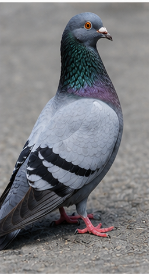
Pigeons are familiar urban birds frequently seen around homes, commercial buildings, bridges, parks, warehouses, and agricultural facilities. Most nuisance pigeons in the United States are feral descendants of domesticated rock pigeons. Although pigeons are intelligent and adaptable animals, large flocks can create sanitation concerns, damage buildings, contaminate stored products, and interfere with normal property use. Effective pigeon management focuses on removing food, water, shelter, and nesting opportunities rather than relying on short-term removal alone.
Taxonomy and Classification
- Common name: Rock pigeon, rock dove, or feral pigeon
- Scientific name: Columba livia
- Order: Columbiformes
- Family: Columbidae
- Type: Bird
Feral pigeons descended primarily from rock pigeons domesticated by people thousands of years ago. Their natural ancestors nested on cliffs and rocky ledges. Modern buildings provide similar elevated surfaces, making cities especially suitable pigeon habitats. Window ledges, roof edges, signs, air-conditioning equipment, parking structures, and bridge supports can all imitate natural cliff environments.
Identification
Adult pigeons typically measure about 11 to 14 inches long and have compact bodies, small heads, short necks, and broad wings. The most recognizable form has a bluish-gray body, two dark bars across each wing, and iridescent green or purple feathers around the neck. However, feral pigeons vary considerably in color. Individuals may be white, reddish-brown, charcoal, mottled, or almost entirely black.
Pigeons have short bills with a pale, fleshy area called a cere near the base. Their feet are usually pinkish or reddish. In flight, they display strong, direct wingbeats and can maneuver efficiently between buildings. Pigeons are also known for their characteristic cooing calls and head-bobbing movements while walking.
Distribution and Habitat
Pigeons occur throughout most of the United States, particularly in cities, suburbs, ports, industrial districts, and farming communities. They readily occupy locations where food and protected nesting sites are available. Common habitats include apartment buildings, shopping centers, grain facilities, train stations, stadiums, barns, schools, churches, and abandoned structures.
Urban environments provide pigeons with dependable warmth, shelter, and food. Restaurant waste, unsecured garbage, spilled grain, outdoor dining areas, bird feeders, and deliberate feeding can support unusually large populations. Pigeons often remain close to dependable resources and may use the same roosting and nesting sites for years.
Diet and Feeding Behavior
Pigeons naturally eat seeds, grains, fruits, and other plant material. In developed areas, they have become opportunistic feeders that consume bread, snack foods, discarded meals, livestock feed, and food waste. Regular feeding by people can concentrate dozens or hundreds of pigeons in a relatively small area.
Pigeons usually feed on the ground but may gather on rooftops or overhead structures before descending. Once they identify a dependable food source, they tend to return repeatedly. Eliminating access to food is therefore one of the most important parts of long-term pigeon management.
Life Cycle and Reproduction
Pigeons can reproduce during much of the year, especially in warm urban environments. A pair generally builds a simple platform nest from twigs, grass, feathers, and debris. Nests are commonly placed on protected ledges, beams, rafters, rooftop equipment, or inside damaged structures.
The female usually lays two white eggs. Both parents incubate the eggs, which normally hatch after approximately 17 to 19 days. Young pigeons, called squabs, are fed a nutrient-rich substance known as crop milk produced by both parents. Squabs usually remain in the nest for about four to six weeks.
A successful pair may produce several broods in one year. Pigeons often reuse their nests, adding new material over old droppings and debris. This repeated nesting can create thick, unsanitary accumulations on buildings.
Signs of a Pigeon Problem
- Large numbers of pigeons gathering on roofs, ledges, signs, or utility equipment
- Frequent cooing, wing noise, or scratching above ceilings
- Droppings accumulating on sidewalks, vehicles, windows, or outdoor furniture
- Nests containing twigs, feathers, eggs, or young birds
- Feathers and nesting debris near rooftop equipment or ventilation openings
- Clogged gutters, drains, or roof valleys
- Repeated pigeon activity around dumpsters, feeding stations, or spilled grain
Damage and Health Concerns
Pigeon droppings can stain stone, metal, painted surfaces, vehicles, and outdoor equipment. Heavy deposits retain moisture and may accelerate the deterioration of certain building materials. Nests and debris can obstruct gutters, drains, vents, and machinery, potentially contributing to water damage or equipment problems.
Droppings may also create slippery walking surfaces. Pigeon nests can harbor bird mites, ticks, fleas, and other small organisms that occasionally move into occupied areas after birds leave. Accumulated bird waste may support microorganisms, including some associated with respiratory illness. The greatest concern generally arises when large quantities of dried droppings are disturbed and airborne dust is inhaled.
People should avoid sweeping or vacuuming dry deposits without appropriate precautions. Extensive contamination, particularly inside buildings or near ventilation equipment, should be evaluated by a qualified bird-control or environmental-cleanup professional.
Pigeon Prevention and Control
A successful pigeon-control program combines sanitation, exclusion, habitat modification, and population monitoring. Simply frightening or removing the current birds rarely provides lasting control when food and nesting sites remain available.
Remove Food and Water
Secure garbage containers, clean outdoor eating areas, repair leaking fixtures, and remove spilled grain or animal feed promptly. Bird feeding should be discouraged in locations experiencing persistent pigeon activity. These steps make the property less capable of supporting a large flock.
Block Nesting and Roosting Sites
Openings into attics, warehouses, towers, and rooftop structures can be covered with durable screening or suitable construction materials. Properly installed bird netting can exclude pigeons from courtyards, loading areas, rafters, and building recesses. Sloped ledge covers, bird wire, and professionally installed spikes can discourage landing without trapping or injuring birds.
Use Deterrents Carefully
Reflective devices, predator models, noise makers, and other frightening tools may offer temporary relief, but pigeons commonly become accustomed to them. Deterrents work best when they are moved regularly and combined with food removal and physical exclusion.
Professional Pigeon Management
Professional assistance may be appropriate when pigeons are nesting inside structures, contaminating ventilation systems, creating dangerous rooftop conditions, or returning despite prevention efforts. Bird-control specialists can identify entry points, select humane exclusion equipment, clean contaminated areas, and follow applicable federal, state, and local rules. Nests should be inspected for eggs or young before exclusion begins so dependent birds are not sealed inside.
Conclusion
Pigeons are highly adaptable birds that thrive wherever buildings supply cliff-like roosts and people provide reliable food. Small numbers may cause little trouble, but established flocks can produce substantial droppings, noise, nesting debris, and building damage. Removing attractants, blocking access, and maintaining exclusion measures offer the most dependable long-term control. When contamination is extensive or nesting sites are difficult to reach, professional pigeon management provides a safer and more complete solution.