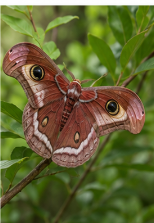
Periphoba arcaei Moths (Periphoba arcaei) are large, tropical silk moths belonging to the family Saturniidae. While the adult moth is harmless and short-lived, the larval stage is well known for its dense covering of venomous spines and irritating hairs that can cause painful skin reactions in people who accidentally touch them. These impressive insects occur primarily throughout Central and South America, where they inhabit tropical forests, plantations, and wooded landscapes.
Unlike many agricultural pests, Periphoba arcaei is not typically considered a major economic threat. The caterpillars feed on the foliage of a variety of trees and shrubs, but healthy plants generally tolerate their feeding. Their greatest significance lies in their medical importance, as accidental contact with the caterpillars may produce localized pain, burning sensations, redness, swelling, and dermatitis.
Overview
Periphoba arcaei belongs to a fascinating group of giant silk moths renowned for their impressive size and beautiful wing patterns. Adult moths possess broad brown wings decorated with eye-like markings that help deter predators. Like most silk moths, adults do not feed and survive only long enough to mate and reproduce.
The caterpillars, however, spend several weeks actively feeding and growing before spinning a cocoon and pupating. During this stage they are equipped with defensive urticating spines that discourage birds, mammals, and other predators.
Taxonomy and Classification
- Order: Lepidoptera
- Family: Saturniidae
- Genus: Periphoba
- Species: Periphoba arcaei
- Common Name: Periphoba arcaei Moth
Saturniid moths include some of the world’s largest moth species and are recognized for their colorful wings, short-lived adults, and often spectacular caterpillars.
Identification
Both the adult moth and caterpillar are distinctive.
- Wingspan: Up to 10 cm (4 inches).
- Color: Shades of brown, tan, and gray.
- Wing Markings: Eye-like spots and intricate camouflage patterns.
- Body: Thick and densely covered with scales.
- Caterpillars: Large, colorful larvae covered with branched venomous spines and irritating hairs.
The adult moth’s coloration blends remarkably well with tree bark and fallen leaves, making it difficult for predators to detect during daylight hours.
Life Cycle
Periphoba arcaei undergoes complete metamorphosis, progressing through four life stages.
- Egg
- Larva (caterpillar)
- Pupa inside a silk cocoon
- Adult moth
Females deposit eggs on suitable host plants where newly hatched caterpillars begin feeding immediately. After several molts, mature larvae construct silk cocoons among leaves or forest debris before pupating.
Adults emerge several weeks or months later depending on environmental conditions. Since adult moths possess reduced mouthparts, they generally do not feed and survive only long enough to reproduce.
Distribution and Habitat
Periphoba arcaei is native to tropical regions of Central and South America.
Typical habitats include:
- Tropical rainforests
- Secondary forests
- Woodland edges
- Plantations
- Gardens
- Shrublands
The species thrives in warm, humid climates where suitable host plants remain available throughout much of the year.
Behavior and Ecology
Caterpillars spend most of their time feeding on leaves, while adults are primarily nocturnal and frequently attracted to lights.
The larvae rely heavily on their venomous spines for defense. When threatened, they often remain motionless, relying on camouflage, or raise portions of their body to expose their defensive spines.
Adult moths use camouflage rather than speed or aggression to avoid predators such as birds and bats.
Host Plants and Damage
The caterpillars feed on the foliage of numerous trees and shrubs.
Although localized defoliation may occur, healthy mature plants usually recover quickly. Significant economic damage is uncommon, and this species is generally considered a minor foliage feeder rather than a destructive forest pest.
Medical Importance
The caterpillars are the primary concern for people.
- Skin Irritation: Contact may cause redness, itching, burning, and swelling.
- Dermatitis: Sensitive individuals may develop more severe allergic reactions.
- Protective Clothing: Gloves should be worn when working around unfamiliar caterpillars.
- Avoid Handling: Never touch hairy caterpillars with bare hands.
Symptoms are typically temporary but may require medical attention if severe allergic reactions occur.
Management and Prevention
Control is rarely necessary except where caterpillars occur in areas with frequent human contact.
- Avoid Direct Contact: Observe caterpillars without touching them.
- Wear Gloves: Use protective clothing when pruning or handling vegetation.
- Inspect Trees: Check ornamental plants before maintenance work.
- Relocate Caterpillars: Where practical, move larvae away from walkways or playgrounds using appropriate tools.
- Encourage Natural Predators: Birds and beneficial insects help regulate populations.
Chemical control is rarely justified due to the species’ generally low pest status.
Conservation and Research
Scientists study Periphoba arcaei and related silk moths to better understand insect defenses, venom chemistry, camouflage, and tropical biodiversity. Their spectacular life cycles and impressive adult moths also make them important educational species in entomology.
Like many native moths, they contribute to local food webs by serving as prey for birds, bats, reptiles, and other wildlife while also supporting overall forest biodiversity.
Conclusion
Periphoba arcaei Moths are impressive members of the giant silk moth family whose adult stage is both harmless and visually striking. Although their caterpillars possess irritating defensive spines that should be avoided, they are generally not considered serious pests. Their fascinating biology, remarkable camouflage, and important ecological role make them valuable components of tropical ecosystems and a continuing subject of scientific research.