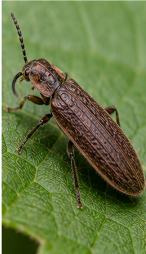
Pennsylvania Leatherwing Beetles (Chauliognathus pennsylvanicus), commonly known as the Goldenrod Soldier Beetle, are among the most beneficial beetles found in North American gardens, meadows, and agricultural landscapes. Their bright yellow bodies with bold black markings make them highly visible during late summer when they gather in large numbers on goldenrod, asters, sunflowers, and other flowering plants. Although their abundance sometimes causes concern among homeowners, these beetles are harmless to people and provide valuable ecological services through pollination and natural pest control.
Unlike destructive beetle species that damage crops or ornamental plants, Pennsylvania Leatherwing Beetles are considered beneficial insects. Adults help pollinate a wide variety of flowering plants while the predatory larvae feed on numerous soft-bodied insect pests living in the soil. Their dual role makes them important contributors to healthy gardens and natural ecosystems.
Overview
The Pennsylvania Leatherwing Beetle belongs to the soldier beetle family (Cantharidae), a group of soft-bodied beetles found throughout much of the world. The species receives its common name from its flexible, leather-like wing covers and its frequent appearance on goldenrod blooms during late summer and early autumn.
Large numbers of adults may congregate on flowering plants, where they feed, mate, and assist with pollination. Their abundance often coincides with the peak flowering season of many native wildflowers, making them one of the most recognizable beneficial insects of late summer.
Taxonomy and Classification
- Order: Coleoptera
- Family: Cantharidae
- Genus: Chauliognathus
- Species: Chauliognathus pennsylvanicus
- Common Names: Pennsylvania Leatherwing Beetle, Goldenrod Soldier Beetle
Like all beetles, Pennsylvania Leatherwing Beetles undergo complete metamorphosis, progressing through egg, larva, pupa, and adult stages.
Identification
The Pennsylvania Leatherwing Beetle is easily recognized by its bright coloration.
- Length: Approximately 12–15 mm.
- Color: Bright yellow to orange-yellow body.
- Wing Covers: Soft, flexible, and marked with distinctive black patches.
- Head: Mostly black.
- Body: Elongated and somewhat flattened.
- Legs: Long and slender, allowing easy movement across flowers.
Their warning coloration likely discourages predators, although they are harmless to humans.
Life Cycle
Adult beetles become active during mid to late summer when flowering plants are abundant.
Females deposit eggs in moist soil or beneath leaf litter. After hatching, larvae spend the autumn, winter, and spring living underground where they hunt small invertebrates.
When fully developed, larvae pupate in the soil before emerging as adults the following summer.
Most populations complete one generation each year.
Distribution and Habitat
Pennsylvania Leatherwing Beetles are widespread throughout eastern and central North America.
They commonly inhabit:
- Native meadows
- Prairies
- Fields
- Roadside wildflower areas
- Gardens
- Parks
- Agricultural field margins
- Open woodland edges
Habitats containing abundant flowering plants provide ideal feeding and breeding conditions.
Behavior and Ecology
Adults spend much of their time feeding on pollen and nectar while moving between blossoms.
Common activities include:
- Visiting flowering plants.
- Feeding on pollen and nectar.
- Mating on flower heads.
- Flying between patches of wildflowers.
The larvae have very different habits, living within the soil where they actively hunt small insects and other invertebrates.
Diet
Adult Pennsylvania Leatherwing Beetles primarily consume:
- Pollen
- Nectar
- Occasionally small soft-bodied insects
Larvae are beneficial predators that feed on:
- Aphids
- Small caterpillars
- Insect eggs
- Soft-bodied larvae
- Other soil-dwelling invertebrates
This combination of pollination and predation makes the species highly valuable in integrated pest management programs.
Ecological Importance
Pennsylvania Leatherwing Beetles provide numerous ecological benefits.
- Pollination: Adults pollinate many native wildflowers and garden plants.
- Natural Pest Control: Larvae consume numerous agricultural and garden pests.
- Wildlife Food: Both larvae and adults provide food for birds, spiders, reptiles, and predatory insects.
- Biodiversity: They contribute to healthy meadow and prairie ecosystems.
Their presence is generally considered a sign of a healthy and diverse habitat.
Pest Status
Pennsylvania Leatherwing Beetles are not considered pests.
Although large numbers may gather on flowers during late summer, they do not damage healthy plants or infest homes. Their activities are overwhelmingly beneficial to both natural ecosystems and cultivated landscapes.
Management and Conservation
No control measures are recommended for this beneficial species.
Gardeners can encourage healthy populations by:
- Planting native flowering plants.
- Growing goldenrod and asters.
- Reducing pesticide applications.
- Maintaining leaf litter and natural ground cover.
- Providing diverse flowering habitats throughout the growing season.
These practices also support numerous native bees, butterflies, and other pollinating insects.
Research and Conservation
Researchers continue studying Pennsylvania Leatherwing Beetles because of their importance as both pollinators and natural predators. Their contribution to biological pest control makes them valuable components of sustainable agriculture and Integrated Pest Management (IPM) programs.
Conservation efforts that preserve native wildflower habitats benefit these beetles while supporting overall pollinator diversity.
Conclusion
Pennsylvania Leatherwing Beetles (Chauliognathus pennsylvanicus) are colorful, beneficial beetles that provide outstanding ecological services through pollination and natural pest control. Their annual appearance on goldenrod and other wildflowers signals the arrival of late summer and highlights the importance of conserving native pollinators and predatory insects. Rather than being pests, these attractive beetles are valuable allies for gardeners, farmers, and natural ecosystems alike.