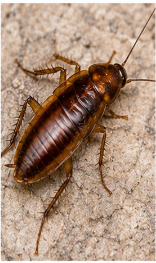
Pennsylvania Wood Cockroaches (Parcoblatta pennsylvanica) are native outdoor cockroaches commonly found throughout forests, woodlots, and wooded residential landscapes across eastern North America. Unlike the German Cockroach or American Cockroach, this species is not considered a structural pest. Pennsylvania Wood Cockroaches spend nearly their entire lives outdoors, where they feed on decaying organic matter and contribute to nutrient recycling within forest ecosystems. Although adults occasionally wander into homes, cabins, or garages, they rarely survive indoors and cannot establish reproducing infestations under normal household conditions.
Because they resemble common household cockroaches, Pennsylvania Wood Cockroaches often cause unnecessary alarm. Fortunately, these insects are considered beneficial decomposers that play an important ecological role while posing little risk to homes, food supplies, or human health.
Overview
The Pennsylvania Wood Cockroach belongs to the family Ectobiidae, a group consisting primarily of outdoor cockroach species. Unlike urban pest cockroaches that depend on heated buildings, this native species thrives in moist woodland habitats where fallen leaves, decaying logs, and dead vegetation provide both shelter and food.
Adult males are excellent fliers and are commonly attracted to porch lights during warm summer evenings. Their appearance indoors often results from accidental entry through open doors or windows rather than an active infestation.
Taxonomy and Classification
- Order: Blattodea
- Family: Ectobiidae
- Genus: Parcoblatta
- Species: Parcoblatta pennsylvanica
- Common Name: Pennsylvania Wood Cockroach
Pennsylvania Wood Cockroaches undergo incomplete metamorphosis, developing through egg, nymph, and adult stages without a pupal phase.
Identification
Pennsylvania Wood Cockroaches differ noticeably from common indoor cockroach pests.
- Length: Approximately 12–25 mm.
- Color: Light reddish-brown to chestnut brown.
- Males: Fully developed wings extending beyond the abdomen and capable of sustained flight.
- Females: Shorter wings that leave much of the abdomen exposed.
- Body: Flattened, oval, and smooth.
- Antennae: Long, thread-like antennae used to locate food and shelter.
The pronounced difference between males and females makes identification relatively straightforward compared to many other cockroach species.
Life Cycle
Pennsylvania Wood Cockroaches typically complete one generation every year, although development may vary depending on climate.
Females produce egg capsules (oothecae) that are deposited in protected outdoor locations beneath bark, logs, or leaf litter. Nymphs hatch and undergo several molts before reaching adulthood.
Adults are most commonly observed from late spring through early autumn, with peak activity occurring during warm summer evenings.
Distribution and Habitat
This species is widespread throughout eastern North America, ranging from southern Canada through much of the eastern United States.
Preferred habitats include:
- Deciduous forests
- Mixed woodlands
- Leaf litter
- Rotting logs
- Under loose bark
- Wood piles
- Mulched landscapes
- Cabins and wooded residential properties
The species requires moist environments and is rarely found far from natural woodland habitats.
Behavior and Ecology
Pennsylvania Wood Cockroaches are primarily nocturnal and spend daylight hours hiding beneath natural debris.
Adult males frequently fly during warm evenings in search of mates and are strongly attracted to outdoor lighting. This behavior explains why they occasionally appear around homes or accidentally enter buildings through open windows and doors.
Unlike household cockroaches, they do not seek kitchens, bathrooms, or other indoor breeding sites.
Diet
Pennsylvania Wood Cockroaches function primarily as decomposers.
Their diet includes:
- Decaying leaves
- Rotting wood
- Fungi
- Plant debris
- Organic matter
- Occasionally dead insects
By consuming decomposing vegetation, they help recycle nutrients back into forest soils.
Do Pennsylvania Wood Cockroaches Infest Homes?
Unlike German Cockroaches, Brown-banded Cockroaches, or American Cockroaches, Pennsylvania Wood Cockroaches rarely establish indoor infestations.
Although adults occasionally wander indoors, they generally:
- Cannot complete their life cycle inside heated buildings.
- Require outdoor moisture and organic debris.
- Do not reproduce inside homes under normal conditions.
- Usually die or return outdoors within a short period.
For this reason, finding a single Pennsylvania Wood Cockroach indoors typically does not indicate a cockroach infestation.
Management and Prevention
Control efforts generally focus on preventing accidental entry rather than eliminating outdoor populations.
- Seal Entry Points: Repair gaps around doors, windows, siding, and utility penetrations.
- Reduce Outdoor Lighting: Bright exterior lights attract flying males during summer evenings.
- Move Firewood: Store firewood away from the home’s foundation.
- Reduce Moisture: Remove excessive mulch and leaf litter adjacent to structures.
- Maintain Screens: Keep window and door screens in good repair.
- Vacuum Individuals: Occasional indoor visitors can simply be removed without pesticide applications.
Broad-spectrum insecticide treatments are rarely necessary for this native outdoor species.
Ecological Importance
Pennsylvania Wood Cockroaches provide several ecological benefits.
- Decomposition: Accelerate breakdown of dead plant material.
- Nutrient Cycling: Return nutrients to forest soils.
- Food Source: Serve as prey for birds, amphibians, reptiles, spiders, and small mammals.
- Forest Health: Support balanced woodland ecosystems.
These insects are valuable members of healthy forest communities and should not be confused with destructive household cockroach species.
Research and Conservation
Researchers continue studying native wood cockroaches because of their ecological importance in decomposition and nutrient recycling. They also serve as useful indicators of healthy woodland habitats and provide insight into the evolution and diversity of North America’s native cockroach fauna.
Conclusion
Pennsylvania Wood Cockroaches (Parcoblatta pennsylvanica) are beneficial native insects that spend their lives recycling organic matter in forests rather than infesting homes. Although their appearance may resemble nuisance cockroach species, they pose little threat to structures or human health. Occasional indoor encounters are almost always accidental, and simple exclusion techniques are typically all that is needed. Understanding the difference between native wood cockroaches and true household pests helps homeowners avoid unnecessary concern and supports appreciation of these valuable forest decomposers.