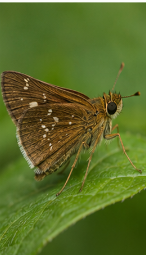
Peck’s Skippers (Polites peckius) are small, energetic butterflies that belong to the skipper family (Hesperiidae). Although often mistaken for moths because of their stout bodies and rapid, darting flight, skippers are true butterflies and are among the most common pollinators found in meadows, lawns, roadsides, and gardens throughout much of North America. Their quick, skipping flight pattern is responsible for both their common name and their reputation as one of the most challenging butterflies to photograph.
Peck’s Skippers are beneficial insects that contribute to pollination while serving as an important food source for birds, spiders, reptiles, and predatory insects. They are not considered agricultural or structural pests, and their caterpillars typically feed on common grasses without causing significant economic damage.
Overview
The Peck’s Skipper is one of the most widespread grass skippers in eastern and central North America. Its adaptability allows it to thrive in both natural habitats and urban landscapes wherever grasses and flowering plants are abundant.
Unlike larger butterflies that glide gracefully across fields, Peck’s Skippers fly in rapid bursts, frequently stopping to feed on flowers before darting to another location. Their energetic behavior makes them highly effective pollinators for many native flowering plants.
Taxonomy and Classification
- Order: Lepidoptera
- Family: Hesperiidae
- Genus: Polites
- Species: Polites peckius
- Common Name: Peck’s Skipper
Like all butterflies, Peck’s Skippers undergo complete metamorphosis, progressing through egg, caterpillar, chrysalis, and adult stages.
Identification
Peck’s Skippers are compact butterflies with distinctive markings.
- Wingspan: Approximately 22–30 mm.
- Upper Wings: Bright orange with dark brown borders and markings.
- Underside: Yellow-orange with pale rectangular spots.
- Body: Short, stout, and densely covered with fine hairs.
- Antennae: Clubbed with distinctive hooked tips typical of skipper butterflies.
Their robust bodies and rapid flight help distinguish them from many other small butterflies.
Life Cycle
Female Peck’s Skippers deposit eggs individually on grasses that serve as larval host plants.
After hatching, the caterpillars feed on grass blades while living inside shelters constructed by folding leaves together with silk.
As they mature, larvae pass through several molts before pupating within these protective shelters.
Adults emerge during spring and summer, with several generations occurring annually in warmer portions of their range.
Distribution and Habitat
Peck’s Skippers are widespread throughout eastern and central North America.
They commonly occur in:
- Native meadows
- Prairies
- Lawns
- Roadside vegetation
- Pastures
- Parks
- Golf courses
- Residential gardens
Habitats containing both grasses and abundant nectar-producing flowers provide ideal conditions for healthy populations.
Host Plants
The caterpillars feed primarily on grasses.
Common host plants include:
- Bluegrasses
- Fescues
- Bentgrasses
- Other native and cultivated grasses
Feeding is generally light and rarely produces noticeable damage to lawns or natural grasslands.
Behavior and Ecology
Peck’s Skippers are active during warm, sunny weather.
Adults commonly:
- Visit flowers for nectar.
- Bask in sunlight with partially open wings.
- Patrol grassy habitats searching for mates.
- Rest on low vegetation between feeding periods.
Their fast, erratic flight allows them to avoid predators while efficiently locating flowering plants across open landscapes.
Pollination Importance
Although small, Peck’s Skippers are valuable pollinators.
They regularly visit:
- Clover
- Milkweed
- Black-eyed Susan
- Coneflowers
- Asters
- Native prairie flowers
As they move between blossoms collecting nectar, they transfer pollen that supports seed production and healthy plant communities.
Pest Status
Peck’s Skippers are not considered pests.
Although caterpillars consume grass leaves, populations rarely become abundant enough to affect lawns, pastures, or crops. Their ecological benefits far outweigh any minor feeding damage.
Integrated Pest Management (IPM)
No pest management measures are recommended for Peck’s Skippers.
Homeowners and gardeners can encourage healthy populations by:
- Planting native flowering plants.
- Reducing unnecessary pesticide applications.
- Maintaining diverse grassland habitats.
- Leaving portions of gardens unmanaged for overwintering insects.
- Supporting native pollinator habitats.
These practices also benefit numerous other butterflies, bees, and beneficial insects.
Conservation and Research
Skipper butterflies are increasingly used by researchers as indicators of habitat quality because they respond quickly to changes in grassland management, pesticide use, and climate conditions.
Conservation efforts that preserve native meadows, roadside vegetation, and flowering grasslands help maintain healthy populations of Peck’s Skippers and countless other native pollinators.
Citizen science butterfly monitoring programs also provide valuable information about long-term population trends across North America.
Conclusion
Peck’s Skippers (Polites peckius) are energetic, beneficial butterflies that contribute significantly to pollination while enhancing the biodiversity of meadows, gardens, and grasslands. Their rapid flight, adaptability, and dependence on native flowering plants make them valuable indicators of healthy ecosystems. Rather than requiring pest control, these attractive butterflies deserve protection through pollinator-friendly landscaping and habitat conservation.