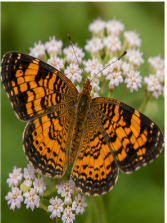
Pearl Crescent Butterflies (Phyciodes tharos) are among the most widespread and recognizable butterflies in North America. Despite their relatively small size, these colorful butterflies play an important ecological role as pollinators and indicators of healthy natural habitats. Their bright orange wings, decorated with intricate black markings and pale crescent-shaped spots on the underside, make them a favorite among butterfly enthusiasts, photographers, and gardeners.
Unlike many insects featured on Pestipedia, the Pearl Crescent Butterfly is not considered a pest. Instead, it is a beneficial species whose caterpillars feed primarily on native asters while adults visit a wide variety of flowering plants in search of nectar. Healthy populations of Pearl Crescent Butterflies often indicate diverse native plant communities and functioning ecosystems.
Overview
The Pearl Crescent Butterfly belongs to the brush-footed butterfly family (Nymphalidae), one of the largest butterfly families in the world. It is one of the most common butterflies encountered across the United States and southern Canada, thriving in gardens, meadows, roadsides, prairies, and woodland openings.
Because of its adaptability and long flight season, the Pearl Crescent is frequently among the first butterflies noticed by beginning butterfly watchers. Multiple generations may occur each year, providing continuous opportunities to observe every stage of its fascinating life cycle.
Taxonomy and Classification
- Order: Lepidoptera
- Family: Nymphalidae
- Genus: Phyciodes
- Species: Phyciodes tharos
- Common Name: Pearl Crescent Butterfly
Like all butterflies, Pearl Crescents undergo complete metamorphosis, progressing through egg, caterpillar, chrysalis, and adult stages.
Identification
The Pearl Crescent Butterfly is small but strikingly patterned.
- Wingspan: Approximately 22–35 mm.
- Upper Wings: Bright orange with bold black markings.
- Underside: Pale orange and cream with distinctive pearl-colored crescent markings.
- Body: Dark brown with fine hairs.
- Antennae: Black with clubbed tips.
The intricate wing patterns help distinguish the Pearl Crescent from other small orange butterflies that share similar habitats.
Life Cycle
The life cycle begins when females deposit eggs individually or in small clusters on host plants within the aster family.
After hatching, the caterpillars feed on leaves before molting through several developmental stages. Mature larvae eventually attach themselves to vegetation and transform into a chrysalis.
Within several days or weeks, depending on temperature, an adult butterfly emerges ready to feed, mate, and begin another generation.
In warmer climates, Pearl Crescents may produce multiple generations each year, while northern populations typically complete fewer generations.
Distribution and Habitat
Pearl Crescent Butterflies are widely distributed throughout North America.
They commonly inhabit:
- Open meadows
- Prairies
- Roadside vegetation
- Native wildflower gardens
- Parks
- Forest edges
- Abandoned fields
- Residential landscapes
Areas containing abundant asters and flowering nectar plants provide the ideal habitat for sustaining healthy populations.
Host Plants
The larvae depend primarily on plants within the aster family (Asteraceae).
Common host plants include:
- Asters
- Smooth asters
- White asters
- Various wild composite flowers
Adult butterflies visit an even wider variety of flowering plants for nectar throughout the growing season.
Behavior and Ecology
Pearl Crescent Butterflies are active during warm, sunny weather and spend much of the day searching for nectar or suitable host plants.
Adults frequently:
- Visit wildflowers for nectar.
- Bask in direct sunlight.
- Rest on low vegetation.
- Patrol open areas searching for mates.
- Puddle on moist soil to obtain minerals.
Males are especially territorial and may chase other butterflies away from preferred breeding areas.
Ecological Importance
Pearl Crescent Butterflies contribute significantly to native ecosystems.
- Pollination: Adults transfer pollen while feeding on nectar.
- Wildlife Food: Eggs, caterpillars, pupae, and adults provide food for birds, spiders, reptiles, and predatory insects.
- Biodiversity: They support healthy native plant communities.
- Environmental Indicators: Population changes often reflect habitat quality.
Because butterflies respond quickly to habitat loss and climate change, they are widely used in conservation monitoring programs.
Pest Status
Pearl Crescent Butterflies are beneficial insects and are not considered agricultural or structural pests.
Although caterpillars consume leaves of their host plants, feeding rarely causes noticeable damage because populations remain naturally balanced by predators and environmental conditions.
Management and Conservation
No pest control measures are recommended or necessary.
Gardeners wishing to encourage Pearl Crescent Butterflies can:
- Plant native asters.
- Grow diverse nectar-producing flowers.
- Avoid unnecessary insecticide use.
- Preserve native meadow habitats.
- Leave portions of gardens undisturbed for overwintering insects.
Native landscaping provides ideal habitat while supporting numerous other pollinators and beneficial insects.
Research and Conservation
Researchers use Pearl Crescent Butterflies to study pollinator ecology, habitat fragmentation, migration, and the effects of climate change on insect populations. Long-term monitoring programs across North America continue to provide valuable information about changes in butterfly diversity and ecosystem health.
Conservation efforts that preserve native grasslands, roadsides, and wildflower habitats benefit not only Pearl Crescents but hundreds of other pollinating insects.
Conclusion
Pearl Crescent Butterflies (Phyciodes tharos) are beautiful, widespread butterflies that provide important pollination services while adding color and biodiversity to landscapes throughout North America. Their dependence on native wildflowers and asters highlights the importance of conserving natural habitats and reducing unnecessary pesticide use. Rather than being pests, these butterflies are valuable indicators of healthy ecosystems and welcome visitors to gardens and meadows.