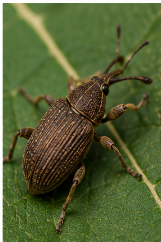
Palmetto Weevils (Rhynchophorus cruentatus) are the largest native weevils in North America and one of the most important insect pests affecting palm trees in the southeastern United States. These large snout beetles belong to the family Curculionidae and are closely related to the destructive Red Palm Weevil (Rhynchophorus ferrugineus), an invasive species responsible for devastating palm populations in many parts of the world.
The Palmetto Weevil naturally attacks stressed, dying, or recently damaged palms, where females lay eggs inside wounds or weakened tissue. The developing larvae tunnel deep into the trunk, feeding on soft internal tissue and often accelerating the decline of already compromised trees. Although healthy palms are less commonly attacked, infestations can become serious in ornamental landscapes, nurseries, and after storm damage or improper pruning.
Overview
Palmetto Weevils are native to the southeastern United States and play a natural role in decomposing weakened palm trees. In managed landscapes, however, they are considered significant pests because larval tunneling can rapidly destroy valuable ornamental palms.
Unlike many tree borers that attack branches or bark, Palmetto Weevil larvae feed within the central trunk and crown area of palms. Because this damage occurs internally, infestations often remain undetected until the tree shows advanced symptoms or dies.
Taxonomy and Classification
- Order: Coleoptera
- Family: Curculionidae
- Subfamily: Dryophthorinae
- Genus: Rhynchophorus
- Species: Rhynchophorus cruentatus
- Common Name: Palmetto Weevil
Like all weevils, the Palmetto Weevil undergoes complete metamorphosis, progressing through egg, larva, pupa, and adult stages.
Identification
The adult Palmetto Weevil is one of the largest weevils found in North America.
- Length: Up to 40 mm (approximately 1.6 inches).
- Color: Dark reddish-brown to black.
- Body: Elongated and robust.
- Snout: Long, curved rostrum characteristic of true weevils.
- Antennae: Elbowed with clubbed tips attached to the snout.
- Wing Covers: Hard, smooth elytra protecting functional wings.
The long snout is used by females to prepare egg-laying sites within damaged palm tissue.
Larval Identification
The larval stage is responsible for nearly all economic damage.
- Body: Thick, legless, and C-shaped.
- Color: Creamy white with a reddish-brown head capsule.
- Length: Up to 2 inches when fully grown.
- Habitat: Internal tissues of palm trunks and crowns.
Larvae remain hidden within the palm throughout development, making early detection difficult.
Distribution and Habitat
Palmetto Weevils occur naturally throughout the southeastern United States where native and ornamental palms are abundant.
Their range includes:
- Florida
- Georgia
- South Carolina
- Alabama
- Mississippi
- Louisiana
- Coastal regions of neighboring states
Common habitats include:
- Palm groves
- Urban landscapes
- Botanical gardens
- Residential properties
- Commercial landscapes
- Nurseries
- Natural palmetto habitats
They are particularly attracted to palms that have been weakened by disease, drought, transplant shock, lightning strikes, freezing temperatures, or mechanical injury.
Life Cycle
Adult females locate stressed or damaged palms using chemical odors released from injured plant tissue.
Eggs are deposited within wounds, pruning cuts, or softened trunk tissue. After hatching, larvae immediately begin tunneling through the palm’s interior while feeding extensively on soft vascular tissue.
As feeding continues, large internal cavities develop that weaken the structural integrity of the trunk and crown.
When mature, larvae construct fibrous cocoons from palm fibers and pupate within the tree. Adult weevils eventually emerge to locate additional host palms.
Several generations may occur annually in warm climates.
Host Plants
Palmetto Weevils attack numerous palm species, including:
- Cabbage Palm (Sabal palmetto)
- Canary Island Date Palm
- Date Palm
- Queen Palm
- Washingtonia Palms
- Bismarck Palm
- Other ornamental palms
Recently transplanted palms and those suffering environmental stress are particularly susceptible.
Damage and Signs of Infestation
Most damage results from extensive larval tunneling inside the trunk and crown.
Common symptoms include:
- Wilting fronds.
- Drooping or collapsing crown.
- Yellowing foliage.
- Soft or hollow trunk tissue.
- Fermenting odors from damaged tissue.
- Oozing sap or fluids.
- Sudden death of the palm.
Because feeding occurs internally, visible symptoms often appear only after severe damage has already occurred.
Integrated Pest Management (IPM)
Successful management focuses primarily on prevention because heavily infested palms are difficult to save.
Cultural Controls
- Maintain healthy palms through proper irrigation and fertilization.
- Avoid unnecessary trunk injuries.
- Limit pruning to essential maintenance.
- Remove severely infested palms promptly.
Monitoring
- Inspect palms regularly for crown decline.
- Look for fresh wounds attracting adult weevils.
- Watch for unusual odors or trunk softening.
Chemical Control
Preventive insecticide treatments may protect valuable landscape palms during periods of high risk, particularly after transplanting or storm damage.
Once larvae are deep inside the trunk, insecticide effectiveness declines significantly.
Sanitation
Prompt removal and proper disposal of heavily infested palms help reduce breeding sites and limit future infestations.
Natural Predators
Although relatively protected within palm trunks, Palmetto Weevils have several natural enemies.
- Woodpeckers
- Parasitic wasps
- Predatory beetles
- Entomopathogenic fungi
- Beneficial nematodes
Researchers continue evaluating biological control agents for improved management.
Ecological Importance
In natural ecosystems, Palmetto Weevils help decompose dying palms and recycle nutrients. Problems arise primarily in ornamental landscapes where mature palms represent valuable investments.
The species illustrates how native insects can become significant pests when landscaping practices create abundant stressed host material.
Conservation and Research
Current research focuses on improved monitoring techniques, pheromone-based detection systems, biological control, and methods for protecting high-value ornamental palms.
Scientists also study the relationship between palm stress, disease, and weevil attraction in order to develop better preventive management strategies.
Conclusion
Palmetto Weevils (Rhynchophorus cruentatus) are impressive native beetles whose larvae can severely damage stressed palm trees throughout the southeastern United States. While they naturally colonize weakened palms, infestations in landscapes can quickly destroy valuable ornamental specimens if left unmanaged.
Maintaining vigorous palms, avoiding trunk injuries, monitoring for early symptoms, and practicing Integrated Pest Management remain the most effective strategies for preventing costly losses.