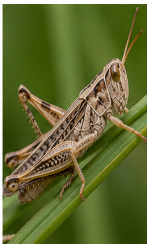
Pallid-winged Grasshoppers are medium-sized members of the family Acrididae, commonly known as short-horned grasshoppers. These insects are well adapted to life in prairies, grasslands, and other open habitats where their pale brown bodies and light-colored wings provide excellent camouflage against dry vegetation and bare soil. While they are normally an important part of healthy grassland ecosystems, large populations can consume significant amounts of vegetation and occasionally become agricultural pests.
Like most grasshoppers, Pallid-winged Grasshoppers are herbivores that feed primarily on grasses and broadleaf plants. Under normal conditions they cause little concern, but during outbreak years their numbers can increase dramatically, resulting in noticeable damage to rangelands, hay fields, gardens, and cultivated crops. Because of their ecological importance and periodic pest status, they are commonly managed using Integrated Pest Management (IPM) techniques rather than relying solely on insecticides.
Overview
Pallid-winged Grasshoppers belong to one of the largest groups of grasshoppers in North America. Their coloration allows them to blend almost perfectly into dry prairie vegetation, helping them avoid predators while remaining close to their food source.
Although they are capable of strong flight, they spend much of their time walking, hopping, and feeding among grasses. Their powerful hind legs allow them to escape predators quickly, while their wings enable longer-distance movement when vegetation becomes scarce.
Taxonomy and Classification
- Order: Orthoptera
- Family: Acrididae
- Subfamily: Varies depending on species
- Common Group: Short-horned Grasshoppers
- Common Name: Pallid-winged Grasshopper
Unlike butterflies and beetles, grasshoppers undergo incomplete metamorphosis. Their development progresses through egg, nymph, and adult stages without a pupal stage.
Identification
Pallid-winged Grasshoppers are medium-sized insects with sturdy bodies and excellent jumping ability.
- Length: Approximately 20–30 mm.
- Color: Pale tan, sandy brown, or light gray.
- Wings: Semi-transparent with a pale or nearly colorless appearance.
- Body: Thick and robust.
- Legs: Large muscular hind legs adapted for jumping.
- Antennae: Relatively short compared to katydids and crickets.
The subdued coloration provides outstanding camouflage in dry grasslands and prairie habitats.
Life Cycle
Females deposit egg pods beneath the soil surface during late summer or autumn. The eggs remain dormant throughout winter and hatch the following spring when temperatures begin to rise.
Young nymphs resemble miniature wingless adults and immediately begin feeding on surrounding vegetation. As they grow, they molt several times before developing fully functional wings and reaching adulthood.
Most Pallid-winged Grasshopper populations complete one generation each year, although development speed varies depending on temperature and moisture.
Distribution and Habitat
Pallid-winged Grasshoppers inhabit open landscapes throughout much of western and central North America where grasses dominate the vegetation.
Preferred habitats include:
- Native prairies
- Grasslands
- Dry meadows
- Pastures
- Rangelands
- Roadsides
- Agricultural field margins
- Shrub-steppe habitats
They thrive in sunny locations with sparse trees and abundant herbaceous vegetation.
Feeding Habits
Pallid-winged Grasshoppers are generalist herbivores that consume a variety of plants throughout their lives.
Common food sources include:
- Native grasses
- Pasture grasses
- Broadleaf weeds
- Wildflowers
- Garden vegetables
- Field crops during outbreak years
Adults and nymphs chew leaves, stems, and tender shoots using powerful chewing mouthparts.
Behavior and Damage
Most years, Pallid-winged Grasshopper populations remain low and have little effect on surrounding vegetation. During periods of warm, dry weather, however, populations may increase rapidly.
Heavy infestations may result in:
- Defoliation of grasses.
- Reduced pasture quality.
- Damage to hay fields.
- Feeding injury to vegetables.
- Reduced crop yields.
- Competition with livestock for forage.
Young seedlings are especially vulnerable because even moderate feeding can reduce plant vigor or kill emerging plants.
Integrated Pest Management (IPM)
Effective management combines monitoring, habitat management, biological control, and selective treatment when necessary.
Monitoring
- Survey grasshopper numbers during spring and early summer.
- Inspect field margins where populations often develop first.
- Monitor weather conditions favorable for outbreaks.
Cultural Controls
- Maintain healthy, vigorous vegetation.
- Reduce excessive weed growth near crops.
- Rotate susceptible crops where practical.
- Encourage diverse plant communities.
Biological Control
Many natural enemies help suppress grasshopper populations.
- Birds
- Ground beetles
- Robber flies
- Spiders
- Praying mantises
- Parasitic flies
- Parasitic wasps
- Entomopathogenic fungi such as Metarhizium species
These beneficial organisms provide important long-term regulation of grasshopper populations.
Chemical Control
When economic thresholds are exceeded, targeted insecticide applications may be justified to protect high-value crops or pastures. Treatments are most effective against young nymphs before they reach adulthood.
Whenever possible, selective products should be used to minimize impacts on pollinators and beneficial insects.
Ecological Importance
Pallid-winged Grasshoppers occupy an essential position within prairie ecosystems.
They recycle plant material, influence vegetation dynamics, and provide food for countless wildlife species, including birds, reptiles, mammals, and predatory insects.
Their presence contributes significantly to healthy grassland biodiversity.
Conservation and Research
Scientists continue studying grasshopper ecology to better predict population outbreaks, improve sustainable management techniques, and understand the effects of climate change on grassland ecosystems.
Current research also examines biological control agents and habitat management practices that reduce damaging outbreaks while preserving the ecological benefits of native grasshopper populations.
Conclusion
Pallid-winged Grasshoppers are well-camouflaged herbivores that play an important role in North America’s grassland ecosystems. While they usually exist at harmless population levels, favorable environmental conditions can occasionally lead to outbreaks that damage crops and pasture vegetation.
Integrated Pest Management strategies—including monitoring, biological control, and cultural practices—provide the most effective and environmentally responsible approach to managing these insects while preserving their valuable ecological role.