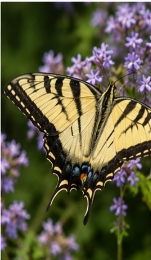
Pale Tiger Swallowtail Butterflies are beautiful members of the swallowtail butterfly family (Papilionidae) recognized for their graceful flight, pale yellow wings, bold black tiger-like stripes, and distinctive tail-like extensions on their hindwings. While the common name “Pale Tiger Swallowtail” is often used to describe lighter-colored forms of several North American tiger swallowtails, these butterflies are closely related to species such as the Eastern Tiger Swallowtail (Papilio glaucus) and the Western Tiger Swallowtail (Papilio rutulus).
Unlike agricultural or structural pests, Pale Tiger Swallowtails are considered highly beneficial insects. Adults are important pollinators of wildflowers, ornamental plants, and native shrubs, while their caterpillars usually feed at low population levels that cause little or no lasting damage to healthy trees.
Overview
Swallowtail butterflies are among the largest and most recognizable butterflies in North America. Their large wings, elegant flight, and striking coloration make them favorites among gardeners, photographers, and butterfly enthusiasts.
Pale Tiger Swallowtails spend much of their adult lives visiting flowering plants in search of nectar. Their long proboscis allows them to reach nectar deep within blossoms while simultaneously transferring pollen between flowers.
Because they contribute significantly to pollination and rarely damage landscape plants, they should be encouraged rather than controlled.
Taxonomy and Classification
- Order: Lepidoptera
- Family: Papilionidae
- Common Group: Tiger Swallowtail Butterflies
- Related Species: Papilio glaucus, Papilio rutulus, and other tiger swallowtails.
Like all butterflies and moths, swallowtails undergo complete metamorphosis, progressing through egg, caterpillar, chrysalis, and adult stages.
Identification
Pale Tiger Swallowtails are large butterflies with graceful, sweeping wings and unmistakable tail extensions.
- Wingspan: Approximately 70–100 mm (2.8–4 inches).
- Wing Color: Pale yellow to creamy yellow.
- Markings: Bold black tiger-like stripes across both pairs of wings.
- Tail Extensions: Prominent “tails” projecting from each hindwing.
- Body: Slender with alternating black and yellow coloration.
- Flight: Strong, graceful, and highly maneuverable.
Females are often larger than males and may exhibit slight variations in wing coloration depending on the species and geographic region.
Larval Identification
The caterpillars undergo remarkable changes as they mature.
- Young Larvae: Brown and white, closely resembling bird droppings to avoid predators.
- Mature Larvae: Bright green with large false eye spots near the head.
- Length: Up to approximately 2 inches when fully grown.
- Defense: Possess an orange forked organ called an osmeterium that releases an unpleasant odor when threatened.
This remarkable defense helps discourage birds, reptiles, and predatory insects.
Distribution and Habitat
Pale Tiger Swallowtails occur wherever suitable tiger swallowtail populations and host plants exist. They are commonly found throughout much of North America.
Preferred habitats include:
- Gardens
- Woodland edges
- River valleys
- Open forests
- Parks
- Meadows
- Suburban landscapes
- Nature preserves
Adults are especially common in areas containing abundant flowering plants and nearby host trees suitable for egg laying.
Life Cycle
Female butterflies carefully select host plants before laying individual eggs on leaves.
After hatching, the caterpillars begin feeding on foliage and pass through several molts while increasing dramatically in size.
When fully developed, the caterpillar forms a chrysalis attached to a branch or other protected surface. Depending on seasonal conditions, the butterfly may emerge within weeks or overwinter inside the chrysalis until the following spring.
Many populations produce two or more generations each year in warmer climates.
Host Plants and Feeding Habits
Caterpillars
The larvae feed on a variety of deciduous trees and shrubs, including:
- Tulip trees
- Wild cherry
- Ash
- Cottonwood
- Willow
- Aspen
- Magnolia
- Birch
Feeding is generally scattered and rarely affects the health of mature trees.
Adults
Adult butterflies feed primarily on flower nectar and are frequently observed visiting:
- Milkweed
- Butterfly bush
- Coneflowers
- Lilac
- Zinnias
- Phlox
- Joe-Pye weed
- Native wildflowers
While feeding, they transfer pollen between flowers and contribute significantly to plant reproduction.
Behavior and Ecology
Pale Tiger Swallowtails are active during daylight hours and are among the strongest flying butterflies in North America.
Males are frequently observed gathering on damp soil, stream banks, and mud puddles in a behavior known as puddling, where they obtain minerals and salts needed for reproduction.
Adults often patrol woodland edges and flower gardens while searching for nectar or mates.
Damage and Pest Status
Pale Tiger Swallowtails are not considered pests.
Although caterpillars consume leaves, populations remain naturally low and healthy trees easily tolerate the minor feeding.
Adults do not damage:
- Homes
- Furniture
- Stored foods
- Landscape structures
- Flowers
Instead, they provide valuable pollination services that benefit both native ecosystems and home gardens.
Management and Conservation
No pest control measures are recommended.
Homeowners can encourage Pale Tiger Swallowtails by:
- Planting native flowering plants.
- Growing host trees for caterpillars.
- Avoiding unnecessary insecticide applications.
- Providing sunny garden areas.
- Maintaining shallow water or puddling areas.
Broad-spectrum insecticides should be avoided because they can eliminate both butterflies and many other beneficial pollinators.
Natural Predators
Despite their impressive size, swallowtails are preyed upon by numerous animals.
- Birds
- Spiders
- Praying mantises
- Dragonflies
- Parasitic wasps
- Parasitic flies
- Small mammals
The bird-dropping camouflage of young caterpillars and the osmeterium of mature larvae provide important defensive adaptations.
Ecological Importance
Pale Tiger Swallowtails are among the most valuable native pollinators found in forests, gardens, and natural landscapes.
They help pollinate countless flowering plants while also serving as an important food source for birds and other wildlife. Their presence is generally considered an indicator of healthy, diverse habitats containing abundant native vegetation.
Conservation and Research
Scientists continue studying tiger swallowtails to better understand butterfly migration, genetics, mimicry, pollination biology, and the effects of habitat loss and climate change on native butterfly populations.
Protecting native wildflowers, preserving woodland habitats, and reducing pesticide use remain the most effective conservation measures for these spectacular butterflies.
Conclusion
Pale Tiger Swallowtail Butterflies are magnificent native pollinators recognized for their pale yellow wings, bold black stripes, and graceful flight. Their caterpillars feed modestly on deciduous trees without causing significant damage, while adults provide valuable pollination services throughout gardens and natural ecosystems.
Rather than being viewed as pests, these butterflies should be welcomed as important contributors to biodiversity and healthy landscapes.