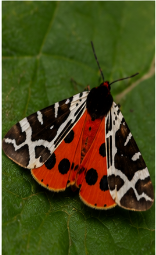
Painted Tiger Moths (Arachnis picta) are attractive native moths found throughout the southwestern United States and northern Mexico. Belonging to the tiger moth group, these insects are recognized by their striking white wings marked with bold black patterns and their fuzzy, brightly colored caterpillars. Although their dramatic appearance sometimes causes concern, Painted Tiger Moths are harmless to humans and are not considered structural, household, or significant agricultural pests.
The species is most commonly encountered in deserts, grasslands, scrublands, and other dry habitats where native vegetation provides suitable food for developing caterpillars. Adult moths are active primarily at night and are often attracted to porch lights, while the larvae feed on a variety of herbaceous plants and shrubs.
Overview
Painted Tiger Moths belong to the tiger moth group within the family Erebidae. Like many tiger moths, they combine bold coloration with hairy caterpillars that help discourage predators.
Unlike clothes moths, pantry moths, or crop-damaging caterpillars, Painted Tiger Moths rarely cause significant economic damage. They are considered native wildlife and contribute to the biodiversity of desert and grassland ecosystems.
Taxonomy and Classification
- Order: Lepidoptera
- Family: Erebidae
- Subfamily: Arctiinae
- Genus: Arachnis
- Species: Arachnis picta
- Common Name: Painted Tiger Moth
Painted Tiger Moths are closely related to other tiger moths, many of which display bright warning colors and hairy caterpillars that provide protection against predators.
Like all moths and butterflies, they undergo complete metamorphosis, developing through egg, caterpillar, pupa, and adult stages.
Identification
Adult Painted Tiger Moths are medium-sized insects with distinctive contrasting wing patterns.
- Wingspan: Approximately 35–45 mm (1.4–1.8 inches).
- Forewings: White to cream-colored with bold black or dark brown markings.
- Hindwings: Usually pale with scattered darker markings.
- Body: Moderately robust and covered with fine scales and hairs.
- Antennae: Threadlike to slightly feathered, especially in males.
The bold black-and-white wing pattern provides excellent camouflage when the moth rests on lichen-covered bark, weathered wood, or rocky surfaces.
Larval Identification
The caterpillars are commonly called woolly bear caterpillars because of their dense covering of hairs.
- Body: Thick and segmented.
- Color: Dark brown, black, reddish, or orange depending on age.
- Covering: Dense hairs that help deter predators.
- Length: Up to approximately 2 inches when fully grown.
Although the hairs may appear intimidating, they are generally not considered medically significant. Sensitive individuals should still avoid handling hairy caterpillars to prevent possible skin irritation.
Distribution and Habitat
Painted Tiger Moths occur primarily throughout the southwestern United States and northern Mexico.
They are commonly found in:
- Arizona
- New Mexico
- Texas
- Southern California
- Nevada
- Northern Mexico
Preferred habitats include:
- Deserts
- Semi-desert grasslands
- Open scrublands
- Chaparral
- Roadsides
- Open woodlands
- Parks and natural landscapes
Adults are frequently attracted to outdoor lighting, particularly during warm evenings in spring, summer, and early fall.
Life Cycle
Painted Tiger Moths complete four distinct developmental stages.
Females lay eggs on suitable host plants where the newly hatched caterpillars begin feeding almost immediately.
The larvae pass through several molts as they grow, eventually forming a protective cocoon where pupation occurs.
Adult moths emerge after metamorphosis, expand their wings, mate, and begin the next generation.
Depending on climate and elevation, one or more generations may occur each year.
Feeding Habits
Caterpillars
The larvae feed on numerous low-growing plants and shrubs. Known host plants include:
- Desert wildflowers
- Forbs
- Herbaceous weeds
- Native shrubs
- Various annual plants
The broad diet allows the species to survive in habitats where food availability changes throughout the growing season.
Adults
Adult Painted Tiger Moths may feed on flower nectar and other sugary liquids, although many adults feed only sparingly during their relatively short lifespan.
When they do visit flowers, they may contribute modestly to pollination.
Behavior
Painted Tiger Moths are primarily nocturnal. During daylight hours they rest quietly on tree trunks, rocks, vegetation, or buildings where their wing patterns provide camouflage.
At night they become active, searching for mates and suitable egg-laying locations. Like many moths, they are attracted to artificial lighting, making them common visitors around homes and businesses in suitable habitats.
The hairy caterpillars rely on both camouflage and their dense covering of hairs to discourage predators such as birds and reptiles.
Damage and Pest Status
Painted Tiger Moths are not considered pest insects.
The caterpillars occasionally feed on ornamental plants, weeds, or native vegetation, but populations rarely become numerous enough to cause significant damage.
Unlike armyworms, cutworms, or tent caterpillars, Painted Tiger Moth larvae seldom produce widespread defoliation or economically important crop losses.
Adults do not damage buildings, clothing, stored foods, furniture, or wood.
Management and Prevention
Because Painted Tiger Moths are harmless native insects, management is generally unnecessary.
If adults become attracted to lights around buildings, simple measures can reduce their presence:
- Reduce unnecessary exterior lighting.
- Use warm-colored or yellow outdoor bulbs.
- Keep doors and windows screened.
- Seal openings around windows and doors.
If caterpillars are feeding on prized ornamental plants, they can usually be removed by hand without the need for insecticides.
Broad-spectrum pesticide applications are rarely justified because they may harm butterflies, pollinators, and other beneficial insects.
Ecological Importance
Painted Tiger Moths are valuable members of native ecosystems.
- Food Source: Caterpillars and adults provide food for birds, bats, reptiles, spiders, and predatory insects.
- Biodiversity: They contribute to healthy desert and grassland ecosystems.
- Pollination: Adults may assist in pollinating flowering plants while feeding.
- Wildlife Value: They are an important component of native food webs.
Their presence is generally considered an indicator of healthy native habitats rather than an infestation requiring treatment.
Conservation and Research
Researchers continue studying tiger moths to better understand insect coloration, predator avoidance, chemical defenses, and adaptation to arid environments.
Conserving native vegetation and reducing unnecessary pesticide use helps maintain healthy populations of Painted Tiger Moths and many other beneficial native insects.
Conclusion
Painted Tiger Moths (Arachnis picta) are beautiful native moths recognized by their striking black-and-white wings and fuzzy caterpillars. Although they occasionally feed on native plants and ornamentals during the larval stage, they rarely cause meaningful damage and are not considered pests.
In most situations they should be appreciated as beneficial members of desert and grassland ecosystems that contribute to biodiversity and provide food for numerous wildlife species.