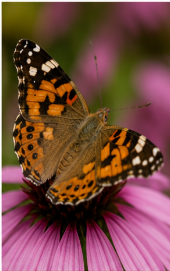
Painted Lady Butterflies (Vanessa cardui) are among the most widespread and recognizable butterflies in the world. Known for their beautiful orange, brown, black, and white wing patterns, these remarkable insects are also famous for their extraordinary long-distance migrations. They occur on every continent except Antarctica and are one of the few butterfly species capable of crossing hundreds or even thousands of miles during seasonal movements.
Unlike many butterflies that rely on only one or two host plants, Painted Lady caterpillars feed on dozens of plant species, making the butterfly highly adaptable to changing environments. Adults are important pollinators that visit a wide variety of flowering plants, while their caterpillars become temporary herbivores in gardens, grasslands, and agricultural areas. Despite occasional feeding damage, Painted Lady Butterflies are considered highly beneficial insects and are valued for both their ecological importance and their beauty.
Overview
The Painted Lady belongs to the brush-footed butterfly family (Nymphalidae) and is one of the world’s most successful butterfly species. Its ability to survive in diverse climates, utilize numerous host plants, and migrate over vast distances has allowed it to establish populations across much of the globe.
Seasonal population explosions sometimes occur after favorable weather conditions, leading to spectacular migrations involving millions of butterflies. These events are especially well known throughout North America, Europe, Africa, Asia, and Australia.
Taxonomy and Classification
- Order: Lepidoptera
- Family: Nymphalidae
- Subfamily: Nymphalinae
- Genus: Vanessa
- Species: Vanessa cardui
- Common Names: Painted Lady Butterfly, Cosmopolitan Butterfly
The Painted Lady is closely related to several other well-known butterflies, including the American Lady and the Red Admiral. Its scientific name reflects its nearly worldwide distribution and remarkable adaptability.
Identification
Adult Painted Lady Butterflies have a wingspan of approximately 2 to 2.5 inches (50–60 mm). Their colorful wings make them relatively easy to distinguish from other butterflies.
- Upper Wings: Bright orange with black markings and white spots near the tips of the forewings.
- Hindwings: Orange and brown with rows of black spots.
- Underside: Mottled tan, gray, and brown with several distinctive eyespots that provide camouflage when the wings are folded.
- Body: Covered with fine hairs and relatively slender compared to many moth species.
- Antennae: Club-shaped, typical of butterflies.
The caterpillars vary considerably in color, ranging from dark brown and black to greenish forms, often covered with branching spines that discourage predators.
Distribution and Habitat
The Painted Lady is one of the few butterfly species found on nearly every continent except Antarctica.
In North America, it occurs throughout the United States, southern Canada, and Mexico. It is particularly common during spring and summer migrations when favorable weather produces large populations.
Preferred habitats include:
- Gardens
- Wildflower meadows
- Prairies
- Open woodlands
- Roadsides
- Agricultural field margins
- Parks
- Desert wildflower blooms
The butterfly is highly adaptable and can thrive wherever flowering plants provide nectar and suitable larval host plants are available.
Life Cycle
Painted Lady Butterflies undergo complete metamorphosis, progressing through egg, caterpillar, chrysalis, and adult stages.
Females lay individual pale green eggs on the leaves of host plants rather than depositing them in clusters. This reduces competition among developing caterpillars.
After hatching, the caterpillars feed on leaves while constructing protective silk shelters by folding or tying leaves together.
As they mature, caterpillars molt several times before forming a chrysalis suspended beneath leaves, stems, fences, or other protected surfaces. Adult butterflies emerge approximately one to two weeks later, depending on temperature.
Several generations may occur each year in warmer climates.
Migration
One of the most remarkable characteristics of the Painted Lady Butterfly is its ability to migrate over enormous distances.
Unlike monarch butterflies, which migrate as a single generation, Painted Lady migrations occur over multiple generations. Individual butterflies complete portions of the journey while their offspring continue the migration.
Scientists have documented migrations involving thousands or even millions of butterflies traveling hundreds to thousands of miles between breeding areas.
These movements are strongly influenced by rainfall, seasonal temperatures, prevailing winds, and the availability of flowering plants.
Feeding Habits
Caterpillars
The larvae feed on numerous host plants, including:
- Thistles
- Mallows
- Sunflowers
- Hollyhocks
- Legumes
- Nettles
- Various native wildflowers
The caterpillars usually feed within silk shelters that provide protection from predators and harsh weather.
Adults
Adult butterflies feed exclusively on nectar using their long coiled proboscis. Favorite nectar sources include:
- Milkweed
- Coneflowers
- Lantana
- Zinnias
- Cosmos
- Verbena
- Asters
- Native wildflowers
As they move between flowers, adults transfer pollen and contribute to the pollination of many native and ornamental plants.
Ecological Importance
Painted Lady Butterflies are valuable members of healthy ecosystems.
- Pollination: Adults help pollinate hundreds of flowering plant species.
- Wildlife Food: Caterpillars and adults provide food for birds, reptiles, spiders, predatory insects, and small mammals.
- Biodiversity: They contribute to healthy meadow and prairie ecosystems.
- Environmental Indicators: Their abundance often reflects favorable weather conditions and healthy native plant communities.
Damage and Economic Importance
Painted Lady Butterflies are generally considered beneficial insects.
Although caterpillars consume leaves of host plants, feeding is usually localized and temporary. Large outbreaks may occasionally defoliate ornamental thistles, mallows, or related plants, but significant economic damage is uncommon.
In most landscapes, the ecological benefits provided by pollination greatly outweigh any minor feeding damage caused by the larvae.
Management and Conservation
Because Painted Lady Butterflies are beneficial, pest control measures are rarely appropriate.
Encouraging Painted Ladies
- Plant nectar-producing flowers throughout the growing season.
- Include native flowering species in landscapes.
- Provide sunny basking locations.
- Avoid unnecessary insecticide applications.
- Allow selected host plants to grow where practical.
Gardeners wishing to support butterfly populations should avoid broad-spectrum insecticides during periods of butterfly activity, as these chemicals can harm both caterpillars and adults.
Research
Painted Lady Butterflies have become important research subjects for studies involving migration, navigation, climate change, genetics, and pollinator ecology.
Scientists continue investigating how these butterflies navigate across continents, respond to changing weather patterns, and maintain one of the longest and most complex migratory cycles known among insects.
Conclusion
Painted Lady Butterflies (Vanessa cardui) are among the world’s most successful and recognizable butterflies. Their beautiful coloration, remarkable migrations, broad host plant range, and valuable pollination services make them one of North America’s most appreciated beneficial insects.
Although their caterpillars occasionally feed on ornamental plants and wildflowers, serious damage is uncommon. Protecting flowering habitats and reducing unnecessary pesticide use helps ensure that these impressive butterflies continue to thrive in gardens, natural landscapes, and agricultural ecosystems.