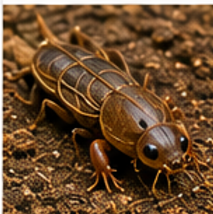
Northern Mole Crickets are large, soil-dwelling insects recognized by their powerful digging legs and extensive underground tunnel systems. Mole crickets can become significant turfgrass, pasture, and agricultural pests because their tunneling disrupts soil and damages plant roots. Several species occur in North America, including native and introduced species, and the severity of damage varies considerably depending on the species present.
In heavily infested turf, mole cricket activity can produce winding surface tunnels, loosened soil, thinning grass, and irregular brown patches. Lawns, golf courses, athletic fields, pastures, sod farms, and other areas of managed turf can be particularly vulnerable. Because most activity occurs underground and at night, populations may become established before property owners realize that mole crickets are responsible for the declining turf.
Taxonomy and Classification
Mole crickets belong to the order Orthoptera, which also includes grasshoppers, katydids, and conventional crickets. They are members of the family Gryllotalpidae.
- Kingdom: Animalia
- Phylum: Arthropoda
- Class: Insecta
- Order: Orthoptera
- Family: Gryllotalpidae
- Common Name: Mole Cricket
Species encountered in North America include native mole crickets as well as introduced species such as the southern mole cricket (Neoscapteriscus borellii). Different species have different diets and damage potential, so accurate identification can be important when deciding whether treatment is necessary.
Mole crickets undergo incomplete metamorphosis, developing through egg, nymph, and adult stages rather than passing through a pupal stage.
Physical Description
Adult mole crickets are usually approximately 1 to 1.5 inches long, although size varies by species. Their bodies are cylindrical and generally tan, yellowish-brown, or dark brown.
Their most recognizable characteristic is the unusual pair of enlarged front legs.
- Forelegs: Broad, powerful, and shovel-like with projections adapted for digging.
- Body: Cylindrical and suited to moving through underground tunnels.
- Antennae: Long and slender.
- Hind Legs: Developed for movement but less specialized for jumping than those of many other crickets.
- Wings: Adults generally possess wings, and some species are capable of substantial flights.
The resemblance of their forelegs to the digging paws of a mole is responsible for the common name mole cricket.
Nymphs and Life Cycle
Young mole crickets, called nymphs, resemble smaller versions of the adults but do not initially have fully developed wings. Females deposit eggs in chambers constructed below the soil surface.
After hatching, the nymphs begin feeding and tunneling. They molt repeatedly as they grow, gradually developing into adults.
Young nymphs are especially important from a pest-management perspective because they are generally easier to control than mature mole crickets. Once adults develop extensive tunnel systems and become highly mobile, management can become considerably more difficult.
Distribution and Habitat
Mole crickets occur in many parts of the world. Pest species are particularly troublesome in warm regions where suitable soil conditions and long growing seasons allow populations to thrive.
They generally prefer moist, relatively loose soil that can be excavated easily. Irrigated turf can therefore provide excellent habitat.
Common environments include:
- Residential lawns
- Golf courses
- Athletic fields
- Sod farms
- Pastures
- Vegetable fields
- Landscaped commercial properties
Sandy and sandy-loam soils are particularly favorable because mole crickets can construct extensive tunnels with relatively little resistance.
Tunneling Behavior
Mole crickets spend much of their lives underground. Their powerful forelegs allow them to push soil aside and create networks of shallow and deeper tunnels.
These tunnels serve several purposes, including feeding, shelter, mating, and escape from unfavorable surface conditions.
Unfortunately, tunneling itself can seriously damage turf. Shallow tunnels may physically separate grass roots from surrounding soil, reducing the plant’s ability to obtain water and nutrients.
The loosened soil also dries more rapidly. During hot or dry weather, turf already weakened by tunneling may deteriorate quickly.
Signs of Mole Cricket Damage
Mole cricket injury is sometimes confused with drought stress, disease, white grub damage, or other turf problems. Looking closely at the soil can help distinguish mole cricket activity.
Common signs include:
- Raised Tunnels: Winding ridges visible immediately below or across the turf surface.
- Loose Soil: Areas that feel unusually soft or spongy when walked upon.
- Thinning Turf: Grass becomes sparse where tunneling is concentrated.
- Brown Patches: Irregular areas of dead or dying grass.
- Root Damage: Grass roots may be cut, disturbed, or separated from surrounding soil.
- Predator Damage: Birds, raccoons, armadillos, or other animals may dig into infested turf while searching for crickets.
Damage may initially appear as narrow lines following underground tunnels before developing into larger irregular patches.
Feeding Habits
Not all mole crickets feed in exactly the same way. Some species consume substantial amounts of plant material, while others are more omnivorous or predatory.
Plant-feeding species may consume:
- Grass roots
- Young shoots
- Seedlings
- Underground plant tissue
Even species that do relatively little direct root feeding can cause substantial turf damage through their mechanical tunneling activity.
Nighttime Activity and Calling
Mole crickets are primarily active during the evening and at night. Adults may leave the soil after dark to disperse or locate mates.
Males of some species construct specialized calling burrows and produce loud songs to attract females. The shape of the burrow can amplify the sound, allowing the call to travel considerable distances.
People may therefore hear mole crickets long before actually seeing one.
Monitoring for Mole Crickets
Early detection is an important part of Integrated Pest Management (IPM). One simple monitoring technique is the soap flush.
A small amount of mild dish soap can be mixed with water and poured over a measured section of suspicious turf. Mole crickets irritated by the solution may move to the surface within several minutes, making them easier to count and identify.
Soap flushing can help determine whether declining turf is associated with mole crickets rather than another lawn problem.
Management and Prevention
Successful mole cricket management combines monitoring, good turf management, biological control, and carefully timed treatments when populations justify intervention.
Maintain Healthy Turf
Healthy grass can tolerate moderate insect activity better than stressed turf. Proper irrigation, mowing, fertilization, drainage, and soil management can improve the ability of turf to recover from minor damage.
Excessive irrigation should be avoided because persistently moist soil can create favorable conditions for mole crickets.
Target Young Nymphs
Timing is one of the most important elements of mole cricket control. Young nymphs are generally more susceptible to treatments than mature adults.
Monitoring during late spring and early summer can help identify newly developing populations before severe damage occurs.
Biological Control
Natural enemies can contribute substantially to long-term suppression of pest mole crickets.
Important biological control organisms include parasitic insects and entomopathogenic nematodes. Certain nematodes can enter mole crickets and introduce symbiotic bacteria that ultimately kill the host.
Biological control has been particularly valuable in areas where invasive mole cricket species have established persistent populations.
Chemical Control
Where populations exceed acceptable levels, appropriately labeled insecticides or mole cricket baits may be used. Treatments are generally most successful when directed against small, actively feeding nymphs rather than mature adults.
Because mole crickets spend much of their time underground, application timing, soil moisture, product selection, and placement can greatly influence results. Always follow the pesticide label and local recommendations for turfgrass pest management.
Ecological Role
Although invasive pest species can cause substantial economic damage, mole crickets as a group are natural components of soil ecosystems. Their tunneling aerates soil, and some species consume other small soil organisms.
For this reason, finding an occasional mole cricket does not automatically justify treatment. Management should be based on the species involved, population density, and actual level of turf or crop damage.
Conservation and Research
Research into mole crickets has produced some notable successes in classical biological control. Scientists continue to study parasitic flies, wasps, nematodes, pathogens, and other natural enemies capable of suppressing damaging populations.
Additional research focuses on improving monitoring techniques, identifying resistant or tolerant turfgrass varieties, understanding seasonal movement, and developing pest-management programs that reduce unnecessary pesticide applications.
Conclusion
Northern Mole Crickets and related mole cricket species are unusual burrowing insects whose shovel-shaped front legs allow them to construct extensive underground tunnel systems. In lawns, golf courses, pastures, and other managed turf, pest species can cause significant damage by disturbing soil, separating roots from the soil, and, in some species, directly feeding on roots and other plant tissues.
The characteristic combination of winding surface tunnels, loosened soil, thinning turf, and irregular dead patches can help distinguish mole cricket injury from drought or disease. Monitoring techniques such as soap flushing can confirm their presence.
Effective management relies on IPM rather than routine treatment. Maintaining healthy turf, monitoring populations, conserving natural enemies, and targeting young nymphs when treatment is actually necessary provide the best opportunity for long-term control while minimizing unnecessary impacts on beneficial soil organisms.