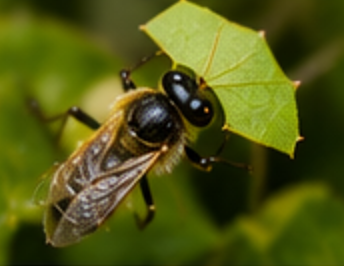
Maple Leafcutting Bees are solitary bees associated with the family Megachilidae, particularly species in the genus Megachile that may collect leaf pieces from maple trees (Acer spp.). The name “maple leafcutting bee” is a descriptive common name rather than a universally recognized name for one specific bee species. These insects use their strong mandibles to cut neat, circular or oval sections from leaves, which they carry to nesting cavities to construct protective cells for their offspring. Although the resulting leaf damage may be noticeable on ornamental maple trees, it is usually cosmetic and rarely threatens tree health. Leafcutting bees are valuable native or naturalized pollinators that contribute to the reproduction of wildflowers, garden plants, and agricultural crops. Understanding their identification, nesting behavior, and ecological importance helps gardeners distinguish harmless leafcutting activity from more serious foliage damage.
Taxonomy and Classification
Maple leafcutting bees belong to the family Megachilidae, which includes leafcutting bees, mason bees, and other solitary bees. Species associated with leafcutting behavior are commonly placed in the genus Megachile.
- Common Name: Maple Leafcutting Bees
- Scientific Classification: Megachile spp. and potentially other leafcutting bees
- Kingdom: Animalia
- Phylum: Arthropoda
- Class: Insecta
- Order: Hymenoptera
- Family: Megachilidae
- Genus: Megachile
- Insect Type: Solitary pollinating bee
- Primary Activity: Collecting leaf sections for nest construction
- Associated Plants: Maple trees and various other broadleaf plants
Leafcutting bees are not closely related to leafcutter ants, despite their similar use of cut plant materials.
Physical Description and Identification
Leafcutting bees are generally robust, hairy insects that resemble small honey bees. Their appearance varies by species, but several characteristics help distinguish them from other bees.
Key Identification Features
- Size: Commonly 6–20 millimeters long, depending on species.
- Body Shape: Compact, sturdy, and somewhat cylindrical.
- Color: Black, dark brown, gray, or occasionally with reddish markings.
- Body Hair: Dense hairs on the thorax and abdomen.
- Head: Relatively broad with strong mandibles.
- Wings: Two pairs of transparent or slightly smoky wings.
- Antennae: Short to moderately long and segmented.
- Pollen-Carrying Structures: Females typically transport pollen on specialized hairs beneath the abdomen.
Distinguishing Leafcutting Bees from Honey Bees
Unlike honey bees, which carry pollen in specialized baskets on their hind legs, female leafcutting bees generally transport pollen using a dense brush of hairs called a scopa on the underside of the abdomen.
Leafcutting bees also tend to live independently rather than forming large colonies with queens and workers.
Distribution and Habitat
Leafcutting bees occur throughout North America and many other regions of the world. Their presence depends on suitable flowering plants, nesting cavities, and accessible leaf materials.
Common habitats include:
- Residential gardens and landscaped yards.
- Urban parks and ornamental tree plantings.
- Deciduous woodlands.
- Forest edges and hedgerows.
- Wildflower meadows.
- Orchards and agricultural landscapes.
- Areas containing dead wood or hollow plant stems.
- Gardens with artificial bee nesting structures.
Maple trees may provide leaf material for nest construction, while nearby flowering plants supply nectar and pollen.
Leafcutting Behavior and Nest Construction
Leafcutting bees do not consume the leaf pieces they remove. Instead, females use them as building materials for their nests.
A female bee lands on a suitable leaf and uses her mandibles to cut a smooth, curved section from the leaf margin. She then carries the piece beneath her body while flying to a nesting site.
Common Nesting Locations
- Hollow plant stems.
- Preexisting tunnels in dead wood.
- Abandoned insect burrows.
- Small cavities in wooden structures.
- Natural crevices.
- Artificial bee nesting tubes.
Within the nesting cavity, the female arranges leaf pieces to form individual brood cells. Each cell receives a supply of pollen and nectar before an egg is deposited and the chamber is sealed.
Several brood cells may be arranged in a linear series within the same cavity.
Life Cycle and Reproduction
Leafcutting bees undergo complete metamorphosis, developing through egg, larva, pupa, and adult stages.
Egg Stage
Female bees lay individual eggs inside prepared brood cells containing pollen and nectar. The surrounding leaf material helps form a protective enclosure.
Larval Stage
After hatching, the larvae feed on the stored pollen and nectar provisions. They remain inside their individual cells throughout development.
Pupal Stage
After completing larval growth, the developing bees undergo metamorphosis within their protected nesting chambers.
Depending on the species and climate, development may pause during winter, with adults emerging the following growing season.
Adult Stage
Adults emerge, mate, and begin searching for flowers and nesting locations. Females independently construct nests and provision cells for their offspring.
Many temperate leafcutting bee species produce one generation annually, although some species may produce additional generations under favorable conditions.
Feeding Behavior and Pollination
Adult leafcutting bees consume nectar for energy and collect pollen to provision their offspring.
They visit a wide range of flowering plants, making them valuable pollinators in gardens and natural ecosystems.
Common Flower Sources
- Native wildflowers.
- Sunflowers.
- Clovers.
- Alfalfa.
- Garden herbs.
- Flowering shrubs.
- Fruit tree blossoms.
- Other nectar- and pollen-producing plants.
Some leafcutting bee species are especially effective pollinators of agricultural crops. The alfalfa leafcutting bee (Megachile rotundata), for example, is commercially managed for alfalfa seed production.
Damage and Signs of Leafcutting Activity
Leafcutting bees produce distinctive leaf damage that is usually easy to recognize.
Common Signs of Maple Leafcutting Bees
- Rounded Leaf Notches: Smooth, circular or semicircular sections missing from leaf edges.
- Oval Cutouts: Larger oval-shaped pieces removed from suitable leaves.
- Repeated Patterns: Multiple similar cuts appearing on several leaves.
- Bee Activity: Bees carrying green leaf pieces toward nesting cavities.
- Leaf-Lined Nests: Small cavities containing neatly arranged leaf sections.
- Localized Foliage Damage: Minor cosmetic injury without widespread defoliation.
Leafcutting damage rarely causes significant harm to established maple trees. Healthy trees generally tolerate the removal of small portions of leaf tissue without measurable effects on growth.
Are Maple Leafcutting Bees Dangerous?
Leafcutting bees are generally gentle and rarely sting unless handled, trapped, or directly threatened.
Unlike social bees and wasps, solitary leafcutting bees do not defend large communal nests.
Females possess stingers, but they are not normally aggressive toward people. Males cannot sting.
Individuals with known insect sting allergies should avoid handling bees and take appropriate precautions around nesting areas.
Maple Leafcutting Bees vs. Other Leaf-Damaging Insects
Leafcutting bee activity can be confused with damage caused by other insects that remove or consume foliage.
- Leafcutting Bees: Produce smooth, rounded cuts along leaf margins and use the pieces for nesting.
- Leafcutter Ants: Remove plant fragments and carry them to underground fungus gardens, primarily in tropical and subtropical regions.
- Caterpillars: Often create irregular feeding holes or extensive leaf-edge damage.
- Japanese Beetles: Feed between leaf veins, producing a skeletonized appearance.
- Leaf Weevils: May produce irregular notches along leaf margins.
- Leaf Miners: Feed within leaf tissue, leaving winding trails or blotches rather than removing entire leaf sections.
The clean, curved edges produced by leafcutting bees are among the most reliable signs of their activity.
Management and Integrated Pest Management (IPM)
Because maple leafcutting bees are beneficial pollinators and usually cause only cosmetic damage, control is rarely necessary.
1. Confirm the Cause of Leaf Damage
Inspect leaf margins for smooth, rounded cuts. Look for bees carrying leaf sections to nearby nesting cavities.
2. Tolerate Minor Leaf Damage
Healthy maple trees and established ornamental plants generally recover without intervention. Minor leafcutting activity should be considered an acceptable part of a pollinator-friendly landscape.
3. Protect Particularly Valuable Young Plants
Where cosmetic damage is unacceptable, temporary fine-mesh barriers may help protect small plants. Ensure coverings do not interfere with plant growth or trap insects.
4. Provide Alternative Nesting Habitat
Suitable nesting structures may encourage leafcutting bees to use designated areas. Properly designed nesting tubes should be kept dry and maintained to reduce parasites and disease.
5. Maintain Diverse Flowering Plants
Planting native flowers that bloom throughout the growing season supports leafcutting bees and other beneficial pollinators.
6. Avoid Broad-Spectrum Insecticides
Insecticide applications aimed at leafcutting bees are generally unnecessary and may harm honey bees, native bees, butterflies, and other beneficial insects.
7. Preserve Active Nests When Possible
Do not seal or destroy occupied nesting cavities unnecessarily. Where nests create a genuine structural or maintenance concern, wait until the nesting cycle is complete before making modifications.
Preventing Excessive Leafcutting Damage
- Maintain healthy maple trees through appropriate watering and care.
- Monitor newly planted trees and ornamental shrubs.
- Accept minor cosmetic leaf damage whenever practical.
- Use temporary physical barriers for particularly sensitive plants.
- Provide suitable flowering plants and nesting habitat.
- Avoid unnecessary pesticide treatments.
- Inspect nesting structures periodically for maintenance needs.
- Preserve beneficial native pollinators.
Ecological Importance
Leafcutting bees contribute significantly to pollination in natural and managed landscapes. Their visits to flowering plants support seed production, plant reproduction, and biodiversity.
Unlike honey bees, which live in large social colonies, most leafcutting bees nest independently. Their solitary nesting behavior makes them important examples of the diversity of native bee life histories.
Leafcutting bees also contribute to agricultural productivity. Certain species are commercially managed for crop pollination, while many others provide valuable pollination services in home gardens and natural habitats.
Conclusion
Maple Leafcutting Bees are beneficial solitary pollinators that may remove neat, circular sections from maple leaves to construct nesting cells for their offspring. Although the resulting leaf notches can be noticeable, they rarely cause meaningful damage to healthy trees.
Effective management emphasizes correct identification, tolerance of minor cosmetic damage, protection of particularly vulnerable plants, and conservation of pollinator habitat. In most situations, maple leafcutting bees should be welcomed rather than treated as harmful pests.