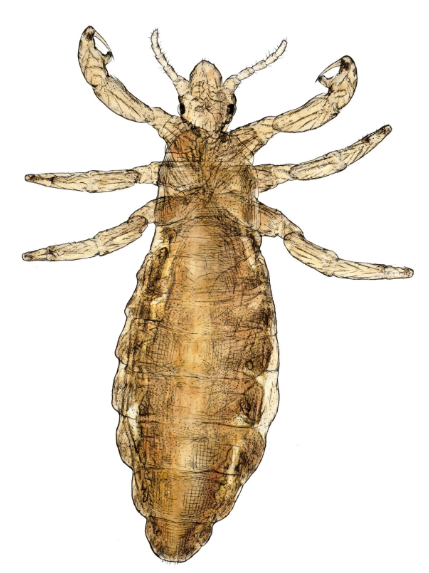
Lice are small, wingless parasitic insects that live on humans, mammals, or birds. Human lice survive by feeding on blood and are highly adapted to particular areas of the body. The three types affecting people are Head Lice (Pediculus humanus capitis), Body Lice (Pediculus humanus humanus or Pediculus humanus corporis), and Pubic Lice (Pthirus pubis), commonly called crab lice.
Lice infestations are medically known as pediculosis. They can cause intense itching, skin irritation, sleep disruption, and emotional distress. Head lice are especially common among school-age children, while body lice are more closely associated with limited access to clean clothing and regular bathing. Pubic lice usually spread through intimate physical contact.
Human lice cannot fly or jump. They move by crawling and usually spread through close contact with an infested person. Although lice are unpleasant, having head lice does not mean that a person or household is dirty.
Taxonomy and Classification
Lice belong to the order Psocodea. Human lice with piercing and sucking mouthparts are traditionally placed in the group Anoplura, commonly called sucking lice.
- Kingdom: Animalia
- Phylum: Arthropoda
- Class: Insecta
- Order: Psocodea
- Group: Anoplura
- Head Louse: Pediculus humanus capitis
- Body Louse: Pediculus humanus humanus
- Pubic Louse: Pthirus pubis
Lice undergo incomplete metamorphosis, developing through egg, nymph, and adult stages. There is no pupal stage.
Physical Description
Adult human lice are approximately 1/16 to 1/8 inch long. Their bodies are flattened, wingless, and usually tan, grayish white, or brown. After feeding, the abdomen may appear darker or reddish because of ingested blood.
- Body: Small, flattened, and wingless
- Legs: Three pairs equipped with gripping claws
- Mouthparts: Adapted for piercing skin and consuming blood
- Movement: Crawling only; lice cannot jump or fly
- Color: Tan, gray, whitish, or brown
The legs end in strong claws that allow lice to hold tightly to hair shafts or clothing fibers. Pubic lice have a shorter, broader body and enlarged claws that give them a crab-like appearance.
Nits and Nymphs
Louse eggs are called nits. Female lice attach their eggs firmly to hair shafts or clothing fibers with a glue-like substance.
Head-lice nits are commonly found close to the scalp, particularly behind the ears and near the neckline. Body-lice eggs are usually attached to the seams and folds of clothing. Pubic-lice nits are attached to coarse hair in the genital region and occasionally to hair elsewhere on the body.
Nits are tiny, oval, and yellowish white or brown. Unlike dandruff, they do not brush away easily. After hatching, immature lice called nymphs resemble smaller versions of adults. They molt several times before reaching maturity.
Types of Human Lice
Head Lice
Head lice live primarily on the scalp and feed several times each day. They are most frequently found around the ears and at the back of the neck. Head lice do not normally transmit disease, but their bites can cause itching and irritation.
Infestations occur most often among preschool and elementary-school children, their household members, and caregivers. Transmission usually results from direct head-to-head contact rather than from furniture or household surfaces.
Body Lice
Body lice live mainly in clothing and bedding rather than continuously on the skin. They move onto the body to feed and then return to clothing seams to hide and lay eggs.
Body lice are more likely to become established when people cannot bathe regularly or change into clean, laundered clothing. Unlike head and pubic lice, body lice can transmit certain bacterial diseases, including epidemic typhus, trench fever, and louse-borne relapsing fever.
Pubic Lice
Pubic lice, or crab lice, usually inhabit coarse hair in the pubic region. They may also occur in armpit hair, chest hair, beards, mustaches, eyebrows, or eyelashes.
They are usually transmitted through intimate or sexual contact. Anyone diagnosed with pubic lice should inform recent sexual partners and consider evaluation for other sexually transmitted infections.
Distribution and Habitat
Human lice occur worldwide and can affect people of any age, income, or background. Their exact habitat depends on the type of louse.
- Head Lice: Scalp hair, especially behind the ears and near the neckline
- Body Lice: Clothing seams, bedding, and areas where fabric touches the skin
- Pubic Lice: Coarse pubic or body hair
Human lice are highly host-specific. Dogs, cats, and other household pets do not carry or spread human head, body, or pubic lice. Veterinary lice found on animals are different species adapted to their particular hosts.
Life Cycle
The louse life cycle consists of egg, nymph, and adult stages. Under suitable conditions, development can be completed within several weeks.
Egg Stage
Females attach nits to hair or clothing. Eggs positioned near the warm skin surface are more likely to hatch successfully.
Nymph Stage
A newly hatched nymph is smaller than an adult but feeds in the same way. It grows through several molts before becoming sexually mature.
Adult Stage
Adults feed repeatedly and remain close to their human host. Human lice generally survive only briefly when separated from a person because they require regular blood meals and appropriate temperature and humidity.
How Lice Spread
Lice spread mainly through close physical contact. Head lice are most often transferred when hair touches the hair of an infested person. Shared beds and prolonged close contact may also permit transfer.
Less commonly, transmission may involve recently used personal items such as:
- Hats and scarves
- Hairbrushes and combs
- Towels
- Pillows and bedding
- Clothing
- Hair accessories
Body lice spread through direct contact or through shared infested clothing and bedding. Pubic lice are generally transmitted through intimate contact. Lice do not leap from one person to another and do not have wings.
Signs of an Infestation
Itching is the most common symptom, but it may not begin immediately during a first infestation. Itching develops as an allergic reaction to louse saliva.
Common signs include:
- Tickling or crawling sensations
- Persistent scalp or body itching
- Red bumps or bite marks
- Scratch marks and irritated skin
- Difficulty sleeping
- Visible crawling lice
- Nits attached firmly to hair or clothing
Repeated scratching may break the skin and allow secondary bacterial infections to develop. A healthcare provider should evaluate painful, swollen, crusted, or draining areas.
Diagnosis
An active head-lice infestation is best confirmed by finding a live crawling louse. Nits alone do not always prove that an active infestation is present because empty or dead eggs may remain attached after successful treatment.
A bright light, magnifying lens, and fine-toothed lice comb can help with inspection. Hair should be examined carefully near the scalp, behind the ears, and around the neck.
Body lice are diagnosed by finding lice or eggs in clothing seams. Pubic lice are diagnosed by identifying crab-like lice or attached nits in coarse body hair.
Head-Lice Treatment
Head lice may be treated with over-the-counter or prescription products. Available treatments may contain ingredients such as permethrin, pyrethrins with piperonyl butoxide, dimethicone, ivermectin, spinosad, benzyl alcohol, or malathion.
The correct treatment depends on age, health, pregnancy status, previous treatment attempts, and local insecticide resistance. Always follow the product label or instructions from a healthcare professional.
- Treat people with a confirmed active infestation.
- Check household members and close contacts.
- Treat infested household members at the same time.
- Use the exact amount and exposure time stated on the label.
- Repeat treatment only when directed.
- Use a lice comb to remove lice and nits where appropriate.
Using excessive amounts, combining different lice medications, or repeating an unsuccessful product too frequently can increase the risk of side effects without improving control.
Manual Removal
Wet combing with a fine-toothed lice comb can remove living lice and nits. Hair is divided into small sections and combed carefully from the scalp toward the ends.
The process should be repeated regularly until no live lice are found. Manual removal is especially useful as a supplement to treatment, although it requires patience and careful inspection.
Cleaning the Home
Extensive spraying or whole-house treatment is unnecessary for head lice. Lice separated from their host do not survive for long, and the risk of transmission from carpets or furniture is low.
Reasonable sanitation steps include:
- Wash recently used clothing, towels, and bedding in hot water.
- Dry washable items using high heat.
- Soak combs and brushes in hot water.
- Vacuum furniture and floors where the infested person rested.
- Seal nonwashable items in a plastic bag when recommended.
Do not use indoor foggers or fumigant sprays for lice. These products are unnecessary and may expose occupants to harmful pesticides.
Body-Lice Management
Body-lice control centers on regular bathing and access to clean clothing and bedding. Infested garments should be machine washed in hot water and dried using high heat.
Medication is often unnecessary when hygiene and clothing changes can be maintained. However, medical treatment may be recommended in certain cases, particularly during disease outbreaks or persistent infestations.
People with body lice who develop fever, severe headache, rash, unusual weakness, or other signs of illness should seek medical attention because body lice can transmit pathogens.
Pubic-Lice Management
Pubic lice may be treated with approved lice-killing products used exactly as directed. Shaving alone does not reliably eliminate an infestation.
Recent sexual partners should be informed, examined, and treated when necessary. Sexual contact should be avoided until treatment has been completed and no active infestation remains.
Lice or nits on eyebrows or eyelashes require professional medical guidance. Ordinary lice products should not be placed near the eyes unless specifically directed by a healthcare provider.
Prevention
- Avoid direct hair-to-hair contact with an infested person.
- Do not share combs, brushes, hats, towels, or bedding.
- Inspect household members after confirmed exposure.
- Launder infested clothing and bedding appropriately.
- Avoid intimate contact until pubic-lice treatment is complete.
- Provide access to bathing and clean clothing to prevent body lice.
Preventive treatment of people who do not have lice is generally unnecessary. Routine inspection after exposure is more appropriate.
Insecticide Resistance and Research
Some head-lice populations have developed resistance to commonly used insecticides, including permethrin and pyrethrins. Apparent treatment failure may also result from incorrect diagnosis, incomplete application, failure to repeat treatment when required, or reinfestation from an untreated close contact.
Research focuses on resistance monitoring, improved diagnostic methods, physically acting products such as dimethicone, heat-based treatments, and safer medications that can kill both lice and eggs.
Conclusion
Lice are host-specific, wingless parasites that survive by feeding on human blood. Head lice are primarily a contagious nuisance, body lice can transmit serious diseases, and pubic lice usually spread through intimate contact.
Successful management begins with correct identification. Head-lice treatment may include an approved medication and careful combing, while body-lice control depends heavily on regular bathing and clean clothing. Pubic lice require treatment of the affected person and appropriate management of recent intimate contacts.
Lice cannot fly or jump, pets do not spread human lice, and excessive household pesticide use is unnecessary. Careful treatment, limited laundering, monitoring, and avoidance of close contact until the infestation is controlled provide the safest and most effective approach.