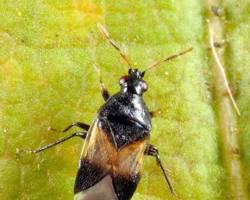
Flower Bugs, more commonly known as Minute Pirate Bugs (Orius spp.), are among the most valuable beneficial insects found in North American gardens, farms, orchards, and greenhouses. Despite measuring only a few millimeters long, these tiny predators consume enormous numbers of agricultural pests, including thrips, aphids, whiteflies, spider mites, and insect eggs. Their appetite for destructive pests makes them one of the most important natural biological control agents used in Integrated Pest Management (IPM) programs.
Although Minute Pirate Bugs occasionally deliver a sharp bite to people working outdoors, they are not aggressive, do not feed on blood, and do not transmit diseases. Their benefits to agriculture and home landscapes far outweigh this temporary nuisance, making them insects that should be protected whenever possible.
Taxonomy and Classification
Minute Pirate Bugs belong to the family Anthocoridae, a group of predatory true bugs commonly called flower bugs or pirate bugs. The genus Orius contains numerous species distributed throughout North America and around the world.
- Order: Hemiptera
- Family: Anthocoridae
- Genus: Orius
- Common Names: Minute Pirate Bugs, Flower Bugs
The most widespread North American species is Orius insidiosus, which is commercially reared and released in greenhouses and crop production systems as a biological control agent.
Physical Description
Minute Pirate Bugs are extremely small but possess several distinctive features that make them recognizable under close inspection.
- Length: 2–5 mm
- Color: Black with white or cream-colored wing patches
- Body: Oval, flattened, and compact
- Eyes: Large and prominent
- Mouthparts: Piercing-sucking beak adapted for capturing prey
Nymphs lack wings and are typically yellow-orange to reddish-brown. As they mature through several molts, they gradually develop darker coloration and wing pads before becoming fully winged adults.
Distribution and Habitat
Minute Pirate Bugs occur throughout most of North America and are found wherever flowering plants support populations of small insects.
Common habitats include:
- Gardens
- Agricultural fields
- Greenhouses
- Orchards
- Wildflower meadows
- Prairies
- Forest edges
- Residential landscapes
They are especially abundant on flowering plants where prey insects are concentrated.
Life Cycle
Minute Pirate Bugs undergo incomplete metamorphosis, progressing through egg, nymph, and adult stages.
- Egg: Females insert eggs into stems, leaves, or flower tissue where they are protected from predators.
- Nymph: Newly hatched nymphs immediately begin hunting small insects and mites.
- Adult: Adults continue feeding, mating, and producing several generations each year in warm climates.
Under favorable conditions, development from egg to adult may require only three to four weeks.
Behavior and Ecology
Minute Pirate Bugs are aggressive predators despite their tiny size. Both adults and nymphs actively patrol flowers and foliage searching for prey.
Their diet commonly includes:
- Thrips
- Aphids
- Spider mites
- Whiteflies
- Scale insect crawlers
- Leafhopper nymphs
- Small caterpillars
- Insect eggs
Using their piercing mouthparts, they inject digestive enzymes into prey before consuming the liquefied body contents. A single Minute Pirate Bug may consume dozens of spider mites or thrips each day.
Biting Humans
Minute Pirate Bugs are well known for occasionally biting people during late summer and early autumn. These bites usually occur when prey becomes scarce or when the insects mistake exposed skin for potential food.
The bite produces a brief, sharp pinprick sensation but:
- Does not transmit diseases
- Contains no medically significant venom
- Rarely causes more than temporary irritation
- Does not indicate an infestation
Because they are highly beneficial predators, these occasional nuisance bites are generally considered a minor inconvenience.
Economic Importance
Minute Pirate Bugs provide enormous economic value by naturally suppressing numerous agricultural pests.
- Biological Control: One of the most effective natural enemies of thrips.
- Reduced Pesticide Use: Helps decrease reliance on chemical insecticides.
- Commercial Availability: Frequently released in greenhouses and specialty crop production.
- Crop Protection: Protects vegetables, fruits, ornamentals, and greenhouse crops.
Their presence often improves crop quality while supporting sustainable pest management programs.
Management and Conservation
Minute Pirate Bugs should generally be encouraged rather than controlled.
- Grow flowering plants that provide nectar and pollen.
- Avoid broad-spectrum insecticides whenever possible.
- Recognize their beneficial role before applying treatments.
- Wear long sleeves during peak activity if nuisance bites become common.
- Maintain diverse landscapes that support beneficial insect populations.
Protecting these predators allows them to naturally suppress many damaging garden pests.
Conservation and Research
Researchers continue to study Orius species because of their exceptional value in Integrated Pest Management. They are widely used in greenhouse biological control programs and serve as model predators for sustainable agriculture. Scientists also investigate their prey preferences, reproduction, and effectiveness against emerging agricultural pests.
Conclusion
Flower Bugs, or Minute Pirate Bugs (Orius spp.), are among the smallest yet most effective beneficial predators found in North American landscapes. Their ability to rapidly reduce populations of thrips, aphids, mites, and other destructive pests makes them invaluable allies for gardeners and farmers alike. Although they occasionally deliver a harmless bite to humans, their contributions to natural pest control far outweigh this minor nuisance, making them insects well worth protecting.