Important host crops include:
- Tomatoes
- Soybeans
- Corn
- Peaches
- Apples
- Beans
- Pecans
- Cotton
Feeding wounds may also allow fungal or bacterial pathogens to enter plant tissue, increasing crop losses.
Defense Mechanisms
Like other stink bugs, Euschistus species possess specialized scent glands that produce strong defensive odors when disturbed or crushed.
The odor helps deter predators such as:
- Birds
- Spiders
- Small mammals
- Predatory insects
The unpleasant smell is one of the defining features of stink bugs.
Economic Importance
Euschistus stink bugs are considered important agricultural pests because they reduce both crop yield and market quality. Cosmetic damage to fruits and vegetables can make produce unmarketable even when internal damage is limited.
Large populations can become especially problematic during warm growing seasons when favorable conditions support rapid reproduction.
Management and Control (IPM)
Monitoring
Regular scouting and crop inspection are essential for early detection of stink bug populations.
- Inspect leaves and fruit regularly
- Use sweep nets in field crops
- Monitor crop edges carefully
Cultural Practices
- Remove weeds that serve as alternate hosts
- Reduce crop residue
- Maintain healthy plant growth
- Rotate crops when possible
Biological Control
Natural enemies such as parasitic wasps, assassin bugs, spiders, and birds help suppress stink bug populations naturally.
Chemical Control
Insecticides may be used when populations exceed economic thresholds, particularly in commercial agriculture.
Conclusion
Euschistus stink bugs are widespread agricultural pests that damage a wide variety of crops through piercing-sucking feeding behavior. Although native species are often less destructive than invasive stink bugs, high populations can still cause serious economic losses in agricultural systems.
Integrated pest management strategies involving monitoring, cultural controls, biological control, and targeted treatments remain the most effective approach for managing Euschistus stink bug populations.
Related Pestipedia Articles
Common feeding damage includes:
- Sunken spots on fruit
- Deformed vegetables
- Seed damage
- Discolored tissue
- Premature fruit drop
- Reduced crop quality
Important host crops include:
- Tomatoes
- Soybeans
- Corn
- Peaches
- Apples
- Beans
- Pecans
- Cotton
Feeding wounds may also allow fungal or bacterial pathogens to enter plant tissue, increasing crop losses.
Defense Mechanisms
Like other stink bugs, Euschistus species possess specialized scent glands that produce strong defensive odors when disturbed or crushed.
The odor helps deter predators such as:
- Birds
- Spiders
- Small mammals
- Predatory insects
The unpleasant smell is one of the defining features of stink bugs.
Economic Importance
Euschistus stink bugs are considered important agricultural pests because they reduce both crop yield and market quality. Cosmetic damage to fruits and vegetables can make produce unmarketable even when internal damage is limited.
Large populations can become especially problematic during warm growing seasons when favorable conditions support rapid reproduction.
Management and Control (IPM)
Monitoring
Regular scouting and crop inspection are essential for early detection of stink bug populations.
- Inspect leaves and fruit regularly
- Use sweep nets in field crops
- Monitor crop edges carefully
Cultural Practices
- Remove weeds that serve as alternate hosts
- Reduce crop residue
- Maintain healthy plant growth
- Rotate crops when possible
Biological Control
Natural enemies such as parasitic wasps, assassin bugs, spiders, and birds help suppress stink bug populations naturally.
Chemical Control
Insecticides may be used when populations exceed economic thresholds, particularly in commercial agriculture.
Conclusion
Euschistus stink bugs are widespread agricultural pests that damage a wide variety of crops through piercing-sucking feeding behavior. Although native species are often less destructive than invasive stink bugs, high populations can still cause serious economic losses in agricultural systems.
Integrated pest management strategies involving monitoring, cultural controls, biological control, and targeted treatments remain the most effective approach for managing Euschistus stink bug populations.
Related Pestipedia Articles
They are commonly found in:
- Agricultural fields
- Gardens
- Orchards
- Woodland edges
- Grasslands
- Urban landscapes
These insects are highly adaptable and may feed on a wide variety of host plants throughout the growing season.
Life Cycle
Euschistus stink bugs undergo incomplete metamorphosis consisting of three main life stages:
- Egg
- Nymph
- Adult
Females lay barrel-shaped eggs in clusters on leaves, stems, and other plant surfaces.
After hatching, nymphs pass through multiple molts while gradually developing adult features and wing pads. Both nymphs and adults feed on plants using piercing mouthparts.
Depending on climate and species, multiple generations may occur each year.
Feeding Behavior and Damage
Euschistus stink bugs damage plants by inserting their needle-like mouthparts into fruits, seeds, stems, and developing plant tissues.
Common feeding damage includes:
- Sunken spots on fruit
- Deformed vegetables
- Seed damage
- Discolored tissue
- Premature fruit drop
- Reduced crop quality
Important host crops include:
- Tomatoes
- Soybeans
- Corn
- Peaches
- Apples
- Beans
- Pecans
- Cotton
Feeding wounds may also allow fungal or bacterial pathogens to enter plant tissue, increasing crop losses.
Defense Mechanisms
Like other stink bugs, Euschistus species possess specialized scent glands that produce strong defensive odors when disturbed or crushed.
The odor helps deter predators such as:
- Birds
- Spiders
- Small mammals
- Predatory insects
The unpleasant smell is one of the defining features of stink bugs.
Economic Importance
Euschistus stink bugs are considered important agricultural pests because they reduce both crop yield and market quality. Cosmetic damage to fruits and vegetables can make produce unmarketable even when internal damage is limited.
Large populations can become especially problematic during warm growing seasons when favorable conditions support rapid reproduction.
Management and Control (IPM)
Monitoring
Regular scouting and crop inspection are essential for early detection of stink bug populations.
- Inspect leaves and fruit regularly
- Use sweep nets in field crops
- Monitor crop edges carefully
Cultural Practices
- Remove weeds that serve as alternate hosts
- Reduce crop residue
- Maintain healthy plant growth
- Rotate crops when possible
Biological Control
Natural enemies such as parasitic wasps, assassin bugs, spiders, and birds help suppress stink bug populations naturally.
Chemical Control
Insecticides may be used when populations exceed economic thresholds, particularly in commercial agriculture.
Conclusion
Euschistus stink bugs are widespread agricultural pests that damage a wide variety of crops through piercing-sucking feeding behavior. Although native species are often less destructive than invasive stink bugs, high populations can still cause serious economic losses in agricultural systems.
Integrated pest management strategies involving monitoring, cultural controls, biological control, and targeted treatments remain the most effective approach for managing Euschistus stink bug populations.
Related Pestipedia Articles
Key identifying characteristics include:
- Broad shield-shaped body
- Triangular scutellum on the back
- Alternating light and dark abdominal edges
- Piercing-sucking mouthparts
- Distinctive odor released when disturbed
Nymphs resemble adults but are smaller, rounder, and wingless during early developmental stages.
Distribution and Habitat
Euschistus stink bugs are widely distributed throughout the United States, Canada, Mexico, and parts of Central America.
They are commonly found in:
- Agricultural fields
- Gardens
- Orchards
- Woodland edges
- Grasslands
- Urban landscapes
These insects are highly adaptable and may feed on a wide variety of host plants throughout the growing season.
Life Cycle
Euschistus stink bugs undergo incomplete metamorphosis consisting of three main life stages:
- Egg
- Nymph
- Adult
Females lay barrel-shaped eggs in clusters on leaves, stems, and other plant surfaces.
After hatching, nymphs pass through multiple molts while gradually developing adult features and wing pads. Both nymphs and adults feed on plants using piercing mouthparts.
Depending on climate and species, multiple generations may occur each year.
Feeding Behavior and Damage
Euschistus stink bugs damage plants by inserting their needle-like mouthparts into fruits, seeds, stems, and developing plant tissues.
Common feeding damage includes:
- Sunken spots on fruit
- Deformed vegetables
- Seed damage
- Discolored tissue
- Premature fruit drop
- Reduced crop quality
Important host crops include:
- Tomatoes
- Soybeans
- Corn
- Peaches
- Apples
- Beans
- Pecans
- Cotton
Feeding wounds may also allow fungal or bacterial pathogens to enter plant tissue, increasing crop losses.
Defense Mechanisms
Like other stink bugs, Euschistus species possess specialized scent glands that produce strong defensive odors when disturbed or crushed.
The odor helps deter predators such as:
- Birds
- Spiders
- Small mammals
- Predatory insects
The unpleasant smell is one of the defining features of stink bugs.
Economic Importance
Euschistus stink bugs are considered important agricultural pests because they reduce both crop yield and market quality. Cosmetic damage to fruits and vegetables can make produce unmarketable even when internal damage is limited.
Large populations can become especially problematic during warm growing seasons when favorable conditions support rapid reproduction.
Management and Control (IPM)
Monitoring
Regular scouting and crop inspection are essential for early detection of stink bug populations.
- Inspect leaves and fruit regularly
- Use sweep nets in field crops
- Monitor crop edges carefully
Cultural Practices
- Remove weeds that serve as alternate hosts
- Reduce crop residue
- Maintain healthy plant growth
- Rotate crops when possible
Biological Control
Natural enemies such as parasitic wasps, assassin bugs, spiders, and birds help suppress stink bug populations naturally.
Chemical Control
Insecticides may be used when populations exceed economic thresholds, particularly in commercial agriculture.
Conclusion
Euschistus stink bugs are widespread agricultural pests that damage a wide variety of crops through piercing-sucking feeding behavior. Although native species are often less destructive than invasive stink bugs, high populations can still cause serious economic losses in agricultural systems.
Integrated pest management strategies involving monitoring, cultural controls, biological control, and targeted treatments remain the most effective approach for managing Euschistus stink bug populations.
Related Pestipedia Articles
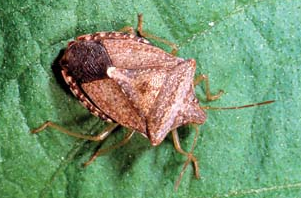
Euschistus stink bugs are a group of shield-shaped plant-feeding insects within the family Pentatomidae. These insects are commonly referred to as brown stink bugs and are among the most widespread agricultural pests affecting fruits, vegetables, grains, and ornamental crops throughout North America. Several species within the genus Euschistus are considered economically important because of their feeding damage to developing crops and harvested produce.
Like other stink bugs, members of the genus Euschistus possess specialized piercing-sucking mouthparts that allow them to feed on plant juices. During feeding, they inject digestive enzymes into plant tissue, which can cause deformities, discoloration, and reduced crop quality. They are closely related to the invasive Brown Marmorated Stink Bug, although most native Euschistus species are less destructive.
Taxonomy and Classification
- Order: Hemiptera
- Family: Pentatomidae
- Genus: Euschistus
- Common Names: Brown Stink Bugs, Euschistus Stink Bugs
The genus Euschistus contains numerous species distributed throughout North America. Common species include:
- Euschistus servus – Brown Stink Bug
- Euschistus tristigmus – Dusky Stink Bug
- Euschistus variolarius – One-Spotted Stink Bug
These insects belong to the true bug order Hemiptera and undergo incomplete metamorphosis, meaning immature stages resemble small wingless adults.
Identification
Euschistus stink bugs are medium-sized shield-shaped insects typically measuring 10–15 mm in length. Their coloration usually ranges from tan and brown to grayish-brown, allowing them to camouflage effectively among bark, foliage, and crop residue.
Key identifying characteristics include:
- Broad shield-shaped body
- Triangular scutellum on the back
- Alternating light and dark abdominal edges
- Piercing-sucking mouthparts
- Distinctive odor released when disturbed
Nymphs resemble adults but are smaller, rounder, and wingless during early developmental stages.
Distribution and Habitat
Euschistus stink bugs are widely distributed throughout the United States, Canada, Mexico, and parts of Central America.
They are commonly found in:
- Agricultural fields
- Gardens
- Orchards
- Woodland edges
- Grasslands
- Urban landscapes
These insects are highly adaptable and may feed on a wide variety of host plants throughout the growing season.
Life Cycle
Euschistus stink bugs undergo incomplete metamorphosis consisting of three main life stages:
- Egg
- Nymph
- Adult
Females lay barrel-shaped eggs in clusters on leaves, stems, and other plant surfaces.
After hatching, nymphs pass through multiple molts while gradually developing adult features and wing pads. Both nymphs and adults feed on plants using piercing mouthparts.
Depending on climate and species, multiple generations may occur each year.
Feeding Behavior and Damage
Euschistus stink bugs damage plants by inserting their needle-like mouthparts into fruits, seeds, stems, and developing plant tissues.
Common feeding damage includes:
- Sunken spots on fruit
- Deformed vegetables
- Seed damage
- Discolored tissue
- Premature fruit drop
- Reduced crop quality
Important host crops include:
- Tomatoes
- Soybeans
- Corn
- Peaches
- Apples
- Beans
- Pecans
- Cotton
Feeding wounds may also allow fungal or bacterial pathogens to enter plant tissue, increasing crop losses.
Defense Mechanisms
Like other stink bugs, Euschistus species possess specialized scent glands that produce strong defensive odors when disturbed or crushed.
The odor helps deter predators such as:
- Birds
- Spiders
- Small mammals
- Predatory insects
The unpleasant smell is one of the defining features of stink bugs.
Economic Importance
Euschistus stink bugs are considered important agricultural pests because they reduce both crop yield and market quality. Cosmetic damage to fruits and vegetables can make produce unmarketable even when internal damage is limited.
Large populations can become especially problematic during warm growing seasons when favorable conditions support rapid reproduction.
Management and Control (IPM)
Monitoring
Regular scouting and crop inspection are essential for early detection of stink bug populations.
- Inspect leaves and fruit regularly
- Use sweep nets in field crops
- Monitor crop edges carefully
Cultural Practices
- Remove weeds that serve as alternate hosts
- Reduce crop residue
- Maintain healthy plant growth
- Rotate crops when possible
Biological Control
Natural enemies such as parasitic wasps, assassin bugs, spiders, and birds help suppress stink bug populations naturally.
Chemical Control
Insecticides may be used when populations exceed economic thresholds, particularly in commercial agriculture.
Conclusion
Euschistus stink bugs are widespread agricultural pests that damage a wide variety of crops through piercing-sucking feeding behavior. Although native species are often less destructive than invasive stink bugs, high populations can still cause serious economic losses in agricultural systems.
Integrated pest management strategies involving monitoring, cultural controls, biological control, and targeted treatments remain the most effective approach for managing Euschistus stink bug populations.
Related Pestipedia Articles
Common feeding damage includes:
- Sunken spots on fruit
- Deformed vegetables
- Seed damage
- Discolored tissue
- Premature fruit drop
- Reduced crop quality
Important host crops include:
- Tomatoes
- Soybeans
- Corn
- Peaches
- Apples
- Beans
- Pecans
- Cotton
Feeding wounds may also allow fungal or bacterial pathogens to enter plant tissue, increasing crop losses.
Defense Mechanisms
Like other stink bugs, Euschistus species possess specialized scent glands that produce strong defensive odors when disturbed or crushed.
The odor helps deter predators such as:
- Birds
- Spiders
- Small mammals
- Predatory insects
The unpleasant smell is one of the defining features of stink bugs.
Economic Importance
Euschistus stink bugs are considered important agricultural pests because they reduce both crop yield and market quality. Cosmetic damage to fruits and vegetables can make produce unmarketable even when internal damage is limited.
Large populations can become especially problematic during warm growing seasons when favorable conditions support rapid reproduction.
Management and Control (IPM)
Monitoring
Regular scouting and crop inspection are essential for early detection of stink bug populations.
- Inspect leaves and fruit regularly
- Use sweep nets in field crops
- Monitor crop edges carefully
Cultural Practices
- Remove weeds that serve as alternate hosts
- Reduce crop residue
- Maintain healthy plant growth
- Rotate crops when possible
Biological Control
Natural enemies such as parasitic wasps, assassin bugs, spiders, and birds help suppress stink bug populations naturally.
Chemical Control
Insecticides may be used when populations exceed economic thresholds, particularly in commercial agriculture.
Conclusion
Euschistus stink bugs are widespread agricultural pests that damage a wide variety of crops through piercing-sucking feeding behavior. Although native species are often less destructive than invasive stink bugs, high populations can still cause serious economic losses in agricultural systems.
Integrated pest management strategies involving monitoring, cultural controls, biological control, and targeted treatments remain the most effective approach for managing Euschistus stink bug populations.
Related Pestipedia Articles
Euschistus stink bugs are a group of shield-shaped plant-feeding insects within the family Pentatomidae. These insects are commonly referred to as brown stink bugs and are among the most widespread agricultural pests affecting fruits, vegetables, grains, and ornamental crops throughout North America. Several species within the genus Euschistus are considered economically important because of their feeding damage to developing crops and harvested produce.
Like other stink bugs, members of the genus Euschistus possess specialized piercing-sucking mouthparts that allow them to feed on plant juices. During feeding, they inject digestive enzymes into plant tissue, which can cause deformities, discoloration, and reduced crop quality. They are closely related to the invasive Brown Marmorated Stink Bug, although most native Euschistus species are less destructive.
Taxonomy and Classification
- Order: Hemiptera
- Family: Pentatomidae
- Genus: Euschistus
- Common Names: Brown Stink Bugs, Euschistus Stink Bugs
The genus Euschistus contains numerous species distributed throughout North America. Common species include:
- Euschistus servus – Brown Stink Bug
- Euschistus tristigmus – Dusky Stink Bug
- Euschistus variolarius – One-Spotted Stink Bug
These insects belong to the true bug order Hemiptera and undergo incomplete metamorphosis, meaning immature stages resemble small wingless adults.
Identification
Euschistus stink bugs are medium-sized shield-shaped insects typically measuring 10–15 mm in length. Their coloration usually ranges from tan and brown to grayish-brown, allowing them to camouflage effectively among bark, foliage, and crop residue.
Key identifying characteristics include:
- Broad shield-shaped body
- Triangular scutellum on the back
- Alternating light and dark abdominal edges
- Piercing-sucking mouthparts
- Distinctive odor released when disturbed
Nymphs resemble adults but are smaller, rounder, and wingless during early developmental stages.
Distribution and Habitat
Euschistus stink bugs are widely distributed throughout the United States, Canada, Mexico, and parts of Central America.
They are commonly found in:
- Agricultural fields
- Gardens
- Orchards
- Woodland edges
- Grasslands
- Urban landscapes
These insects are highly adaptable and may feed on a wide variety of host plants throughout the growing season.
Life Cycle
Euschistus stink bugs undergo incomplete metamorphosis consisting of three main life stages:
- Egg
- Nymph
- Adult
Females lay barrel-shaped eggs in clusters on leaves, stems, and other plant surfaces.
After hatching, nymphs pass through multiple molts while gradually developing adult features and wing pads. Both nymphs and adults feed on plants using piercing mouthparts.
Depending on climate and species, multiple generations may occur each year.
Feeding Behavior and Damage
Euschistus stink bugs damage plants by inserting their needle-like mouthparts into fruits, seeds, stems, and developing plant tissues.
Common feeding damage includes:
- Sunken spots on fruit
- Deformed vegetables
- Seed damage
- Discolored tissue
- Premature fruit drop
- Reduced crop quality
Important host crops include:
- Tomatoes
- Soybeans
- Corn
- Peaches
- Apples
- Beans
- Pecans
- Cotton
Feeding wounds may also allow fungal or bacterial pathogens to enter plant tissue, increasing crop losses.
Defense Mechanisms
Like other stink bugs, Euschistus species possess specialized scent glands that produce strong defensive odors when disturbed or crushed.
The odor helps deter predators such as:
- Birds
- Spiders
- Small mammals
- Predatory insects
The unpleasant smell is one of the defining features of stink bugs.
Economic Importance
Euschistus stink bugs are considered important agricultural pests because they reduce both crop yield and market quality. Cosmetic damage to fruits and vegetables can make produce unmarketable even when internal damage is limited.
Large populations can become especially problematic during warm growing seasons when favorable conditions support rapid reproduction.
Management and Control (IPM)
Monitoring
Regular scouting and crop inspection are essential for early detection of stink bug populations.
- Inspect leaves and fruit regularly
- Use sweep nets in field crops
- Monitor crop edges carefully
Cultural Practices
- Remove weeds that serve as alternate hosts
- Reduce crop residue
- Maintain healthy plant growth
- Rotate crops when possible
Biological Control
Natural enemies such as parasitic wasps, assassin bugs, spiders, and birds help suppress stink bug populations naturally.
Chemical Control
Insecticides may be used when populations exceed economic thresholds, particularly in commercial agriculture.
Conclusion
Euschistus stink bugs are widespread agricultural pests that damage a wide variety of crops through piercing-sucking feeding behavior. Although native species are often less destructive than invasive stink bugs, high populations can still cause serious economic losses in agricultural systems.
Integrated pest management strategies involving monitoring, cultural controls, biological control, and targeted treatments remain the most effective approach for managing Euschistus stink bug populations.
Related Pestipedia Articles
They are commonly found in:
- Agricultural fields
- Gardens
- Orchards
- Woodland edges
- Grasslands
- Urban landscapes
These insects are highly adaptable and may feed on a wide variety of host plants throughout the growing season.
Life Cycle
Euschistus stink bugs undergo incomplete metamorphosis consisting of three main life stages:
- Egg
- Nymph
- Adult
Females lay barrel-shaped eggs in clusters on leaves, stems, and other plant surfaces.
After hatching, nymphs pass through multiple molts while gradually developing adult features and wing pads. Both nymphs and adults feed on plants using piercing mouthparts.
Depending on climate and species, multiple generations may occur each year.
Feeding Behavior and Damage
Euschistus stink bugs damage plants by inserting their needle-like mouthparts into fruits, seeds, stems, and developing plant tissues.
Common feeding damage includes:
- Sunken spots on fruit
- Deformed vegetables
- Seed damage
- Discolored tissue
- Premature fruit drop
- Reduced crop quality
Important host crops include:
- Tomatoes
- Soybeans
- Corn
- Peaches
- Apples
- Beans
- Pecans
- Cotton
Feeding wounds may also allow fungal or bacterial pathogens to enter plant tissue, increasing crop losses.
Defense Mechanisms
Like other stink bugs, Euschistus species possess specialized scent glands that produce strong defensive odors when disturbed or crushed.
The odor helps deter predators such as:
- Birds
- Spiders
- Small mammals
- Predatory insects
The unpleasant smell is one of the defining features of stink bugs.
Economic Importance
Euschistus stink bugs are considered important agricultural pests because they reduce both crop yield and market quality. Cosmetic damage to fruits and vegetables can make produce unmarketable even when internal damage is limited.
Large populations can become especially problematic during warm growing seasons when favorable conditions support rapid reproduction.
Management and Control (IPM)
Monitoring
Regular scouting and crop inspection are essential for early detection of stink bug populations.
- Inspect leaves and fruit regularly
- Use sweep nets in field crops
- Monitor crop edges carefully
Cultural Practices
- Remove weeds that serve as alternate hosts
- Reduce crop residue
- Maintain healthy plant growth
- Rotate crops when possible
Biological Control
Natural enemies such as parasitic wasps, assassin bugs, spiders, and birds help suppress stink bug populations naturally.
Chemical Control
Insecticides may be used when populations exceed economic thresholds, particularly in commercial agriculture.
Conclusion
Euschistus stink bugs are widespread agricultural pests that damage a wide variety of crops through piercing-sucking feeding behavior. Although native species are often less destructive than invasive stink bugs, high populations can still cause serious economic losses in agricultural systems.
Integrated pest management strategies involving monitoring, cultural controls, biological control, and targeted treatments remain the most effective approach for managing Euschistus stink bug populations.
Related Pestipedia Articles
Euschistus stink bugs are a group of shield-shaped plant-feeding insects within the family Pentatomidae. These insects are commonly referred to as brown stink bugs and are among the most widespread agricultural pests affecting fruits, vegetables, grains, and ornamental crops throughout North America. Several species within the genus Euschistus are considered economically important because of their feeding damage to developing crops and harvested produce.
Like other stink bugs, members of the genus Euschistus possess specialized piercing-sucking mouthparts that allow them to feed on plant juices. During feeding, they inject digestive enzymes into plant tissue, which can cause deformities, discoloration, and reduced crop quality. They are closely related to the invasive Brown Marmorated Stink Bug, although most native Euschistus species are less destructive.
Taxonomy and Classification
- Order: Hemiptera
- Family: Pentatomidae
- Genus: Euschistus
- Common Names: Brown Stink Bugs, Euschistus Stink Bugs
The genus Euschistus contains numerous species distributed throughout North America. Common species include:
- Euschistus servus – Brown Stink Bug
- Euschistus tristigmus – Dusky Stink Bug
- Euschistus variolarius – One-Spotted Stink Bug
These insects belong to the true bug order Hemiptera and undergo incomplete metamorphosis, meaning immature stages resemble small wingless adults.
Identification
Euschistus stink bugs are medium-sized shield-shaped insects typically measuring 10–15 mm in length. Their coloration usually ranges from tan and brown to grayish-brown, allowing them to camouflage effectively among bark, foliage, and crop residue.
Key identifying characteristics include:
- Broad shield-shaped body
- Triangular scutellum on the back
- Alternating light and dark abdominal edges
- Piercing-sucking mouthparts
- Distinctive odor released when disturbed
Nymphs resemble adults but are smaller, rounder, and wingless during early developmental stages.
Distribution and Habitat
Euschistus stink bugs are widely distributed throughout the United States, Canada, Mexico, and parts of Central America.
They are commonly found in:
- Agricultural fields
- Gardens
- Orchards
- Woodland edges
- Grasslands
- Urban landscapes
These insects are highly adaptable and may feed on a wide variety of host plants throughout the growing season.
Life Cycle
Euschistus stink bugs undergo incomplete metamorphosis consisting of three main life stages:
- Egg
- Nymph
- Adult
Females lay barrel-shaped eggs in clusters on leaves, stems, and other plant surfaces.
After hatching, nymphs pass through multiple molts while gradually developing adult features and wing pads. Both nymphs and adults feed on plants using piercing mouthparts.
Depending on climate and species, multiple generations may occur each year.
Feeding Behavior and Damage
Euschistus stink bugs damage plants by inserting their needle-like mouthparts into fruits, seeds, stems, and developing plant tissues.
Common feeding damage includes:
- Sunken spots on fruit
- Deformed vegetables
- Seed damage
- Discolored tissue
- Premature fruit drop
- Reduced crop quality
Important host crops include:
- Tomatoes
- Soybeans
- Corn
- Peaches
- Apples
- Beans
- Pecans
- Cotton
Feeding wounds may also allow fungal or bacterial pathogens to enter plant tissue, increasing crop losses.
Defense Mechanisms
Like other stink bugs, Euschistus species possess specialized scent glands that produce strong defensive odors when disturbed or crushed.
The odor helps deter predators such as:
- Birds
- Spiders
- Small mammals
- Predatory insects
The unpleasant smell is one of the defining features of stink bugs.
Economic Importance
Euschistus stink bugs are considered important agricultural pests because they reduce both crop yield and market quality. Cosmetic damage to fruits and vegetables can make produce unmarketable even when internal damage is limited.
Large populations can become especially problematic during warm growing seasons when favorable conditions support rapid reproduction.
Management and Control (IPM)
Monitoring
Regular scouting and crop inspection are essential for early detection of stink bug populations.
- Inspect leaves and fruit regularly
- Use sweep nets in field crops
- Monitor crop edges carefully
Cultural Practices
- Remove weeds that serve as alternate hosts
- Reduce crop residue
- Maintain healthy plant growth
- Rotate crops when possible
Biological Control
Natural enemies such as parasitic wasps, assassin bugs, spiders, and birds help suppress stink bug populations naturally.
Chemical Control
Insecticides may be used when populations exceed economic thresholds, particularly in commercial agriculture.
Conclusion
Euschistus stink bugs are widespread agricultural pests that damage a wide variety of crops through piercing-sucking feeding behavior. Although native species are often less destructive than invasive stink bugs, high populations can still cause serious economic losses in agricultural systems.
Integrated pest management strategies involving monitoring, cultural controls, biological control, and targeted treatments remain the most effective approach for managing Euschistus stink bug populations.
Related Pestipedia Articles
Key identifying characteristics include:
- Broad shield-shaped body
- Triangular scutellum on the back
- Alternating light and dark abdominal edges
- Piercing-sucking mouthparts
- Distinctive odor released when disturbed
Nymphs resemble adults but are smaller, rounder, and wingless during early developmental stages.
Distribution and Habitat
Euschistus stink bugs are widely distributed throughout the United States, Canada, Mexico, and parts of Central America.
They are commonly found in:
- Agricultural fields
- Gardens
- Orchards
- Woodland edges
- Grasslands
- Urban landscapes
These insects are highly adaptable and may feed on a wide variety of host plants throughout the growing season.
Life Cycle
Euschistus stink bugs undergo incomplete metamorphosis consisting of three main life stages:
- Egg
- Nymph
- Adult
Females lay barrel-shaped eggs in clusters on leaves, stems, and other plant surfaces.
After hatching, nymphs pass through multiple molts while gradually developing adult features and wing pads. Both nymphs and adults feed on plants using piercing mouthparts.
Depending on climate and species, multiple generations may occur each year.
Feeding Behavior and Damage
Euschistus stink bugs damage plants by inserting their needle-like mouthparts into fruits, seeds, stems, and developing plant tissues.
Common feeding damage includes:
- Sunken spots on fruit
- Deformed vegetables
- Seed damage
- Discolored tissue
- Premature fruit drop
- Reduced crop quality
Important host crops include:
- Tomatoes
- Soybeans
- Corn
- Peaches
- Apples
- Beans
- Pecans
- Cotton
Feeding wounds may also allow fungal or bacterial pathogens to enter plant tissue, increasing crop losses.
Defense Mechanisms
Like other stink bugs, Euschistus species possess specialized scent glands that produce strong defensive odors when disturbed or crushed.
The odor helps deter predators such as:
- Birds
- Spiders
- Small mammals
- Predatory insects
The unpleasant smell is one of the defining features of stink bugs.
Economic Importance
Euschistus stink bugs are considered important agricultural pests because they reduce both crop yield and market quality. Cosmetic damage to fruits and vegetables can make produce unmarketable even when internal damage is limited.
Large populations can become especially problematic during warm growing seasons when favorable conditions support rapid reproduction.
Management and Control (IPM)
Monitoring
Regular scouting and crop inspection are essential for early detection of stink bug populations.
- Inspect leaves and fruit regularly
- Use sweep nets in field crops
- Monitor crop edges carefully
Cultural Practices
- Remove weeds that serve as alternate hosts
- Reduce crop residue
- Maintain healthy plant growth
- Rotate crops when possible
Biological Control
Natural enemies such as parasitic wasps, assassin bugs, spiders, and birds help suppress stink bug populations naturally.
Chemical Control
Insecticides may be used when populations exceed economic thresholds, particularly in commercial agriculture.
Conclusion
Euschistus stink bugs are widespread agricultural pests that damage a wide variety of crops through piercing-sucking feeding behavior. Although native species are often less destructive than invasive stink bugs, high populations can still cause serious economic losses in agricultural systems.
Integrated pest management strategies involving monitoring, cultural controls, biological control, and targeted treatments remain the most effective approach for managing Euschistus stink bug populations.
Related Pestipedia Articles
Euschistus stink bugs are a group of shield-shaped plant-feeding insects within the family Pentatomidae. These insects are commonly referred to as brown stink bugs and are among the most widespread agricultural pests affecting fruits, vegetables, grains, and ornamental crops throughout North America. Several species within the genus Euschistus are considered economically important because of their feeding damage to developing crops and harvested produce.
Like other stink bugs, members of the genus Euschistus possess specialized piercing-sucking mouthparts that allow them to feed on plant juices. During feeding, they inject digestive enzymes into plant tissue, which can cause deformities, discoloration, and reduced crop quality. They are closely related to the invasive Brown Marmorated Stink Bug, although most native Euschistus species are less destructive.
Taxonomy and Classification
- Order: Hemiptera
- Family: Pentatomidae
- Genus: Euschistus
- Common Names: Brown Stink Bugs, Euschistus Stink Bugs
The genus Euschistus contains numerous species distributed throughout North America. Common species include:
- Euschistus servus – Brown Stink Bug
- Euschistus tristigmus – Dusky Stink Bug
- Euschistus variolarius – One-Spotted Stink Bug
These insects belong to the true bug order Hemiptera and undergo incomplete metamorphosis, meaning immature stages resemble small wingless adults.
Identification
Euschistus stink bugs are medium-sized shield-shaped insects typically measuring 10–15 mm in length. Their coloration usually ranges from tan and brown to grayish-brown, allowing them to camouflage effectively among bark, foliage, and crop residue.
Key identifying characteristics include:
- Broad shield-shaped body
- Triangular scutellum on the back
- Alternating light and dark abdominal edges
- Piercing-sucking mouthparts
- Distinctive odor released when disturbed
Nymphs resemble adults but are smaller, rounder, and wingless during early developmental stages.
Distribution and Habitat
Euschistus stink bugs are widely distributed throughout the United States, Canada, Mexico, and parts of Central America.
They are commonly found in:
- Agricultural fields
- Gardens
- Orchards
- Woodland edges
- Grasslands
- Urban landscapes
These insects are highly adaptable and may feed on a wide variety of host plants throughout the growing season.
Life Cycle
Euschistus stink bugs undergo incomplete metamorphosis consisting of three main life stages:
- Egg
- Nymph
- Adult
Females lay barrel-shaped eggs in clusters on leaves, stems, and other plant surfaces.
After hatching, nymphs pass through multiple molts while gradually developing adult features and wing pads. Both nymphs and adults feed on plants using piercing mouthparts.
Depending on climate and species, multiple generations may occur each year.
Feeding Behavior and Damage
Euschistus stink bugs damage plants by inserting their needle-like mouthparts into fruits, seeds, stems, and developing plant tissues.
Common feeding damage includes:
- Sunken spots on fruit
- Deformed vegetables
- Seed damage
- Discolored tissue
- Premature fruit drop
- Reduced crop quality
Important host crops include:
- Tomatoes
- Soybeans
- Corn
- Peaches
- Apples
- Beans
- Pecans
- Cotton
Feeding wounds may also allow fungal or bacterial pathogens to enter plant tissue, increasing crop losses.
Defense Mechanisms
Like other stink bugs, Euschistus species possess specialized scent glands that produce strong defensive odors when disturbed or crushed.
The odor helps deter predators such as:
- Birds
- Spiders
- Small mammals
- Predatory insects
The unpleasant smell is one of the defining features of stink bugs.
Economic Importance
Euschistus stink bugs are considered important agricultural pests because they reduce both crop yield and market quality. Cosmetic damage to fruits and vegetables can make produce unmarketable even when internal damage is limited.
Large populations can become especially problematic during warm growing seasons when favorable conditions support rapid reproduction.
Management and Control (IPM)
Monitoring
Regular scouting and crop inspection are essential for early detection of stink bug populations.
- Inspect leaves and fruit regularly
- Use sweep nets in field crops
- Monitor crop edges carefully
Cultural Practices
- Remove weeds that serve as alternate hosts
- Reduce crop residue
- Maintain healthy plant growth
- Rotate crops when possible
Biological Control
Natural enemies such as parasitic wasps, assassin bugs, spiders, and birds help suppress stink bug populations naturally.
Chemical Control
Insecticides may be used when populations exceed economic thresholds, particularly in commercial agriculture.
Conclusion
Euschistus stink bugs are widespread agricultural pests that damage a wide variety of crops through piercing-sucking feeding behavior. Although native species are often less destructive than invasive stink bugs, high populations can still cause serious economic losses in agricultural systems.
Integrated pest management strategies involving monitoring, cultural controls, biological control, and targeted treatments remain the most effective approach for managing Euschistus stink bug populations.
Related Pestipedia Articles
Common feeding damage includes:
- Sunken spots on fruit
- Deformed vegetables
- Seed damage
- Discolored tissue
- Premature fruit drop
- Reduced crop quality
Important host crops include:
- Tomatoes
- Soybeans
- Corn
- Peaches
- Apples
- Beans
- Pecans
- Cotton
Feeding wounds may also allow fungal or bacterial pathogens to enter plant tissue, increasing crop losses.
Defense Mechanisms
Like other stink bugs, Euschistus species possess specialized scent glands that produce strong defensive odors when disturbed or crushed.
The odor helps deter predators such as:
- Birds
- Spiders
- Small mammals
- Predatory insects
The unpleasant smell is one of the defining features of stink bugs.
Economic Importance
Euschistus stink bugs are considered important agricultural pests because they reduce both crop yield and market quality. Cosmetic damage to fruits and vegetables can make produce unmarketable even when internal damage is limited.
Large populations can become especially problematic during warm growing seasons when favorable conditions support rapid reproduction.
Management and Control (IPM)
Monitoring
Regular scouting and crop inspection are essential for early detection of stink bug populations.
- Inspect leaves and fruit regularly
- Use sweep nets in field crops
- Monitor crop edges carefully
Cultural Practices
- Remove weeds that serve as alternate hosts
- Reduce crop residue
- Maintain healthy plant growth
- Rotate crops when possible
Biological Control
Natural enemies such as parasitic wasps, assassin bugs, spiders, and birds help suppress stink bug populations naturally.
Chemical Control
Insecticides may be used when populations exceed economic thresholds, particularly in commercial agriculture.
Conclusion
Euschistus stink bugs are widespread agricultural pests that damage a wide variety of crops through piercing-sucking feeding behavior. Although native species are often less destructive than invasive stink bugs, high populations can still cause serious economic losses in agricultural systems.
Integrated pest management strategies involving monitoring, cultural controls, biological control, and targeted treatments remain the most effective approach for managing Euschistus stink bug populations.
Related Pestipedia Articles
Key identifying characteristics include:
- Broad shield-shaped body
- Triangular scutellum on the back
- Alternating light and dark abdominal edges
- Piercing-sucking mouthparts
- Distinctive odor released when disturbed
Nymphs resemble adults but are smaller, rounder, and wingless during early developmental stages.
Distribution and Habitat
Euschistus stink bugs are widely distributed throughout the United States, Canada, Mexico, and parts of Central America.
They are commonly found in:
- Agricultural fields
- Gardens
- Orchards
- Woodland edges
- Grasslands
- Urban landscapes
These insects are highly adaptable and may feed on a wide variety of host plants throughout the growing season.
Life Cycle
Euschistus stink bugs undergo incomplete metamorphosis consisting of three main life stages:
- Egg
- Nymph
- Adult
Females lay barrel-shaped eggs in clusters on leaves, stems, and other plant surfaces.
After hatching, nymphs pass through multiple molts while gradually developing adult features and wing pads. Both nymphs and adults feed on plants using piercing mouthparts.
Depending on climate and species, multiple generations may occur each year.
Feeding Behavior and Damage
Euschistus stink bugs damage plants by inserting their needle-like mouthparts into fruits, seeds, stems, and developing plant tissues.
Common feeding damage includes:
- Sunken spots on fruit
- Deformed vegetables
- Seed damage
- Discolored tissue
- Premature fruit drop
- Reduced crop quality
Important host crops include:
- Tomatoes
- Soybeans
- Corn
- Peaches
- Apples
- Beans
- Pecans
- Cotton
Feeding wounds may also allow fungal or bacterial pathogens to enter plant tissue, increasing crop losses.
Defense Mechanisms
Like other stink bugs, Euschistus species possess specialized scent glands that produce strong defensive odors when disturbed or crushed.
The odor helps deter predators such as:
- Birds
- Spiders
- Small mammals
- Predatory insects
The unpleasant smell is one of the defining features of stink bugs.
Economic Importance
Euschistus stink bugs are considered important agricultural pests because they reduce both crop yield and market quality. Cosmetic damage to fruits and vegetables can make produce unmarketable even when internal damage is limited.
Large populations can become especially problematic during warm growing seasons when favorable conditions support rapid reproduction.
Management and Control (IPM)
Monitoring
Regular scouting and crop inspection are essential for early detection of stink bug populations.
- Inspect leaves and fruit regularly
- Use sweep nets in field crops
- Monitor crop edges carefully
Cultural Practices
- Remove weeds that serve as alternate hosts
- Reduce crop residue
- Maintain healthy plant growth
- Rotate crops when possible
Biological Control
Natural enemies such as parasitic wasps, assassin bugs, spiders, and birds help suppress stink bug populations naturally.
Chemical Control
Insecticides may be used when populations exceed economic thresholds, particularly in commercial agriculture.
Conclusion
Euschistus stink bugs are widespread agricultural pests that damage a wide variety of crops through piercing-sucking feeding behavior. Although native species are often less destructive than invasive stink bugs, high populations can still cause serious economic losses in agricultural systems.
Integrated pest management strategies involving monitoring, cultural controls, biological control, and targeted treatments remain the most effective approach for managing Euschistus stink bug populations.
Related Pestipedia Articles
Euschistus stink bugs are a group of shield-shaped plant-feeding insects within the family Pentatomidae. These insects are commonly referred to as brown stink bugs and are among the most widespread agricultural pests affecting fruits, vegetables, grains, and ornamental crops throughout North America. Several species within the genus Euschistus are considered economically important because of their feeding damage to developing crops and harvested produce.
Like other stink bugs, members of the genus Euschistus possess specialized piercing-sucking mouthparts that allow them to feed on plant juices. During feeding, they inject digestive enzymes into plant tissue, which can cause deformities, discoloration, and reduced crop quality. They are closely related to the invasive Brown Marmorated Stink Bug, although most native Euschistus species are less destructive.
Taxonomy and Classification
- Order: Hemiptera
- Family: Pentatomidae
- Genus: Euschistus
- Common Names: Brown Stink Bugs, Euschistus Stink Bugs
The genus Euschistus contains numerous species distributed throughout North America. Common species include:
- Euschistus servus – Brown Stink Bug
- Euschistus tristigmus – Dusky Stink Bug
- Euschistus variolarius – One-Spotted Stink Bug
These insects belong to the true bug order Hemiptera and undergo incomplete metamorphosis, meaning immature stages resemble small wingless adults.
Identification
Euschistus stink bugs are medium-sized shield-shaped insects typically measuring 10–15 mm in length. Their coloration usually ranges from tan and brown to grayish-brown, allowing them to camouflage effectively among bark, foliage, and crop residue.
Key identifying characteristics include:
- Broad shield-shaped body
- Triangular scutellum on the back
- Alternating light and dark abdominal edges
- Piercing-sucking mouthparts
- Distinctive odor released when disturbed
Nymphs resemble adults but are smaller, rounder, and wingless during early developmental stages.
Distribution and Habitat
Euschistus stink bugs are widely distributed throughout the United States, Canada, Mexico, and parts of Central America.
They are commonly found in:
- Agricultural fields
- Gardens
- Orchards
- Woodland edges
- Grasslands
- Urban landscapes
These insects are highly adaptable and may feed on a wide variety of host plants throughout the growing season.
Life Cycle
Euschistus stink bugs undergo incomplete metamorphosis consisting of three main life stages:
- Egg
- Nymph
- Adult
Females lay barrel-shaped eggs in clusters on leaves, stems, and other plant surfaces.
After hatching, nymphs pass through multiple molts while gradually developing adult features and wing pads. Both nymphs and adults feed on plants using piercing mouthparts.
Depending on climate and species, multiple generations may occur each year.
Feeding Behavior and Damage
Euschistus stink bugs damage plants by inserting their needle-like mouthparts into fruits, seeds, stems, and developing plant tissues.
Common feeding damage includes:
- Sunken spots on fruit
- Deformed vegetables
- Seed damage
- Discolored tissue
- Premature fruit drop
- Reduced crop quality
Important host crops include:
- Tomatoes
- Soybeans
- Corn
- Peaches
- Apples
- Beans
- Pecans
- Cotton
Feeding wounds may also allow fungal or bacterial pathogens to enter plant tissue, increasing crop losses.
Defense Mechanisms
Like other stink bugs, Euschistus species possess specialized scent glands that produce strong defensive odors when disturbed or crushed.
The odor helps deter predators such as:
- Birds
- Spiders
- Small mammals
- Predatory insects
The unpleasant smell is one of the defining features of stink bugs.
Economic Importance
Euschistus stink bugs are considered important agricultural pests because they reduce both crop yield and market quality. Cosmetic damage to fruits and vegetables can make produce unmarketable even when internal damage is limited.
Large populations can become especially problematic during warm growing seasons when favorable conditions support rapid reproduction.
Management and Control (IPM)
Monitoring
Regular scouting and crop inspection are essential for early detection of stink bug populations.
- Inspect leaves and fruit regularly
- Use sweep nets in field crops
- Monitor crop edges carefully
Cultural Practices
- Remove weeds that serve as alternate hosts
- Reduce crop residue
- Maintain healthy plant growth
- Rotate crops when possible
Biological Control
Natural enemies such as parasitic wasps, assassin bugs, spiders, and birds help suppress stink bug populations naturally.
Chemical Control
Insecticides may be used when populations exceed economic thresholds, particularly in commercial agriculture.
Conclusion
Euschistus stink bugs are widespread agricultural pests that damage a wide variety of crops through piercing-sucking feeding behavior. Although native species are often less destructive than invasive stink bugs, high populations can still cause serious economic losses in agricultural systems.
Integrated pest management strategies involving monitoring, cultural controls, biological control, and targeted treatments remain the most effective approach for managing Euschistus stink bug populations.
Related Pestipedia Articles
They are commonly found in:
- Agricultural fields
- Gardens
- Orchards
- Woodland edges
- Grasslands
- Urban landscapes
These insects are highly adaptable and may feed on a wide variety of host plants throughout the growing season.
Life Cycle
Euschistus stink bugs undergo incomplete metamorphosis consisting of three main life stages:
- Egg
- Nymph
- Adult
Females lay barrel-shaped eggs in clusters on leaves, stems, and other plant surfaces.
After hatching, nymphs pass through multiple molts while gradually developing adult features and wing pads. Both nymphs and adults feed on plants using piercing mouthparts.
Depending on climate and species, multiple generations may occur each year.
Feeding Behavior and Damage
Euschistus stink bugs damage plants by inserting their needle-like mouthparts into fruits, seeds, stems, and developing plant tissues.
Common feeding damage includes:
- Sunken spots on fruit
- Deformed vegetables
- Seed damage
- Discolored tissue
- Premature fruit drop
- Reduced crop quality
Important host crops include:
- Tomatoes
- Soybeans
- Corn
- Peaches
- Apples
- Beans
- Pecans
- Cotton
Feeding wounds may also allow fungal or bacterial pathogens to enter plant tissue, increasing crop losses.
Defense Mechanisms
Like other stink bugs, Euschistus species possess specialized scent glands that produce strong defensive odors when disturbed or crushed.
The odor helps deter predators such as:
- Birds
- Spiders
- Small mammals
- Predatory insects
The unpleasant smell is one of the defining features of stink bugs.
Economic Importance
Euschistus stink bugs are considered important agricultural pests because they reduce both crop yield and market quality. Cosmetic damage to fruits and vegetables can make produce unmarketable even when internal damage is limited.
Large populations can become especially problematic during warm growing seasons when favorable conditions support rapid reproduction.
Management and Control (IPM)
Monitoring
Regular scouting and crop inspection are essential for early detection of stink bug populations.
- Inspect leaves and fruit regularly
- Use sweep nets in field crops
- Monitor crop edges carefully
Cultural Practices
- Remove weeds that serve as alternate hosts
- Reduce crop residue
- Maintain healthy plant growth
- Rotate crops when possible
Biological Control
Natural enemies such as parasitic wasps, assassin bugs, spiders, and birds help suppress stink bug populations naturally.
Chemical Control
Insecticides may be used when populations exceed economic thresholds, particularly in commercial agriculture.
Conclusion
Euschistus stink bugs are widespread agricultural pests that damage a wide variety of crops through piercing-sucking feeding behavior. Although native species are often less destructive than invasive stink bugs, high populations can still cause serious economic losses in agricultural systems.
Integrated pest management strategies involving monitoring, cultural controls, biological control, and targeted treatments remain the most effective approach for managing Euschistus stink bug populations.
Related Pestipedia Articles
Key identifying characteristics include:
- Broad shield-shaped body
- Triangular scutellum on the back
- Alternating light and dark abdominal edges
- Piercing-sucking mouthparts
- Distinctive odor released when disturbed
Nymphs resemble adults but are smaller, rounder, and wingless during early developmental stages.
Distribution and Habitat
Euschistus stink bugs are widely distributed throughout the United States, Canada, Mexico, and parts of Central America.
They are commonly found in:
- Agricultural fields
- Gardens
- Orchards
- Woodland edges
- Grasslands
- Urban landscapes
These insects are highly adaptable and may feed on a wide variety of host plants throughout the growing season.
Life Cycle
Euschistus stink bugs undergo incomplete metamorphosis consisting of three main life stages:
- Egg
- Nymph
- Adult
Females lay barrel-shaped eggs in clusters on leaves, stems, and other plant surfaces.
After hatching, nymphs pass through multiple molts while gradually developing adult features and wing pads. Both nymphs and adults feed on plants using piercing mouthparts.
Depending on climate and species, multiple generations may occur each year.
Feeding Behavior and Damage
Euschistus stink bugs damage plants by inserting their needle-like mouthparts into fruits, seeds, stems, and developing plant tissues.
Common feeding damage includes:
- Sunken spots on fruit
- Deformed vegetables
- Seed damage
- Discolored tissue
- Premature fruit drop
- Reduced crop quality
Important host crops include:
- Tomatoes
- Soybeans
- Corn
- Peaches
- Apples
- Beans
- Pecans
- Cotton
Feeding wounds may also allow fungal or bacterial pathogens to enter plant tissue, increasing crop losses.
Defense Mechanisms
Like other stink bugs, Euschistus species possess specialized scent glands that produce strong defensive odors when disturbed or crushed.
The odor helps deter predators such as:
- Birds
- Spiders
- Small mammals
- Predatory insects
The unpleasant smell is one of the defining features of stink bugs.
Economic Importance
Euschistus stink bugs are considered important agricultural pests because they reduce both crop yield and market quality. Cosmetic damage to fruits and vegetables can make produce unmarketable even when internal damage is limited.
Large populations can become especially problematic during warm growing seasons when favorable conditions support rapid reproduction.
Management and Control (IPM)
Monitoring
Regular scouting and crop inspection are essential for early detection of stink bug populations.
- Inspect leaves and fruit regularly
- Use sweep nets in field crops
- Monitor crop edges carefully
Cultural Practices
- Remove weeds that serve as alternate hosts
- Reduce crop residue
- Maintain healthy plant growth
- Rotate crops when possible
Biological Control
Natural enemies such as parasitic wasps, assassin bugs, spiders, and birds help suppress stink bug populations naturally.
Chemical Control
Insecticides may be used when populations exceed economic thresholds, particularly in commercial agriculture.
Conclusion
Euschistus stink bugs are widespread agricultural pests that damage a wide variety of crops through piercing-sucking feeding behavior. Although native species are often less destructive than invasive stink bugs, high populations can still cause serious economic losses in agricultural systems.
Integrated pest management strategies involving monitoring, cultural controls, biological control, and targeted treatments remain the most effective approach for managing Euschistus stink bug populations.
Related Pestipedia Articles
Euschistus stink bugs are a group of shield-shaped plant-feeding insects within the family Pentatomidae. These insects are commonly referred to as brown stink bugs and are among the most widespread agricultural pests affecting fruits, vegetables, grains, and ornamental crops throughout North America. Several species within the genus Euschistus are considered economically important because of their feeding damage to developing crops and harvested produce.
Like other stink bugs, members of the genus Euschistus possess specialized piercing-sucking mouthparts that allow them to feed on plant juices. During feeding, they inject digestive enzymes into plant tissue, which can cause deformities, discoloration, and reduced crop quality. They are closely related to the invasive Brown Marmorated Stink Bug, although most native Euschistus species are less destructive.
Taxonomy and Classification
- Order: Hemiptera
- Family: Pentatomidae
- Genus: Euschistus
- Common Names: Brown Stink Bugs, Euschistus Stink Bugs
The genus Euschistus contains numerous species distributed throughout North America. Common species include:
- Euschistus servus – Brown Stink Bug
- Euschistus tristigmus – Dusky Stink Bug
- Euschistus variolarius – One-Spotted Stink Bug
These insects belong to the true bug order Hemiptera and undergo incomplete metamorphosis, meaning immature stages resemble small wingless adults.
Identification
Euschistus stink bugs are medium-sized shield-shaped insects typically measuring 10–15 mm in length. Their coloration usually ranges from tan and brown to grayish-brown, allowing them to camouflage effectively among bark, foliage, and crop residue.
Key identifying characteristics include:
- Broad shield-shaped body
- Triangular scutellum on the back
- Alternating light and dark abdominal edges
- Piercing-sucking mouthparts
- Distinctive odor released when disturbed
Nymphs resemble adults but are smaller, rounder, and wingless during early developmental stages.
Distribution and Habitat
Euschistus stink bugs are widely distributed throughout the United States, Canada, Mexico, and parts of Central America.
They are commonly found in:
- Agricultural fields
- Gardens
- Orchards
- Woodland edges
- Grasslands
- Urban landscapes
These insects are highly adaptable and may feed on a wide variety of host plants throughout the growing season.
Life Cycle
Euschistus stink bugs undergo incomplete metamorphosis consisting of three main life stages:
- Egg
- Nymph
- Adult
Females lay barrel-shaped eggs in clusters on leaves, stems, and other plant surfaces.
After hatching, nymphs pass through multiple molts while gradually developing adult features and wing pads. Both nymphs and adults feed on plants using piercing mouthparts.
Depending on climate and species, multiple generations may occur each year.
Feeding Behavior and Damage
Euschistus stink bugs damage plants by inserting their needle-like mouthparts into fruits, seeds, stems, and developing plant tissues.
Common feeding damage includes:
- Sunken spots on fruit
- Deformed vegetables
- Seed damage
- Discolored tissue
- Premature fruit drop
- Reduced crop quality
Important host crops include:
- Tomatoes
- Soybeans
- Corn
- Peaches
- Apples
- Beans
- Pecans
- Cotton
Feeding wounds may also allow fungal or bacterial pathogens to enter plant tissue, increasing crop losses.
Defense Mechanisms
Like other stink bugs, Euschistus species possess specialized scent glands that produce strong defensive odors when disturbed or crushed.
The odor helps deter predators such as:
- Birds
- Spiders
- Small mammals
- Predatory insects
The unpleasant smell is one of the defining features of stink bugs.
Economic Importance
Euschistus stink bugs are considered important agricultural pests because they reduce both crop yield and market quality. Cosmetic damage to fruits and vegetables can make produce unmarketable even when internal damage is limited.
Large populations can become especially problematic during warm growing seasons when favorable conditions support rapid reproduction.
Management and Control (IPM)
Monitoring
Regular scouting and crop inspection are essential for early detection of stink bug populations.
- Inspect leaves and fruit regularly
- Use sweep nets in field crops
- Monitor crop edges carefully
Cultural Practices
- Remove weeds that serve as alternate hosts
- Reduce crop residue
- Maintain healthy plant growth
- Rotate crops when possible
Biological Control
Natural enemies such as parasitic wasps, assassin bugs, spiders, and birds help suppress stink bug populations naturally.
Chemical Control
Insecticides may be used when populations exceed economic thresholds, particularly in commercial agriculture.
Conclusion
Euschistus stink bugs are widespread agricultural pests that damage a wide variety of crops through piercing-sucking feeding behavior. Although native species are often less destructive than invasive stink bugs, high populations can still cause serious economic losses in agricultural systems.
Integrated pest management strategies involving monitoring, cultural controls, biological control, and targeted treatments remain the most effective approach for managing Euschistus stink bug populations.
Related Pestipedia Articles
Common feeding damage includes:
- Sunken spots on fruit
- Deformed vegetables
- Seed damage
- Discolored tissue
- Premature fruit drop
- Reduced crop quality
Important host crops include:
- Tomatoes
- Soybeans
- Corn
- Peaches
- Apples
- Beans
- Pecans
- Cotton
Feeding wounds may also allow fungal or bacterial pathogens to enter plant tissue, increasing crop losses.
Defense Mechanisms
Like other stink bugs, Euschistus species possess specialized scent glands that produce strong defensive odors when disturbed or crushed.
The odor helps deter predators such as:
- Birds
- Spiders
- Small mammals
- Predatory insects
The unpleasant smell is one of the defining features of stink bugs.
Economic Importance
Euschistus stink bugs are considered important agricultural pests because they reduce both crop yield and market quality. Cosmetic damage to fruits and vegetables can make produce unmarketable even when internal damage is limited.
Large populations can become especially problematic during warm growing seasons when favorable conditions support rapid reproduction.
Management and Control (IPM)
Monitoring
Regular scouting and crop inspection are essential for early detection of stink bug populations.
- Inspect leaves and fruit regularly
- Use sweep nets in field crops
- Monitor crop edges carefully
Cultural Practices
- Remove weeds that serve as alternate hosts
- Reduce crop residue
- Maintain healthy plant growth
- Rotate crops when possible
Biological Control
Natural enemies such as parasitic wasps, assassin bugs, spiders, and birds help suppress stink bug populations naturally.
Chemical Control
Insecticides may be used when populations exceed economic thresholds, particularly in commercial agriculture.
Conclusion
Euschistus stink bugs are widespread agricultural pests that damage a wide variety of crops through piercing-sucking feeding behavior. Although native species are often less destructive than invasive stink bugs, high populations can still cause serious economic losses in agricultural systems.
Integrated pest management strategies involving monitoring, cultural controls, biological control, and targeted treatments remain the most effective approach for managing Euschistus stink bug populations.
Related Pestipedia Articles
They are commonly found in:
- Agricultural fields
- Gardens
- Orchards
- Woodland edges
- Grasslands
- Urban landscapes
These insects are highly adaptable and may feed on a wide variety of host plants throughout the growing season.
Life Cycle
Euschistus stink bugs undergo incomplete metamorphosis consisting of three main life stages:
- Egg
- Nymph
- Adult
Females lay barrel-shaped eggs in clusters on leaves, stems, and other plant surfaces.
After hatching, nymphs pass through multiple molts while gradually developing adult features and wing pads. Both nymphs and adults feed on plants using piercing mouthparts.
Depending on climate and species, multiple generations may occur each year.
Feeding Behavior and Damage
Euschistus stink bugs damage plants by inserting their needle-like mouthparts into fruits, seeds, stems, and developing plant tissues.
Common feeding damage includes:
- Sunken spots on fruit
- Deformed vegetables
- Seed damage
- Discolored tissue
- Premature fruit drop
- Reduced crop quality
Important host crops include:
- Tomatoes
- Soybeans
- Corn
- Peaches
- Apples
- Beans
- Pecans
- Cotton
Feeding wounds may also allow fungal or bacterial pathogens to enter plant tissue, increasing crop losses.
Defense Mechanisms
Like other stink bugs, Euschistus species possess specialized scent glands that produce strong defensive odors when disturbed or crushed.
The odor helps deter predators such as:
- Birds
- Spiders
- Small mammals
- Predatory insects
The unpleasant smell is one of the defining features of stink bugs.
Economic Importance
Euschistus stink bugs are considered important agricultural pests because they reduce both crop yield and market quality. Cosmetic damage to fruits and vegetables can make produce unmarketable even when internal damage is limited.
Large populations can become especially problematic during warm growing seasons when favorable conditions support rapid reproduction.
Management and Control (IPM)
Monitoring
Regular scouting and crop inspection are essential for early detection of stink bug populations.
- Inspect leaves and fruit regularly
- Use sweep nets in field crops
- Monitor crop edges carefully
Cultural Practices
- Remove weeds that serve as alternate hosts
- Reduce crop residue
- Maintain healthy plant growth
- Rotate crops when possible
Biological Control
Natural enemies such as parasitic wasps, assassin bugs, spiders, and birds help suppress stink bug populations naturally.
Chemical Control
Insecticides may be used when populations exceed economic thresholds, particularly in commercial agriculture.
Conclusion
Euschistus stink bugs are widespread agricultural pests that damage a wide variety of crops through piercing-sucking feeding behavior. Although native species are often less destructive than invasive stink bugs, high populations can still cause serious economic losses in agricultural systems.
Integrated pest management strategies involving monitoring, cultural controls, biological control, and targeted treatments remain the most effective approach for managing Euschistus stink bug populations.
Related Pestipedia Articles
Key identifying characteristics include:
- Broad shield-shaped body
- Triangular scutellum on the back
- Alternating light and dark abdominal edges
- Piercing-sucking mouthparts
- Distinctive odor released when disturbed
Nymphs resemble adults but are smaller, rounder, and wingless during early developmental stages.
Distribution and Habitat
Euschistus stink bugs are widely distributed throughout the United States, Canada, Mexico, and parts of Central America.
They are commonly found in:
- Agricultural fields
- Gardens
- Orchards
- Woodland edges
- Grasslands
- Urban landscapes
These insects are highly adaptable and may feed on a wide variety of host plants throughout the growing season.
Life Cycle
Euschistus stink bugs undergo incomplete metamorphosis consisting of three main life stages:
- Egg
- Nymph
- Adult
Females lay barrel-shaped eggs in clusters on leaves, stems, and other plant surfaces.
After hatching, nymphs pass through multiple molts while gradually developing adult features and wing pads. Both nymphs and adults feed on plants using piercing mouthparts.
Depending on climate and species, multiple generations may occur each year.
Feeding Behavior and Damage
Euschistus stink bugs damage plants by inserting their needle-like mouthparts into fruits, seeds, stems, and developing plant tissues.
Common feeding damage includes:
- Sunken spots on fruit
- Deformed vegetables
- Seed damage
- Discolored tissue
- Premature fruit drop
- Reduced crop quality
Important host crops include:
- Tomatoes
- Soybeans
- Corn
- Peaches
- Apples
- Beans
- Pecans
- Cotton
Feeding wounds may also allow fungal or bacterial pathogens to enter plant tissue, increasing crop losses.
Defense Mechanisms
Like other stink bugs, Euschistus species possess specialized scent glands that produce strong defensive odors when disturbed or crushed.
The odor helps deter predators such as:
- Birds
- Spiders
- Small mammals
- Predatory insects
The unpleasant smell is one of the defining features of stink bugs.
Economic Importance
Euschistus stink bugs are considered important agricultural pests because they reduce both crop yield and market quality. Cosmetic damage to fruits and vegetables can make produce unmarketable even when internal damage is limited.
Large populations can become especially problematic during warm growing seasons when favorable conditions support rapid reproduction.
Management and Control (IPM)
Monitoring
Regular scouting and crop inspection are essential for early detection of stink bug populations.
- Inspect leaves and fruit regularly
- Use sweep nets in field crops
- Monitor crop edges carefully
Cultural Practices
- Remove weeds that serve as alternate hosts
- Reduce crop residue
- Maintain healthy plant growth
- Rotate crops when possible
Biological Control
Natural enemies such as parasitic wasps, assassin bugs, spiders, and birds help suppress stink bug populations naturally.
Chemical Control
Insecticides may be used when populations exceed economic thresholds, particularly in commercial agriculture.
Conclusion
Euschistus stink bugs are widespread agricultural pests that damage a wide variety of crops through piercing-sucking feeding behavior. Although native species are often less destructive than invasive stink bugs, high populations can still cause serious economic losses in agricultural systems.
Integrated pest management strategies involving monitoring, cultural controls, biological control, and targeted treatments remain the most effective approach for managing Euschistus stink bug populations.
Related Pestipedia Articles
Euschistus stink bugs are a group of shield-shaped plant-feeding insects within the family Pentatomidae. These insects are commonly referred to as brown stink bugs and are among the most widespread agricultural pests affecting fruits, vegetables, grains, and ornamental crops throughout North America. Several species within the genus Euschistus are considered economically important because of their feeding damage to developing crops and harvested produce.
Like other stink bugs, members of the genus Euschistus possess specialized piercing-sucking mouthparts that allow them to feed on plant juices. During feeding, they inject digestive enzymes into plant tissue, which can cause deformities, discoloration, and reduced crop quality. They are closely related to the invasive Brown Marmorated Stink Bug, although most native Euschistus species are less destructive.
Taxonomy and Classification
- Order: Hemiptera
- Family: Pentatomidae
- Genus: Euschistus
- Common Names: Brown Stink Bugs, Euschistus Stink Bugs
The genus Euschistus contains numerous species distributed throughout North America. Common species include:
- Euschistus servus – Brown Stink Bug
- Euschistus tristigmus – Dusky Stink Bug
- Euschistus variolarius – One-Spotted Stink Bug
These insects belong to the true bug order Hemiptera and undergo incomplete metamorphosis, meaning immature stages resemble small wingless adults.
Identification
Euschistus stink bugs are medium-sized shield-shaped insects typically measuring 10–15 mm in length. Their coloration usually ranges from tan and brown to grayish-brown, allowing them to camouflage effectively among bark, foliage, and crop residue.
Key identifying characteristics include:
- Broad shield-shaped body
- Triangular scutellum on the back
- Alternating light and dark abdominal edges
- Piercing-sucking mouthparts
- Distinctive odor released when disturbed
Nymphs resemble adults but are smaller, rounder, and wingless during early developmental stages.
Distribution and Habitat
Euschistus stink bugs are widely distributed throughout the United States, Canada, Mexico, and parts of Central America.
They are commonly found in:
- Agricultural fields
- Gardens
- Orchards
- Woodland edges
- Grasslands
- Urban landscapes
These insects are highly adaptable and may feed on a wide variety of host plants throughout the growing season.
Life Cycle
Euschistus stink bugs undergo incomplete metamorphosis consisting of three main life stages:
- Egg
- Nymph
- Adult
Females lay barrel-shaped eggs in clusters on leaves, stems, and other plant surfaces.
After hatching, nymphs pass through multiple molts while gradually developing adult features and wing pads. Both nymphs and adults feed on plants using piercing mouthparts.
Depending on climate and species, multiple generations may occur each year.
Feeding Behavior and Damage
Euschistus stink bugs damage plants by inserting their needle-like mouthparts into fruits, seeds, stems, and developing plant tissues.
Common feeding damage includes:
- Sunken spots on fruit
- Deformed vegetables
- Seed damage
- Discolored tissue
- Premature fruit drop
- Reduced crop quality
Important host crops include:
- Tomatoes
- Soybeans
- Corn
- Peaches
- Apples
- Beans
- Pecans
- Cotton
Feeding wounds may also allow fungal or bacterial pathogens to enter plant tissue, increasing crop losses.
Defense Mechanisms
Like other stink bugs, Euschistus species possess specialized scent glands that produce strong defensive odors when disturbed or crushed.
The odor helps deter predators such as:
- Birds
- Spiders
- Small mammals
- Predatory insects
The unpleasant smell is one of the defining features of stink bugs.
Economic Importance
Euschistus stink bugs are considered important agricultural pests because they reduce both crop yield and market quality. Cosmetic damage to fruits and vegetables can make produce unmarketable even when internal damage is limited.
Large populations can become especially problematic during warm growing seasons when favorable conditions support rapid reproduction.
Management and Control (IPM)
Monitoring
Regular scouting and crop inspection are essential for early detection of stink bug populations.
- Inspect leaves and fruit regularly
- Use sweep nets in field crops
- Monitor crop edges carefully
Cultural Practices
- Remove weeds that serve as alternate hosts
- Reduce crop residue
- Maintain healthy plant growth
- Rotate crops when possible
Biological Control
Natural enemies such as parasitic wasps, assassin bugs, spiders, and birds help suppress stink bug populations naturally.
Chemical Control
Insecticides may be used when populations exceed economic thresholds, particularly in commercial agriculture.
Conclusion
Euschistus stink bugs are widespread agricultural pests that damage a wide variety of crops through piercing-sucking feeding behavior. Although native species are often less destructive than invasive stink bugs, high populations can still cause serious economic losses in agricultural systems.
Integrated pest management strategies involving monitoring, cultural controls, biological control, and targeted treatments remain the most effective approach for managing Euschistus stink bug populations.