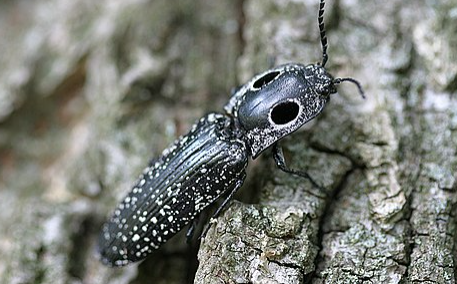
The Eastern Eyed Click Beetle (Alaus oculatus) is one of the largest and most recognizable click beetles in North America. This distinctive insect is famous for the large false “eye spots” located on the thorax, which are believed to function as a defensive adaptation against predators. Although its appearance may seem intimidating, the Eastern Eyed Click Beetle is harmless to humans and is generally considered a beneficial insect because its larvae prey on wood-boring insect larvae living inside decaying timber.
Taxonomy and Classification
The Eastern Eyed Click Beetle belongs to the order Coleoptera, the beetle order, and the family Elateridae, commonly known as click beetles.
Click beetles are named for their unique ability to produce a sharp clicking sound and suddenly launch themselves into the air when overturned or threatened. This mechanism helps them escape predators and regain their footing.
The genus Alaus contains several large click beetle species characterized by striking eye-like markings and elongated bodies.
Identification
Adult Eastern Eyed Click Beetles are large insects that may reach up to 45 mm (approximately 1.75 inches) in length. Their elongated black bodies are heavily speckled with white or gray scales, giving them a mottled appearance that blends well with tree bark.
The most distinctive feature is the pair of large black circular markings outlined in white located on the pronotum behind the head. These false “eyes” create the illusion of a much larger animal and may help deter birds and other predators.
Adults also possess the characteristic clicking mechanism found in all click beetles. When placed on their backs, they can flex a specialized spine located between body segments, snapping it into place and propelling themselves upward with an audible click.
The larvae, commonly called wireworms, are long, cylindrical, segmented, and yellowish-brown. Unlike many agricultural wireworms that damage crops, Eastern Eyed Click Beetle larvae are primarily predatory and inhabit rotting wood.
Distribution and Habitat
This species is widely distributed throughout eastern North America, including much of the United States and southern Canada.
The Eastern Eyed Click Beetle is most commonly associated with:
- Deciduous forests
- Woodlands
- Rotting logs
- Dead standing trees
- Forest edges
- Wood piles
Larvae require moist decaying wood where they can locate prey and complete development. Adults are frequently encountered resting on tree trunks or attracted to outdoor lights during warm evenings.
Life Cycle
The Eastern Eyed Click Beetle undergoes complete metamorphosis with four life stages:
- Egg
- Larva (wireworm)
- Pupa
- Adult
Females lay eggs in decaying wood or beneath loose bark. After hatching, larvae tunnel through rotting timber while feeding on other insect larvae, especially wood-boring beetles.
The larval stage may last several years depending on environmental conditions and food availability. Once mature, larvae pupate within protected chambers inside wood.
Adults emerge during warm months and are primarily nocturnal. They are strong fliers and frequently visit lights at night.
Behavior and Ecology
Eastern Eyed Click Beetles are beneficial predators during their larval stage. By feeding on wood-boring insect larvae, they help regulate populations of insects that contribute to wood decay.
The species also contributes to natural decomposition processes in forest ecosystems by inhabiting rotting logs and dead timber.
Their dramatic clicking behavior serves multiple purposes:
- Escaping predators
- Righting themselves when overturned
- Startling potential attackers
The large false eye spots are another defensive adaptation, helping the beetle appear larger and more threatening to predators such as birds.
Damage and Economic Importance
Unlike many beetles associated with wood, Eastern Eyed Click Beetles are not structural pests and do not damage healthy trees, buildings, furniture, or stored products.
The larvae are generally considered beneficial because they prey on other wood-inhabiting insects. As a result, this species plays an important ecological role rather than functioning as a pest.
Occasionally adults may wander indoors after being attracted to lights, but they do not reproduce inside homes or cause infestations.
Natural Predators
Eastern Eyed Click Beetles are preyed upon by several animals despite their defensive adaptations, including:
- Birds
- Small mammals
- Reptiles
- Spiders
- Predatory insects
Their camouflage, clicking behavior, and eye spots all help reduce predation risk.
Management and Control
No control measures are necessary for Eastern Eyed Click Beetles because they are harmless and beneficial.
- No Chemical Control Needed: These beetles are not pests.
- Preserve Habitat: Dead wood and natural forest debris support beneficial populations.
- Reduce Outdoor Lighting: This may reduce accidental attraction to homes.
Ecological Importance
The Eastern Eyed Click Beetle is an important part of forest ecosystems. Its predatory larvae help control populations of wood-boring insects while contributing to decomposition and nutrient recycling in decaying timber.
As both predator and prey, this beetle occupies an important position in woodland food webs.
Conclusion
The Eastern Eyed Click Beetle is one of the most visually striking beetles in North America, recognized for its large false eye spots and dramatic clicking behavior. Although intimidating in appearance, it is completely harmless to humans and beneficial to forest ecosystems. Its predatory larvae help suppress wood-boring insect populations while supporting the natural breakdown of decaying wood in woodland habitats.