Economic losses may result from:
- Reduced yields
- Damaged market crops
- Reduced plant vigor
- Increased management costs
- Lower tuber quality
Signs of Infestation
Common signs of Epitrix Flea Beetle activity include:
- Tiny holes in leaves
- Rapidly jumping beetles
- Weak or stunted seedlings
- Root feeding damage
- Scarring on potato tubers
Management and Control (IPM)
Crop Rotation
Rotating crops away from susceptible host plants helps interrupt flea beetle life cycles and reduce local populations.
Row Covers
Floating row covers can physically exclude adult beetles from young plants during vulnerable growth stages.
Weed Management
Removing nightshade weeds and volunteer host plants helps eliminate breeding sites and overwintering habitats.
Monitoring
Regular field inspections are important for early detection of feeding damage and adult activity.
Biological Control
Predatory insects, parasitic nematodes, and beneficial ground beetles may help suppress flea beetle populations naturally.
Chemical Control
Targeted insecticide applications may be used when populations exceed economic thresholds, particularly during early seedling establishment.
Conclusion
Epitrix Flea Beetles are destructive agricultural pests capable of causing serious damage to potatoes, tomatoes, and other solanaceous crops. Their combined leaf-feeding and root-feeding behavior can significantly reduce crop yields and market quality.
Integrated pest management strategies that combine crop rotation, monitoring, exclusion methods, and biological controls are the most effective approaches for long-term flea beetle management.
Related Pestipedia Articles
Larval Damage
Larvae feeding on roots and tubers may:
- Reduce nutrient uptake
- Damage root systems
- Create scars on potatoes
- Increase disease susceptibility
- Lower crop marketability
Economic Importance
Epitrix Flea Beetles are significant pests in commercial potato and vegetable production systems. Seedlings are especially vulnerable because even moderate feeding can severely stunt early plant growth.
Economic losses may result from:
- Reduced yields
- Damaged market crops
- Reduced plant vigor
- Increased management costs
- Lower tuber quality
Signs of Infestation
Common signs of Epitrix Flea Beetle activity include:
- Tiny holes in leaves
- Rapidly jumping beetles
- Weak or stunted seedlings
- Root feeding damage
- Scarring on potato tubers
Management and Control (IPM)
Crop Rotation
Rotating crops away from susceptible host plants helps interrupt flea beetle life cycles and reduce local populations.
Row Covers
Floating row covers can physically exclude adult beetles from young plants during vulnerable growth stages.
Weed Management
Removing nightshade weeds and volunteer host plants helps eliminate breeding sites and overwintering habitats.
Monitoring
Regular field inspections are important for early detection of feeding damage and adult activity.
Biological Control
Predatory insects, parasitic nematodes, and beneficial ground beetles may help suppress flea beetle populations naturally.
Chemical Control
Targeted insecticide applications may be used when populations exceed economic thresholds, particularly during early seedling establishment.
Conclusion
Epitrix Flea Beetles are destructive agricultural pests capable of causing serious damage to potatoes, tomatoes, and other solanaceous crops. Their combined leaf-feeding and root-feeding behavior can significantly reduce crop yields and market quality.
Integrated pest management strategies that combine crop rotation, monitoring, exclusion methods, and biological controls are the most effective approaches for long-term flea beetle management.
Related Pestipedia Articles
Heavy feeding may:
- Reduce photosynthesis
- Weaken seedlings
- Slow plant growth
- Cause wilting in young plants
- Reduce crop vigor
Larval Damage
Larvae feeding on roots and tubers may:
- Reduce nutrient uptake
- Damage root systems
- Create scars on potatoes
- Increase disease susceptibility
- Lower crop marketability
Economic Importance
Epitrix Flea Beetles are significant pests in commercial potato and vegetable production systems. Seedlings are especially vulnerable because even moderate feeding can severely stunt early plant growth.
Economic losses may result from:
- Reduced yields
- Damaged market crops
- Reduced plant vigor
- Increased management costs
- Lower tuber quality
Signs of Infestation
Common signs of Epitrix Flea Beetle activity include:
- Tiny holes in leaves
- Rapidly jumping beetles
- Weak or stunted seedlings
- Root feeding damage
- Scarring on potato tubers
Management and Control (IPM)
Crop Rotation
Rotating crops away from susceptible host plants helps interrupt flea beetle life cycles and reduce local populations.
Row Covers
Floating row covers can physically exclude adult beetles from young plants during vulnerable growth stages.
Weed Management
Removing nightshade weeds and volunteer host plants helps eliminate breeding sites and overwintering habitats.
Monitoring
Regular field inspections are important for early detection of feeding damage and adult activity.
Biological Control
Predatory insects, parasitic nematodes, and beneficial ground beetles may help suppress flea beetle populations naturally.
Chemical Control
Targeted insecticide applications may be used when populations exceed economic thresholds, particularly during early seedling establishment.
Conclusion
Epitrix Flea Beetles are destructive agricultural pests capable of causing serious damage to potatoes, tomatoes, and other solanaceous crops. Their combined leaf-feeding and root-feeding behavior can significantly reduce crop yields and market quality.
Integrated pest management strategies that combine crop rotation, monitoring, exclusion methods, and biological controls are the most effective approaches for long-term flea beetle management.
Related Pestipedia Articles
Preferred habitats include:
- Vegetable gardens
- Agricultural crop fields
- Greenhouses
- Weedy field margins
- Commercial potato farms
Warm temperatures and dry conditions often favor flea beetle activity and reproduction.
Host Plants
Epitrix Flea Beetles primarily attack plants within the Solanaceae family.
- Potatoes
- Tomatoes
- Eggplants
- Peppers
- Tobacco
- Nightshade weeds
Weedy host plants can serve as reservoirs that allow populations to persist between crop cycles.
Life Cycle
Egg Stage
Females lay eggs in soil near the base of host plants. Eggs hatch after several days depending on environmental conditions.
Larval Stage
Larvae feed underground on roots and tubers. In potatoes, larval feeding may create shallow tunnels and scars on tuber surfaces, reducing market quality.
Pupal Stage
Pupation occurs in the soil near host plants. Adult beetles emerge shortly afterward and begin feeding on foliage.
Adult Stage
Adults actively feed on leaves and may produce multiple generations per year in warm climates.
Feeding Damage
Adult Feeding Damage
Adult beetles chew numerous tiny round holes through leaf tissue. This creates a distinctive “shot-hole” appearance.
Heavy feeding may:
- Reduce photosynthesis
- Weaken seedlings
- Slow plant growth
- Cause wilting in young plants
- Reduce crop vigor
Larval Damage
Larvae feeding on roots and tubers may:
- Reduce nutrient uptake
- Damage root systems
- Create scars on potatoes
- Increase disease susceptibility
- Lower crop marketability
Economic Importance
Epitrix Flea Beetles are significant pests in commercial potato and vegetable production systems. Seedlings are especially vulnerable because even moderate feeding can severely stunt early plant growth.
Economic losses may result from:
- Reduced yields
- Damaged market crops
- Reduced plant vigor
- Increased management costs
- Lower tuber quality
Signs of Infestation
Common signs of Epitrix Flea Beetle activity include:
- Tiny holes in leaves
- Rapidly jumping beetles
- Weak or stunted seedlings
- Root feeding damage
- Scarring on potato tubers
Management and Control (IPM)
Crop Rotation
Rotating crops away from susceptible host plants helps interrupt flea beetle life cycles and reduce local populations.
Row Covers
Floating row covers can physically exclude adult beetles from young plants during vulnerable growth stages.
Weed Management
Removing nightshade weeds and volunteer host plants helps eliminate breeding sites and overwintering habitats.
Monitoring
Regular field inspections are important for early detection of feeding damage and adult activity.
Biological Control
Predatory insects, parasitic nematodes, and beneficial ground beetles may help suppress flea beetle populations naturally.
Chemical Control
Targeted insecticide applications may be used when populations exceed economic thresholds, particularly during early seedling establishment.
Conclusion
Epitrix Flea Beetles are destructive agricultural pests capable of causing serious damage to potatoes, tomatoes, and other solanaceous crops. Their combined leaf-feeding and root-feeding behavior can significantly reduce crop yields and market quality.
Integrated pest management strategies that combine crop rotation, monitoring, exclusion methods, and biological controls are the most effective approaches for long-term flea beetle management.
Related Pestipedia Articles
Key identifying features include:
- Small oval body shape
- Shiny dark coloration
- Powerful hind legs for jumping
- Rapid movement when disturbed
- Characteristic “shot-hole” feeding damage on leaves
Larvae
Larvae are slender, whitish, worm-like grubs with brown head capsules. They live underground where they feed on roots, tubers, and developing underground plant tissue.
Distribution and Habitat
Epitrix Flea Beetles occur throughout North America and many agricultural regions worldwide. They are especially common in areas where potatoes, tomatoes, tobacco, peppers, and other members of the nightshade family are cultivated.
Preferred habitats include:
- Vegetable gardens
- Agricultural crop fields
- Greenhouses
- Weedy field margins
- Commercial potato farms
Warm temperatures and dry conditions often favor flea beetle activity and reproduction.
Host Plants
Epitrix Flea Beetles primarily attack plants within the Solanaceae family.
- Potatoes
- Tomatoes
- Eggplants
- Peppers
- Tobacco
- Nightshade weeds
Weedy host plants can serve as reservoirs that allow populations to persist between crop cycles.
Life Cycle
Egg Stage
Females lay eggs in soil near the base of host plants. Eggs hatch after several days depending on environmental conditions.
Larval Stage
Larvae feed underground on roots and tubers. In potatoes, larval feeding may create shallow tunnels and scars on tuber surfaces, reducing market quality.
Pupal Stage
Pupation occurs in the soil near host plants. Adult beetles emerge shortly afterward and begin feeding on foliage.
Adult Stage
Adults actively feed on leaves and may produce multiple generations per year in warm climates.
Feeding Damage
Adult Feeding Damage
Adult beetles chew numerous tiny round holes through leaf tissue. This creates a distinctive “shot-hole” appearance.
Heavy feeding may:
- Reduce photosynthesis
- Weaken seedlings
- Slow plant growth
- Cause wilting in young plants
- Reduce crop vigor
Larval Damage
Larvae feeding on roots and tubers may:
- Reduce nutrient uptake
- Damage root systems
- Create scars on potatoes
- Increase disease susceptibility
- Lower crop marketability
Economic Importance
Epitrix Flea Beetles are significant pests in commercial potato and vegetable production systems. Seedlings are especially vulnerable because even moderate feeding can severely stunt early plant growth.
Economic losses may result from:
- Reduced yields
- Damaged market crops
- Reduced plant vigor
- Increased management costs
- Lower tuber quality
Signs of Infestation
Common signs of Epitrix Flea Beetle activity include:
- Tiny holes in leaves
- Rapidly jumping beetles
- Weak or stunted seedlings
- Root feeding damage
- Scarring on potato tubers
Management and Control (IPM)
Crop Rotation
Rotating crops away from susceptible host plants helps interrupt flea beetle life cycles and reduce local populations.
Row Covers
Floating row covers can physically exclude adult beetles from young plants during vulnerable growth stages.
Weed Management
Removing nightshade weeds and volunteer host plants helps eliminate breeding sites and overwintering habitats.
Monitoring
Regular field inspections are important for early detection of feeding damage and adult activity.
Biological Control
Predatory insects, parasitic nematodes, and beneficial ground beetles may help suppress flea beetle populations naturally.
Chemical Control
Targeted insecticide applications may be used when populations exceed economic thresholds, particularly during early seedling establishment.
Conclusion
Epitrix Flea Beetles are destructive agricultural pests capable of causing serious damage to potatoes, tomatoes, and other solanaceous crops. Their combined leaf-feeding and root-feeding behavior can significantly reduce crop yields and market quality.
Integrated pest management strategies that combine crop rotation, monitoring, exclusion methods, and biological controls are the most effective approaches for long-term flea beetle management.
Related Pestipedia Articles
Epitrix Flea Beetles (genus Epitrix) are small plant-feeding beetles that are important agricultural pests of solanaceous crops such as potatoes, tomatoes, eggplants, and peppers. These insects are named for their powerful jumping ability, which resembles the movement of fleas. Adult beetles damage foliage by chewing numerous small holes in leaves, while larvae feed on roots and underground plant structures. Heavy infestations can reduce crop vigor, decrease yields, and lower the market quality of vegetables.
Several species within the genus Epitrix are recognized as economically important pests in commercial agriculture and home gardens. Potato flea beetles and tobacco flea beetles are among the most damaging species associated with vegetable production systems.
Taxonomy and Classification
- Order: Coleoptera
- Family: Chrysomelidae
- Subfamily: Galerucinae
- Genus: Epitrix
- Common Name: Epitrix Flea Beetles
Epitrix Flea Beetles belong to the leaf beetle family (Chrysomelidae), which contains many economically important agricultural pests. These beetles undergo complete metamorphosis with egg, larval, pupal, and adult stages.
Physical Description
Adult Beetles
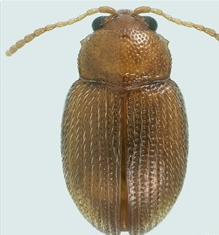
Adult Epitrix Flea Beetles are extremely small, usually measuring only 1.5 to 2.5 millimeters in length. They are oval-shaped and dark brown, bronze, or black in coloration. Their enlarged hind legs allow them to jump rapidly when disturbed.
Key identifying features include:
- Small oval body shape
- Shiny dark coloration
- Powerful hind legs for jumping
- Rapid movement when disturbed
- Characteristic “shot-hole” feeding damage on leaves
Larvae
Larvae are slender, whitish, worm-like grubs with brown head capsules. They live underground where they feed on roots, tubers, and developing underground plant tissue.
Distribution and Habitat
Epitrix Flea Beetles occur throughout North America and many agricultural regions worldwide. They are especially common in areas where potatoes, tomatoes, tobacco, peppers, and other members of the nightshade family are cultivated.
Preferred habitats include:
- Vegetable gardens
- Agricultural crop fields
- Greenhouses
- Weedy field margins
- Commercial potato farms
Warm temperatures and dry conditions often favor flea beetle activity and reproduction.
Host Plants
Epitrix Flea Beetles primarily attack plants within the Solanaceae family.
- Potatoes
- Tomatoes
- Eggplants
- Peppers
- Tobacco
- Nightshade weeds
Weedy host plants can serve as reservoirs that allow populations to persist between crop cycles.
Life Cycle
Egg Stage
Females lay eggs in soil near the base of host plants. Eggs hatch after several days depending on environmental conditions.
Larval Stage
Larvae feed underground on roots and tubers. In potatoes, larval feeding may create shallow tunnels and scars on tuber surfaces, reducing market quality.
Pupal Stage
Pupation occurs in the soil near host plants. Adult beetles emerge shortly afterward and begin feeding on foliage.
Adult Stage
Adults actively feed on leaves and may produce multiple generations per year in warm climates.
Feeding Damage
Adult Feeding Damage
Adult beetles chew numerous tiny round holes through leaf tissue. This creates a distinctive “shot-hole” appearance.
Heavy feeding may:
- Reduce photosynthesis
- Weaken seedlings
- Slow plant growth
- Cause wilting in young plants
- Reduce crop vigor
Larval Damage
Larvae feeding on roots and tubers may:
- Reduce nutrient uptake
- Damage root systems
- Create scars on potatoes
- Increase disease susceptibility
- Lower crop marketability
Economic Importance
Epitrix Flea Beetles are significant pests in commercial potato and vegetable production systems. Seedlings are especially vulnerable because even moderate feeding can severely stunt early plant growth.
Economic losses may result from:
- Reduced yields
- Damaged market crops
- Reduced plant vigor
- Increased management costs
- Lower tuber quality
Signs of Infestation
Common signs of Epitrix Flea Beetle activity include:
- Tiny holes in leaves
- Rapidly jumping beetles
- Weak or stunted seedlings
- Root feeding damage
- Scarring on potato tubers
Management and Control (IPM)
Crop Rotation
Rotating crops away from susceptible host plants helps interrupt flea beetle life cycles and reduce local populations.
Row Covers
Floating row covers can physically exclude adult beetles from young plants during vulnerable growth stages.
Weed Management
Removing nightshade weeds and volunteer host plants helps eliminate breeding sites and overwintering habitats.
Monitoring
Regular field inspections are important for early detection of feeding damage and adult activity.
Biological Control
Predatory insects, parasitic nematodes, and beneficial ground beetles may help suppress flea beetle populations naturally.
Chemical Control
Targeted insecticide applications may be used when populations exceed economic thresholds, particularly during early seedling establishment.
Conclusion
Epitrix Flea Beetles are destructive agricultural pests capable of causing serious damage to potatoes, tomatoes, and other solanaceous crops. Their combined leaf-feeding and root-feeding behavior can significantly reduce crop yields and market quality.
Integrated pest management strategies that combine crop rotation, monitoring, exclusion methods, and biological controls are the most effective approaches for long-term flea beetle management.
Related Pestipedia Articles
Larval Damage
Larvae feeding on roots and tubers may:
- Reduce nutrient uptake
- Damage root systems
- Create scars on potatoes
- Increase disease susceptibility
- Lower crop marketability
Economic Importance
Epitrix Flea Beetles are significant pests in commercial potato and vegetable production systems. Seedlings are especially vulnerable because even moderate feeding can severely stunt early plant growth.
Economic losses may result from:
- Reduced yields
- Damaged market crops
- Reduced plant vigor
- Increased management costs
- Lower tuber quality
Signs of Infestation
Common signs of Epitrix Flea Beetle activity include:
- Tiny holes in leaves
- Rapidly jumping beetles
- Weak or stunted seedlings
- Root feeding damage
- Scarring on potato tubers
Management and Control (IPM)
Crop Rotation
Rotating crops away from susceptible host plants helps interrupt flea beetle life cycles and reduce local populations.
Row Covers
Floating row covers can physically exclude adult beetles from young plants during vulnerable growth stages.
Weed Management
Removing nightshade weeds and volunteer host plants helps eliminate breeding sites and overwintering habitats.
Monitoring
Regular field inspections are important for early detection of feeding damage and adult activity.
Biological Control
Predatory insects, parasitic nematodes, and beneficial ground beetles may help suppress flea beetle populations naturally.
Chemical Control
Targeted insecticide applications may be used when populations exceed economic thresholds, particularly during early seedling establishment.
Conclusion
Epitrix Flea Beetles are destructive agricultural pests capable of causing serious damage to potatoes, tomatoes, and other solanaceous crops. Their combined leaf-feeding and root-feeding behavior can significantly reduce crop yields and market quality.
Integrated pest management strategies that combine crop rotation, monitoring, exclusion methods, and biological controls are the most effective approaches for long-term flea beetle management.
Related Pestipedia Articles
Epitrix Flea Beetles (genus Epitrix) are small plant-feeding beetles that are important agricultural pests of solanaceous crops such as potatoes, tomatoes, eggplants, and peppers. These insects are named for their powerful jumping ability, which resembles the movement of fleas. Adult beetles damage foliage by chewing numerous small holes in leaves, while larvae feed on roots and underground plant structures. Heavy infestations can reduce crop vigor, decrease yields, and lower the market quality of vegetables.
Several species within the genus Epitrix are recognized as economically important pests in commercial agriculture and home gardens. Potato flea beetles and tobacco flea beetles are among the most damaging species associated with vegetable production systems.
Taxonomy and Classification
- Order: Coleoptera
- Family: Chrysomelidae
- Subfamily: Galerucinae
- Genus: Epitrix
- Common Name: Epitrix Flea Beetles
Epitrix Flea Beetles belong to the leaf beetle family (Chrysomelidae), which contains many economically important agricultural pests. These beetles undergo complete metamorphosis with egg, larval, pupal, and adult stages.
Physical Description
Adult Beetles
Adult Epitrix Flea Beetles are extremely small, usually measuring only 1.5 to 2.5 millimeters in length. They are oval-shaped and dark brown, bronze, or black in coloration. Their enlarged hind legs allow them to jump rapidly when disturbed.
Key identifying features include:
- Small oval body shape
- Shiny dark coloration
- Powerful hind legs for jumping
- Rapid movement when disturbed
- Characteristic “shot-hole” feeding damage on leaves
Larvae
Larvae are slender, whitish, worm-like grubs with brown head capsules. They live underground where they feed on roots, tubers, and developing underground plant tissue.
Distribution and Habitat
Epitrix Flea Beetles occur throughout North America and many agricultural regions worldwide. They are especially common in areas where potatoes, tomatoes, tobacco, peppers, and other members of the nightshade family are cultivated.
Preferred habitats include:
- Vegetable gardens
- Agricultural crop fields
- Greenhouses
- Weedy field margins
- Commercial potato farms
Warm temperatures and dry conditions often favor flea beetle activity and reproduction.
Host Plants
Epitrix Flea Beetles primarily attack plants within the Solanaceae family.
- Potatoes
- Tomatoes
- Eggplants
- Peppers
- Tobacco
- Nightshade weeds
Weedy host plants can serve as reservoirs that allow populations to persist between crop cycles.
Life Cycle
Egg Stage
Females lay eggs in soil near the base of host plants. Eggs hatch after several days depending on environmental conditions.
Larval Stage
Larvae feed underground on roots and tubers. In potatoes, larval feeding may create shallow tunnels and scars on tuber surfaces, reducing market quality.
Pupal Stage
Pupation occurs in the soil near host plants. Adult beetles emerge shortly afterward and begin feeding on foliage.
Adult Stage
Adults actively feed on leaves and may produce multiple generations per year in warm climates.
Feeding Damage
Adult Feeding Damage
Adult beetles chew numerous tiny round holes through leaf tissue. This creates a distinctive “shot-hole” appearance.
Heavy feeding may:
- Reduce photosynthesis
- Weaken seedlings
- Slow plant growth
- Cause wilting in young plants
- Reduce crop vigor
Larval Damage
Larvae feeding on roots and tubers may:
- Reduce nutrient uptake
- Damage root systems
- Create scars on potatoes
- Increase disease susceptibility
- Lower crop marketability
Economic Importance
Epitrix Flea Beetles are significant pests in commercial potato and vegetable production systems. Seedlings are especially vulnerable because even moderate feeding can severely stunt early plant growth.
Economic losses may result from:
- Reduced yields
- Damaged market crops
- Reduced plant vigor
- Increased management costs
- Lower tuber quality
Signs of Infestation
Common signs of Epitrix Flea Beetle activity include:
- Tiny holes in leaves
- Rapidly jumping beetles
- Weak or stunted seedlings
- Root feeding damage
- Scarring on potato tubers
Management and Control (IPM)
Crop Rotation
Rotating crops away from susceptible host plants helps interrupt flea beetle life cycles and reduce local populations.
Row Covers
Floating row covers can physically exclude adult beetles from young plants during vulnerable growth stages.
Weed Management
Removing nightshade weeds and volunteer host plants helps eliminate breeding sites and overwintering habitats.
Monitoring
Regular field inspections are important for early detection of feeding damage and adult activity.
Biological Control
Predatory insects, parasitic nematodes, and beneficial ground beetles may help suppress flea beetle populations naturally.
Chemical Control
Targeted insecticide applications may be used when populations exceed economic thresholds, particularly during early seedling establishment.
Conclusion
Epitrix Flea Beetles are destructive agricultural pests capable of causing serious damage to potatoes, tomatoes, and other solanaceous crops. Their combined leaf-feeding and root-feeding behavior can significantly reduce crop yields and market quality.
Integrated pest management strategies that combine crop rotation, monitoring, exclusion methods, and biological controls are the most effective approaches for long-term flea beetle management.
Related Pestipedia Articles
Heavy feeding may:
- Reduce photosynthesis
- Weaken seedlings
- Slow plant growth
- Cause wilting in young plants
- Reduce crop vigor
Larval Damage
Larvae feeding on roots and tubers may:
- Reduce nutrient uptake
- Damage root systems
- Create scars on potatoes
- Increase disease susceptibility
- Lower crop marketability
Economic Importance
Epitrix Flea Beetles are significant pests in commercial potato and vegetable production systems. Seedlings are especially vulnerable because even moderate feeding can severely stunt early plant growth.
Economic losses may result from:
- Reduced yields
- Damaged market crops
- Reduced plant vigor
- Increased management costs
- Lower tuber quality
Signs of Infestation
Common signs of Epitrix Flea Beetle activity include:
- Tiny holes in leaves
- Rapidly jumping beetles
- Weak or stunted seedlings
- Root feeding damage
- Scarring on potato tubers
Management and Control (IPM)
Crop Rotation
Rotating crops away from susceptible host plants helps interrupt flea beetle life cycles and reduce local populations.
Row Covers
Floating row covers can physically exclude adult beetles from young plants during vulnerable growth stages.
Weed Management
Removing nightshade weeds and volunteer host plants helps eliminate breeding sites and overwintering habitats.
Monitoring
Regular field inspections are important for early detection of feeding damage and adult activity.
Biological Control
Predatory insects, parasitic nematodes, and beneficial ground beetles may help suppress flea beetle populations naturally.
Chemical Control
Targeted insecticide applications may be used when populations exceed economic thresholds, particularly during early seedling establishment.
Conclusion
Epitrix Flea Beetles are destructive agricultural pests capable of causing serious damage to potatoes, tomatoes, and other solanaceous crops. Their combined leaf-feeding and root-feeding behavior can significantly reduce crop yields and market quality.
Integrated pest management strategies that combine crop rotation, monitoring, exclusion methods, and biological controls are the most effective approaches for long-term flea beetle management.
Related Pestipedia Articles
Epitrix Flea Beetles (genus Epitrix) are small plant-feeding beetles that are important agricultural pests of solanaceous crops such as potatoes, tomatoes, eggplants, and peppers. These insects are named for their powerful jumping ability, which resembles the movement of fleas. Adult beetles damage foliage by chewing numerous small holes in leaves, while larvae feed on roots and underground plant structures. Heavy infestations can reduce crop vigor, decrease yields, and lower the market quality of vegetables.
Several species within the genus Epitrix are recognized as economically important pests in commercial agriculture and home gardens. Potato flea beetles and tobacco flea beetles are among the most damaging species associated with vegetable production systems.
Taxonomy and Classification
- Order: Coleoptera
- Family: Chrysomelidae
- Subfamily: Galerucinae
- Genus: Epitrix
- Common Name: Epitrix Flea Beetles
Epitrix Flea Beetles belong to the leaf beetle family (Chrysomelidae), which contains many economically important agricultural pests. These beetles undergo complete metamorphosis with egg, larval, pupal, and adult stages.
Physical Description
Adult Beetles
Adult Epitrix Flea Beetles are extremely small, usually measuring only 1.5 to 2.5 millimeters in length. They are oval-shaped and dark brown, bronze, or black in coloration. Their enlarged hind legs allow them to jump rapidly when disturbed.
Key identifying features include:
- Small oval body shape
- Shiny dark coloration
- Powerful hind legs for jumping
- Rapid movement when disturbed
- Characteristic “shot-hole” feeding damage on leaves
Larvae
Larvae are slender, whitish, worm-like grubs with brown head capsules. They live underground where they feed on roots, tubers, and developing underground plant tissue.
Distribution and Habitat
Epitrix Flea Beetles occur throughout North America and many agricultural regions worldwide. They are especially common in areas where potatoes, tomatoes, tobacco, peppers, and other members of the nightshade family are cultivated.
Preferred habitats include:
- Vegetable gardens
- Agricultural crop fields
- Greenhouses
- Weedy field margins
- Commercial potato farms
Warm temperatures and dry conditions often favor flea beetle activity and reproduction.
Host Plants
Epitrix Flea Beetles primarily attack plants within the Solanaceae family.
- Potatoes
- Tomatoes
- Eggplants
- Peppers
- Tobacco
- Nightshade weeds
Weedy host plants can serve as reservoirs that allow populations to persist between crop cycles.
Life Cycle
Egg Stage
Females lay eggs in soil near the base of host plants. Eggs hatch after several days depending on environmental conditions.
Larval Stage
Larvae feed underground on roots and tubers. In potatoes, larval feeding may create shallow tunnels and scars on tuber surfaces, reducing market quality.
Pupal Stage
Pupation occurs in the soil near host plants. Adult beetles emerge shortly afterward and begin feeding on foliage.
Adult Stage
Adults actively feed on leaves and may produce multiple generations per year in warm climates.
Feeding Damage
Adult Feeding Damage
Adult beetles chew numerous tiny round holes through leaf tissue. This creates a distinctive “shot-hole” appearance.
Heavy feeding may:
- Reduce photosynthesis
- Weaken seedlings
- Slow plant growth
- Cause wilting in young plants
- Reduce crop vigor
Larval Damage
Larvae feeding on roots and tubers may:
- Reduce nutrient uptake
- Damage root systems
- Create scars on potatoes
- Increase disease susceptibility
- Lower crop marketability
Economic Importance
Epitrix Flea Beetles are significant pests in commercial potato and vegetable production systems. Seedlings are especially vulnerable because even moderate feeding can severely stunt early plant growth.
Economic losses may result from:
- Reduced yields
- Damaged market crops
- Reduced plant vigor
- Increased management costs
- Lower tuber quality
Signs of Infestation
Common signs of Epitrix Flea Beetle activity include:
- Tiny holes in leaves
- Rapidly jumping beetles
- Weak or stunted seedlings
- Root feeding damage
- Scarring on potato tubers
Management and Control (IPM)
Crop Rotation
Rotating crops away from susceptible host plants helps interrupt flea beetle life cycles and reduce local populations.
Row Covers
Floating row covers can physically exclude adult beetles from young plants during vulnerable growth stages.
Weed Management
Removing nightshade weeds and volunteer host plants helps eliminate breeding sites and overwintering habitats.
Monitoring
Regular field inspections are important for early detection of feeding damage and adult activity.
Biological Control
Predatory insects, parasitic nematodes, and beneficial ground beetles may help suppress flea beetle populations naturally.
Chemical Control
Targeted insecticide applications may be used when populations exceed economic thresholds, particularly during early seedling establishment.
Conclusion
Epitrix Flea Beetles are destructive agricultural pests capable of causing serious damage to potatoes, tomatoes, and other solanaceous crops. Their combined leaf-feeding and root-feeding behavior can significantly reduce crop yields and market quality.
Integrated pest management strategies that combine crop rotation, monitoring, exclusion methods, and biological controls are the most effective approaches for long-term flea beetle management.
Related Pestipedia Articles
Preferred habitats include:
- Vegetable gardens
- Agricultural crop fields
- Greenhouses
- Weedy field margins
- Commercial potato farms
Warm temperatures and dry conditions often favor flea beetle activity and reproduction.
Host Plants
Epitrix Flea Beetles primarily attack plants within the Solanaceae family.
- Potatoes
- Tomatoes
- Eggplants
- Peppers
- Tobacco
- Nightshade weeds
Weedy host plants can serve as reservoirs that allow populations to persist between crop cycles.
Life Cycle
Egg Stage
Females lay eggs in soil near the base of host plants. Eggs hatch after several days depending on environmental conditions.
Larval Stage
Larvae feed underground on roots and tubers. In potatoes, larval feeding may create shallow tunnels and scars on tuber surfaces, reducing market quality.
Pupal Stage
Pupation occurs in the soil near host plants. Adult beetles emerge shortly afterward and begin feeding on foliage.
Adult Stage
Adults actively feed on leaves and may produce multiple generations per year in warm climates.
Feeding Damage
Adult Feeding Damage
Adult beetles chew numerous tiny round holes through leaf tissue. This creates a distinctive “shot-hole” appearance.
Heavy feeding may:
- Reduce photosynthesis
- Weaken seedlings
- Slow plant growth
- Cause wilting in young plants
- Reduce crop vigor
Larval Damage
Larvae feeding on roots and tubers may:
- Reduce nutrient uptake
- Damage root systems
- Create scars on potatoes
- Increase disease susceptibility
- Lower crop marketability
Economic Importance
Epitrix Flea Beetles are significant pests in commercial potato and vegetable production systems. Seedlings are especially vulnerable because even moderate feeding can severely stunt early plant growth.
Economic losses may result from:
- Reduced yields
- Damaged market crops
- Reduced plant vigor
- Increased management costs
- Lower tuber quality
Signs of Infestation
Common signs of Epitrix Flea Beetle activity include:
- Tiny holes in leaves
- Rapidly jumping beetles
- Weak or stunted seedlings
- Root feeding damage
- Scarring on potato tubers
Management and Control (IPM)
Crop Rotation
Rotating crops away from susceptible host plants helps interrupt flea beetle life cycles and reduce local populations.
Row Covers
Floating row covers can physically exclude adult beetles from young plants during vulnerable growth stages.
Weed Management
Removing nightshade weeds and volunteer host plants helps eliminate breeding sites and overwintering habitats.
Monitoring
Regular field inspections are important for early detection of feeding damage and adult activity.
Biological Control
Predatory insects, parasitic nematodes, and beneficial ground beetles may help suppress flea beetle populations naturally.
Chemical Control
Targeted insecticide applications may be used when populations exceed economic thresholds, particularly during early seedling establishment.
Conclusion
Epitrix Flea Beetles are destructive agricultural pests capable of causing serious damage to potatoes, tomatoes, and other solanaceous crops. Their combined leaf-feeding and root-feeding behavior can significantly reduce crop yields and market quality.
Integrated pest management strategies that combine crop rotation, monitoring, exclusion methods, and biological controls are the most effective approaches for long-term flea beetle management.
Related Pestipedia Articles
Epitrix Flea Beetles (genus Epitrix) are small plant-feeding beetles that are important agricultural pests of solanaceous crops such as potatoes, tomatoes, eggplants, and peppers. These insects are named for their powerful jumping ability, which resembles the movement of fleas. Adult beetles damage foliage by chewing numerous small holes in leaves, while larvae feed on roots and underground plant structures. Heavy infestations can reduce crop vigor, decrease yields, and lower the market quality of vegetables.
Several species within the genus Epitrix are recognized as economically important pests in commercial agriculture and home gardens. Potato flea beetles and tobacco flea beetles are among the most damaging species associated with vegetable production systems.
Taxonomy and Classification
- Order: Coleoptera
- Family: Chrysomelidae
- Subfamily: Galerucinae
- Genus: Epitrix
- Common Name: Epitrix Flea Beetles
Epitrix Flea Beetles belong to the leaf beetle family (Chrysomelidae), which contains many economically important agricultural pests. These beetles undergo complete metamorphosis with egg, larval, pupal, and adult stages.
Physical Description
Adult Beetles
Adult Epitrix Flea Beetles are extremely small, usually measuring only 1.5 to 2.5 millimeters in length. They are oval-shaped and dark brown, bronze, or black in coloration. Their enlarged hind legs allow them to jump rapidly when disturbed.
Key identifying features include:
- Small oval body shape
- Shiny dark coloration
- Powerful hind legs for jumping
- Rapid movement when disturbed
- Characteristic “shot-hole” feeding damage on leaves
Larvae
Larvae are slender, whitish, worm-like grubs with brown head capsules. They live underground where they feed on roots, tubers, and developing underground plant tissue.
Distribution and Habitat
Epitrix Flea Beetles occur throughout North America and many agricultural regions worldwide. They are especially common in areas where potatoes, tomatoes, tobacco, peppers, and other members of the nightshade family are cultivated.
Preferred habitats include:
- Vegetable gardens
- Agricultural crop fields
- Greenhouses
- Weedy field margins
- Commercial potato farms
Warm temperatures and dry conditions often favor flea beetle activity and reproduction.
Host Plants
Epitrix Flea Beetles primarily attack plants within the Solanaceae family.
- Potatoes
- Tomatoes
- Eggplants
- Peppers
- Tobacco
- Nightshade weeds
Weedy host plants can serve as reservoirs that allow populations to persist between crop cycles.
Life Cycle
Egg Stage
Females lay eggs in soil near the base of host plants. Eggs hatch after several days depending on environmental conditions.
Larval Stage
Larvae feed underground on roots and tubers. In potatoes, larval feeding may create shallow tunnels and scars on tuber surfaces, reducing market quality.
Pupal Stage
Pupation occurs in the soil near host plants. Adult beetles emerge shortly afterward and begin feeding on foliage.
Adult Stage
Adults actively feed on leaves and may produce multiple generations per year in warm climates.
Feeding Damage
Adult Feeding Damage
Adult beetles chew numerous tiny round holes through leaf tissue. This creates a distinctive “shot-hole” appearance.
Heavy feeding may:
- Reduce photosynthesis
- Weaken seedlings
- Slow plant growth
- Cause wilting in young plants
- Reduce crop vigor
Larval Damage
Larvae feeding on roots and tubers may:
- Reduce nutrient uptake
- Damage root systems
- Create scars on potatoes
- Increase disease susceptibility
- Lower crop marketability
Economic Importance
Epitrix Flea Beetles are significant pests in commercial potato and vegetable production systems. Seedlings are especially vulnerable because even moderate feeding can severely stunt early plant growth.
Economic losses may result from:
- Reduced yields
- Damaged market crops
- Reduced plant vigor
- Increased management costs
- Lower tuber quality
Signs of Infestation
Common signs of Epitrix Flea Beetle activity include:
- Tiny holes in leaves
- Rapidly jumping beetles
- Weak or stunted seedlings
- Root feeding damage
- Scarring on potato tubers
Management and Control (IPM)
Crop Rotation
Rotating crops away from susceptible host plants helps interrupt flea beetle life cycles and reduce local populations.
Row Covers
Floating row covers can physically exclude adult beetles from young plants during vulnerable growth stages.
Weed Management
Removing nightshade weeds and volunteer host plants helps eliminate breeding sites and overwintering habitats.
Monitoring
Regular field inspections are important for early detection of feeding damage and adult activity.
Biological Control
Predatory insects, parasitic nematodes, and beneficial ground beetles may help suppress flea beetle populations naturally.
Chemical Control
Targeted insecticide applications may be used when populations exceed economic thresholds, particularly during early seedling establishment.
Conclusion
Epitrix Flea Beetles are destructive agricultural pests capable of causing serious damage to potatoes, tomatoes, and other solanaceous crops. Their combined leaf-feeding and root-feeding behavior can significantly reduce crop yields and market quality.
Integrated pest management strategies that combine crop rotation, monitoring, exclusion methods, and biological controls are the most effective approaches for long-term flea beetle management.
Related Pestipedia Articles
Key identifying features include:
- Small oval body shape
- Shiny dark coloration
- Powerful hind legs for jumping
- Rapid movement when disturbed
- Characteristic “shot-hole” feeding damage on leaves
Larvae
Larvae are slender, whitish, worm-like grubs with brown head capsules. They live underground where they feed on roots, tubers, and developing underground plant tissue.
Distribution and Habitat
Epitrix Flea Beetles occur throughout North America and many agricultural regions worldwide. They are especially common in areas where potatoes, tomatoes, tobacco, peppers, and other members of the nightshade family are cultivated.
Preferred habitats include:
- Vegetable gardens
- Agricultural crop fields
- Greenhouses
- Weedy field margins
- Commercial potato farms
Warm temperatures and dry conditions often favor flea beetle activity and reproduction.
Host Plants
Epitrix Flea Beetles primarily attack plants within the Solanaceae family.
- Potatoes
- Tomatoes
- Eggplants
- Peppers
- Tobacco
- Nightshade weeds
Weedy host plants can serve as reservoirs that allow populations to persist between crop cycles.
Life Cycle
Egg Stage
Females lay eggs in soil near the base of host plants. Eggs hatch after several days depending on environmental conditions.
Larval Stage
Larvae feed underground on roots and tubers. In potatoes, larval feeding may create shallow tunnels and scars on tuber surfaces, reducing market quality.
Pupal Stage
Pupation occurs in the soil near host plants. Adult beetles emerge shortly afterward and begin feeding on foliage.
Adult Stage
Adults actively feed on leaves and may produce multiple generations per year in warm climates.
Feeding Damage
Adult Feeding Damage
Adult beetles chew numerous tiny round holes through leaf tissue. This creates a distinctive “shot-hole” appearance.
Heavy feeding may:
- Reduce photosynthesis
- Weaken seedlings
- Slow plant growth
- Cause wilting in young plants
- Reduce crop vigor
Larval Damage
Larvae feeding on roots and tubers may:
- Reduce nutrient uptake
- Damage root systems
- Create scars on potatoes
- Increase disease susceptibility
- Lower crop marketability
Economic Importance
Epitrix Flea Beetles are significant pests in commercial potato and vegetable production systems. Seedlings are especially vulnerable because even moderate feeding can severely stunt early plant growth.
Economic losses may result from:
- Reduced yields
- Damaged market crops
- Reduced plant vigor
- Increased management costs
- Lower tuber quality
Signs of Infestation
Common signs of Epitrix Flea Beetle activity include:
- Tiny holes in leaves
- Rapidly jumping beetles
- Weak or stunted seedlings
- Root feeding damage
- Scarring on potato tubers
Management and Control (IPM)
Crop Rotation
Rotating crops away from susceptible host plants helps interrupt flea beetle life cycles and reduce local populations.
Row Covers
Floating row covers can physically exclude adult beetles from young plants during vulnerable growth stages.
Weed Management
Removing nightshade weeds and volunteer host plants helps eliminate breeding sites and overwintering habitats.
Monitoring
Regular field inspections are important for early detection of feeding damage and adult activity.
Biological Control
Predatory insects, parasitic nematodes, and beneficial ground beetles may help suppress flea beetle populations naturally.
Chemical Control
Targeted insecticide applications may be used when populations exceed economic thresholds, particularly during early seedling establishment.
Conclusion
Epitrix Flea Beetles are destructive agricultural pests capable of causing serious damage to potatoes, tomatoes, and other solanaceous crops. Their combined leaf-feeding and root-feeding behavior can significantly reduce crop yields and market quality.
Integrated pest management strategies that combine crop rotation, monitoring, exclusion methods, and biological controls are the most effective approaches for long-term flea beetle management.
Related Pestipedia Articles
Epitrix Flea Beetles (genus Epitrix) are small plant-feeding beetles that are important agricultural pests of solanaceous crops such as potatoes, tomatoes, eggplants, and peppers. These insects are named for their powerful jumping ability, which resembles the movement of fleas. Adult beetles damage foliage by chewing numerous small holes in leaves, while larvae feed on roots and underground plant structures. Heavy infestations can reduce crop vigor, decrease yields, and lower the market quality of vegetables.
Several species within the genus Epitrix are recognized as economically important pests in commercial agriculture and home gardens. Potato flea beetles and tobacco flea beetles are among the most damaging species associated with vegetable production systems.
Taxonomy and Classification
- Order: Coleoptera
- Family: Chrysomelidae
- Subfamily: Galerucinae
- Genus: Epitrix
- Common Name: Epitrix Flea Beetles
Epitrix Flea Beetles belong to the leaf beetle family (Chrysomelidae), which contains many economically important agricultural pests. These beetles undergo complete metamorphosis with egg, larval, pupal, and adult stages.
Physical Description
Adult Beetles
Adult Epitrix Flea Beetles are extremely small, usually measuring only 1.5 to 2.5 millimeters in length. They are oval-shaped and dark brown, bronze, or black in coloration. Their enlarged hind legs allow them to jump rapidly when disturbed.
Key identifying features include:
- Small oval body shape
- Shiny dark coloration
- Powerful hind legs for jumping
- Rapid movement when disturbed
- Characteristic “shot-hole” feeding damage on leaves
Larvae
Larvae are slender, whitish, worm-like grubs with brown head capsules. They live underground where they feed on roots, tubers, and developing underground plant tissue.
Distribution and Habitat
Epitrix Flea Beetles occur throughout North America and many agricultural regions worldwide. They are especially common in areas where potatoes, tomatoes, tobacco, peppers, and other members of the nightshade family are cultivated.
Preferred habitats include:
- Vegetable gardens
- Agricultural crop fields
- Greenhouses
- Weedy field margins
- Commercial potato farms
Warm temperatures and dry conditions often favor flea beetle activity and reproduction.
Host Plants
Epitrix Flea Beetles primarily attack plants within the Solanaceae family.
- Potatoes
- Tomatoes
- Eggplants
- Peppers
- Tobacco
- Nightshade weeds
Weedy host plants can serve as reservoirs that allow populations to persist between crop cycles.
Life Cycle
Egg Stage
Females lay eggs in soil near the base of host plants. Eggs hatch after several days depending on environmental conditions.
Larval Stage
Larvae feed underground on roots and tubers. In potatoes, larval feeding may create shallow tunnels and scars on tuber surfaces, reducing market quality.
Pupal Stage
Pupation occurs in the soil near host plants. Adult beetles emerge shortly afterward and begin feeding on foliage.
Adult Stage
Adults actively feed on leaves and may produce multiple generations per year in warm climates.
Feeding Damage
Adult Feeding Damage
Adult beetles chew numerous tiny round holes through leaf tissue. This creates a distinctive “shot-hole” appearance.
Heavy feeding may:
- Reduce photosynthesis
- Weaken seedlings
- Slow plant growth
- Cause wilting in young plants
- Reduce crop vigor
Larval Damage
Larvae feeding on roots and tubers may:
- Reduce nutrient uptake
- Damage root systems
- Create scars on potatoes
- Increase disease susceptibility
- Lower crop marketability
Economic Importance
Epitrix Flea Beetles are significant pests in commercial potato and vegetable production systems. Seedlings are especially vulnerable because even moderate feeding can severely stunt early plant growth.
Economic losses may result from:
- Reduced yields
- Damaged market crops
- Reduced plant vigor
- Increased management costs
- Lower tuber quality
Signs of Infestation
Common signs of Epitrix Flea Beetle activity include:
- Tiny holes in leaves
- Rapidly jumping beetles
- Weak or stunted seedlings
- Root feeding damage
- Scarring on potato tubers
Management and Control (IPM)
Crop Rotation
Rotating crops away from susceptible host plants helps interrupt flea beetle life cycles and reduce local populations.
Row Covers
Floating row covers can physically exclude adult beetles from young plants during vulnerable growth stages.
Weed Management
Removing nightshade weeds and volunteer host plants helps eliminate breeding sites and overwintering habitats.
Monitoring
Regular field inspections are important for early detection of feeding damage and adult activity.
Biological Control
Predatory insects, parasitic nematodes, and beneficial ground beetles may help suppress flea beetle populations naturally.
Chemical Control
Targeted insecticide applications may be used when populations exceed economic thresholds, particularly during early seedling establishment.
Conclusion
Epitrix Flea Beetles are destructive agricultural pests capable of causing serious damage to potatoes, tomatoes, and other solanaceous crops. Their combined leaf-feeding and root-feeding behavior can significantly reduce crop yields and market quality.
Integrated pest management strategies that combine crop rotation, monitoring, exclusion methods, and biological controls are the most effective approaches for long-term flea beetle management.
Related Pestipedia Articles
Larval Damage
Larvae feeding on roots and tubers may:
- Reduce nutrient uptake
- Damage root systems
- Create scars on potatoes
- Increase disease susceptibility
- Lower crop marketability
Economic Importance
Epitrix Flea Beetles are significant pests in commercial potato and vegetable production systems. Seedlings are especially vulnerable because even moderate feeding can severely stunt early plant growth.
Economic losses may result from:
- Reduced yields
- Damaged market crops
- Reduced plant vigor
- Increased management costs
- Lower tuber quality
Signs of Infestation
Common signs of Epitrix Flea Beetle activity include:
- Tiny holes in leaves
- Rapidly jumping beetles
- Weak or stunted seedlings
- Root feeding damage
- Scarring on potato tubers
Management and Control (IPM)
Crop Rotation
Rotating crops away from susceptible host plants helps interrupt flea beetle life cycles and reduce local populations.
Row Covers
Floating row covers can physically exclude adult beetles from young plants during vulnerable growth stages.
Weed Management
Removing nightshade weeds and volunteer host plants helps eliminate breeding sites and overwintering habitats.
Monitoring
Regular field inspections are important for early detection of feeding damage and adult activity.
Biological Control
Predatory insects, parasitic nematodes, and beneficial ground beetles may help suppress flea beetle populations naturally.
Chemical Control
Targeted insecticide applications may be used when populations exceed economic thresholds, particularly during early seedling establishment.
Conclusion
Epitrix Flea Beetles are destructive agricultural pests capable of causing serious damage to potatoes, tomatoes, and other solanaceous crops. Their combined leaf-feeding and root-feeding behavior can significantly reduce crop yields and market quality.
Integrated pest management strategies that combine crop rotation, monitoring, exclusion methods, and biological controls are the most effective approaches for long-term flea beetle management.
Related Pestipedia Articles
Key identifying features include:
- Small oval body shape
- Shiny dark coloration
- Powerful hind legs for jumping
- Rapid movement when disturbed
- Characteristic “shot-hole” feeding damage on leaves
Larvae
Larvae are slender, whitish, worm-like grubs with brown head capsules. They live underground where they feed on roots, tubers, and developing underground plant tissue.
Distribution and Habitat
Epitrix Flea Beetles occur throughout North America and many agricultural regions worldwide. They are especially common in areas where potatoes, tomatoes, tobacco, peppers, and other members of the nightshade family are cultivated.
Preferred habitats include:
- Vegetable gardens
- Agricultural crop fields
- Greenhouses
- Weedy field margins
- Commercial potato farms
Warm temperatures and dry conditions often favor flea beetle activity and reproduction.
Host Plants
Epitrix Flea Beetles primarily attack plants within the Solanaceae family.
- Potatoes
- Tomatoes
- Eggplants
- Peppers
- Tobacco
- Nightshade weeds
Weedy host plants can serve as reservoirs that allow populations to persist between crop cycles.
Life Cycle
Egg Stage
Females lay eggs in soil near the base of host plants. Eggs hatch after several days depending on environmental conditions.
Larval Stage
Larvae feed underground on roots and tubers. In potatoes, larval feeding may create shallow tunnels and scars on tuber surfaces, reducing market quality.
Pupal Stage
Pupation occurs in the soil near host plants. Adult beetles emerge shortly afterward and begin feeding on foliage.
Adult Stage
Adults actively feed on leaves and may produce multiple generations per year in warm climates.
Feeding Damage
Adult Feeding Damage
Adult beetles chew numerous tiny round holes through leaf tissue. This creates a distinctive “shot-hole” appearance.
Heavy feeding may:
- Reduce photosynthesis
- Weaken seedlings
- Slow plant growth
- Cause wilting in young plants
- Reduce crop vigor
Larval Damage
Larvae feeding on roots and tubers may:
- Reduce nutrient uptake
- Damage root systems
- Create scars on potatoes
- Increase disease susceptibility
- Lower crop marketability
Economic Importance
Epitrix Flea Beetles are significant pests in commercial potato and vegetable production systems. Seedlings are especially vulnerable because even moderate feeding can severely stunt early plant growth.
Economic losses may result from:
- Reduced yields
- Damaged market crops
- Reduced plant vigor
- Increased management costs
- Lower tuber quality
Signs of Infestation
Common signs of Epitrix Flea Beetle activity include:
- Tiny holes in leaves
- Rapidly jumping beetles
- Weak or stunted seedlings
- Root feeding damage
- Scarring on potato tubers
Management and Control (IPM)
Crop Rotation
Rotating crops away from susceptible host plants helps interrupt flea beetle life cycles and reduce local populations.
Row Covers
Floating row covers can physically exclude adult beetles from young plants during vulnerable growth stages.
Weed Management
Removing nightshade weeds and volunteer host plants helps eliminate breeding sites and overwintering habitats.
Monitoring
Regular field inspections are important for early detection of feeding damage and adult activity.
Biological Control
Predatory insects, parasitic nematodes, and beneficial ground beetles may help suppress flea beetle populations naturally.
Chemical Control
Targeted insecticide applications may be used when populations exceed economic thresholds, particularly during early seedling establishment.
Conclusion
Epitrix Flea Beetles are destructive agricultural pests capable of causing serious damage to potatoes, tomatoes, and other solanaceous crops. Their combined leaf-feeding and root-feeding behavior can significantly reduce crop yields and market quality.
Integrated pest management strategies that combine crop rotation, monitoring, exclusion methods, and biological controls are the most effective approaches for long-term flea beetle management.
Related Pestipedia Articles
Epitrix Flea Beetles (genus Epitrix) are small plant-feeding beetles that are important agricultural pests of solanaceous crops such as potatoes, tomatoes, eggplants, and peppers. These insects are named for their powerful jumping ability, which resembles the movement of fleas. Adult beetles damage foliage by chewing numerous small holes in leaves, while larvae feed on roots and underground plant structures. Heavy infestations can reduce crop vigor, decrease yields, and lower the market quality of vegetables.
Several species within the genus Epitrix are recognized as economically important pests in commercial agriculture and home gardens. Potato flea beetles and tobacco flea beetles are among the most damaging species associated with vegetable production systems.
Taxonomy and Classification
- Order: Coleoptera
- Family: Chrysomelidae
- Subfamily: Galerucinae
- Genus: Epitrix
- Common Name: Epitrix Flea Beetles
Epitrix Flea Beetles belong to the leaf beetle family (Chrysomelidae), which contains many economically important agricultural pests. These beetles undergo complete metamorphosis with egg, larval, pupal, and adult stages.
Physical Description
Adult Beetles
Adult Epitrix Flea Beetles are extremely small, usually measuring only 1.5 to 2.5 millimeters in length. They are oval-shaped and dark brown, bronze, or black in coloration. Their enlarged hind legs allow them to jump rapidly when disturbed.
Key identifying features include:
- Small oval body shape
- Shiny dark coloration
- Powerful hind legs for jumping
- Rapid movement when disturbed
- Characteristic “shot-hole” feeding damage on leaves
Larvae
Larvae are slender, whitish, worm-like grubs with brown head capsules. They live underground where they feed on roots, tubers, and developing underground plant tissue.
Distribution and Habitat
Epitrix Flea Beetles occur throughout North America and many agricultural regions worldwide. They are especially common in areas where potatoes, tomatoes, tobacco, peppers, and other members of the nightshade family are cultivated.
Preferred habitats include:
- Vegetable gardens
- Agricultural crop fields
- Greenhouses
- Weedy field margins
- Commercial potato farms
Warm temperatures and dry conditions often favor flea beetle activity and reproduction.
Host Plants
Epitrix Flea Beetles primarily attack plants within the Solanaceae family.
- Potatoes
- Tomatoes
- Eggplants
- Peppers
- Tobacco
- Nightshade weeds
Weedy host plants can serve as reservoirs that allow populations to persist between crop cycles.
Life Cycle
Egg Stage
Females lay eggs in soil near the base of host plants. Eggs hatch after several days depending on environmental conditions.
Larval Stage
Larvae feed underground on roots and tubers. In potatoes, larval feeding may create shallow tunnels and scars on tuber surfaces, reducing market quality.
Pupal Stage
Pupation occurs in the soil near host plants. Adult beetles emerge shortly afterward and begin feeding on foliage.
Adult Stage
Adults actively feed on leaves and may produce multiple generations per year in warm climates.
Feeding Damage
Adult Feeding Damage
Adult beetles chew numerous tiny round holes through leaf tissue. This creates a distinctive “shot-hole” appearance.
Heavy feeding may:
- Reduce photosynthesis
- Weaken seedlings
- Slow plant growth
- Cause wilting in young plants
- Reduce crop vigor
Larval Damage
Larvae feeding on roots and tubers may:
- Reduce nutrient uptake
- Damage root systems
- Create scars on potatoes
- Increase disease susceptibility
- Lower crop marketability
Economic Importance
Epitrix Flea Beetles are significant pests in commercial potato and vegetable production systems. Seedlings are especially vulnerable because even moderate feeding can severely stunt early plant growth.
Economic losses may result from:
- Reduced yields
- Damaged market crops
- Reduced plant vigor
- Increased management costs
- Lower tuber quality
Signs of Infestation
Common signs of Epitrix Flea Beetle activity include:
- Tiny holes in leaves
- Rapidly jumping beetles
- Weak or stunted seedlings
- Root feeding damage
- Scarring on potato tubers
Management and Control (IPM)
Crop Rotation
Rotating crops away from susceptible host plants helps interrupt flea beetle life cycles and reduce local populations.
Row Covers
Floating row covers can physically exclude adult beetles from young plants during vulnerable growth stages.
Weed Management
Removing nightshade weeds and volunteer host plants helps eliminate breeding sites and overwintering habitats.
Monitoring
Regular field inspections are important for early detection of feeding damage and adult activity.
Biological Control
Predatory insects, parasitic nematodes, and beneficial ground beetles may help suppress flea beetle populations naturally.
Chemical Control
Targeted insecticide applications may be used when populations exceed economic thresholds, particularly during early seedling establishment.
Conclusion
Epitrix Flea Beetles are destructive agricultural pests capable of causing serious damage to potatoes, tomatoes, and other solanaceous crops. Their combined leaf-feeding and root-feeding behavior can significantly reduce crop yields and market quality.
Integrated pest management strategies that combine crop rotation, monitoring, exclusion methods, and biological controls are the most effective approaches for long-term flea beetle management.
Related Pestipedia Articles
Heavy feeding may:
- Reduce photosynthesis
- Weaken seedlings
- Slow plant growth
- Cause wilting in young plants
- Reduce crop vigor
Larval Damage
Larvae feeding on roots and tubers may:
- Reduce nutrient uptake
- Damage root systems
- Create scars on potatoes
- Increase disease susceptibility
- Lower crop marketability
Economic Importance
Epitrix Flea Beetles are significant pests in commercial potato and vegetable production systems. Seedlings are especially vulnerable because even moderate feeding can severely stunt early plant growth.
Economic losses may result from:
- Reduced yields
- Damaged market crops
- Reduced plant vigor
- Increased management costs
- Lower tuber quality
Signs of Infestation
Common signs of Epitrix Flea Beetle activity include:
- Tiny holes in leaves
- Rapidly jumping beetles
- Weak or stunted seedlings
- Root feeding damage
- Scarring on potato tubers
Management and Control (IPM)
Crop Rotation
Rotating crops away from susceptible host plants helps interrupt flea beetle life cycles and reduce local populations.
Row Covers
Floating row covers can physically exclude adult beetles from young plants during vulnerable growth stages.
Weed Management
Removing nightshade weeds and volunteer host plants helps eliminate breeding sites and overwintering habitats.
Monitoring
Regular field inspections are important for early detection of feeding damage and adult activity.
Biological Control
Predatory insects, parasitic nematodes, and beneficial ground beetles may help suppress flea beetle populations naturally.
Chemical Control
Targeted insecticide applications may be used when populations exceed economic thresholds, particularly during early seedling establishment.
Conclusion
Epitrix Flea Beetles are destructive agricultural pests capable of causing serious damage to potatoes, tomatoes, and other solanaceous crops. Their combined leaf-feeding and root-feeding behavior can significantly reduce crop yields and market quality.
Integrated pest management strategies that combine crop rotation, monitoring, exclusion methods, and biological controls are the most effective approaches for long-term flea beetle management.
Related Pestipedia Articles
Key identifying features include:
- Small oval body shape
- Shiny dark coloration
- Powerful hind legs for jumping
- Rapid movement when disturbed
- Characteristic “shot-hole” feeding damage on leaves
Larvae
Larvae are slender, whitish, worm-like grubs with brown head capsules. They live underground where they feed on roots, tubers, and developing underground plant tissue.
Distribution and Habitat
Epitrix Flea Beetles occur throughout North America and many agricultural regions worldwide. They are especially common in areas where potatoes, tomatoes, tobacco, peppers, and other members of the nightshade family are cultivated.
Preferred habitats include:
- Vegetable gardens
- Agricultural crop fields
- Greenhouses
- Weedy field margins
- Commercial potato farms
Warm temperatures and dry conditions often favor flea beetle activity and reproduction.
Host Plants
Epitrix Flea Beetles primarily attack plants within the Solanaceae family.
- Potatoes
- Tomatoes
- Eggplants
- Peppers
- Tobacco
- Nightshade weeds
Weedy host plants can serve as reservoirs that allow populations to persist between crop cycles.
Life Cycle
Egg Stage
Females lay eggs in soil near the base of host plants. Eggs hatch after several days depending on environmental conditions.
Larval Stage
Larvae feed underground on roots and tubers. In potatoes, larval feeding may create shallow tunnels and scars on tuber surfaces, reducing market quality.
Pupal Stage
Pupation occurs in the soil near host plants. Adult beetles emerge shortly afterward and begin feeding on foliage.
Adult Stage
Adults actively feed on leaves and may produce multiple generations per year in warm climates.
Feeding Damage
Adult Feeding Damage
Adult beetles chew numerous tiny round holes through leaf tissue. This creates a distinctive “shot-hole” appearance.
Heavy feeding may:
- Reduce photosynthesis
- Weaken seedlings
- Slow plant growth
- Cause wilting in young plants
- Reduce crop vigor
Larval Damage
Larvae feeding on roots and tubers may:
- Reduce nutrient uptake
- Damage root systems
- Create scars on potatoes
- Increase disease susceptibility
- Lower crop marketability
Economic Importance
Epitrix Flea Beetles are significant pests in commercial potato and vegetable production systems. Seedlings are especially vulnerable because even moderate feeding can severely stunt early plant growth.
Economic losses may result from:
- Reduced yields
- Damaged market crops
- Reduced plant vigor
- Increased management costs
- Lower tuber quality
Signs of Infestation
Common signs of Epitrix Flea Beetle activity include:
- Tiny holes in leaves
- Rapidly jumping beetles
- Weak or stunted seedlings
- Root feeding damage
- Scarring on potato tubers
Management and Control (IPM)
Crop Rotation
Rotating crops away from susceptible host plants helps interrupt flea beetle life cycles and reduce local populations.
Row Covers
Floating row covers can physically exclude adult beetles from young plants during vulnerable growth stages.
Weed Management
Removing nightshade weeds and volunteer host plants helps eliminate breeding sites and overwintering habitats.
Monitoring
Regular field inspections are important for early detection of feeding damage and adult activity.
Biological Control
Predatory insects, parasitic nematodes, and beneficial ground beetles may help suppress flea beetle populations naturally.
Chemical Control
Targeted insecticide applications may be used when populations exceed economic thresholds, particularly during early seedling establishment.
Conclusion
Epitrix Flea Beetles are destructive agricultural pests capable of causing serious damage to potatoes, tomatoes, and other solanaceous crops. Their combined leaf-feeding and root-feeding behavior can significantly reduce crop yields and market quality.
Integrated pest management strategies that combine crop rotation, monitoring, exclusion methods, and biological controls are the most effective approaches for long-term flea beetle management.
Related Pestipedia Articles
Epitrix Flea Beetles (genus Epitrix) are small plant-feeding beetles that are important agricultural pests of solanaceous crops such as potatoes, tomatoes, eggplants, and peppers. These insects are named for their powerful jumping ability, which resembles the movement of fleas. Adult beetles damage foliage by chewing numerous small holes in leaves, while larvae feed on roots and underground plant structures. Heavy infestations can reduce crop vigor, decrease yields, and lower the market quality of vegetables.
Several species within the genus Epitrix are recognized as economically important pests in commercial agriculture and home gardens. Potato flea beetles and tobacco flea beetles are among the most damaging species associated with vegetable production systems.
Taxonomy and Classification
- Order: Coleoptera
- Family: Chrysomelidae
- Subfamily: Galerucinae
- Genus: Epitrix
- Common Name: Epitrix Flea Beetles
Epitrix Flea Beetles belong to the leaf beetle family (Chrysomelidae), which contains many economically important agricultural pests. These beetles undergo complete metamorphosis with egg, larval, pupal, and adult stages.
Physical Description
Adult Beetles
Adult Epitrix Flea Beetles are extremely small, usually measuring only 1.5 to 2.5 millimeters in length. They are oval-shaped and dark brown, bronze, or black in coloration. Their enlarged hind legs allow them to jump rapidly when disturbed.
Key identifying features include:
- Small oval body shape
- Shiny dark coloration
- Powerful hind legs for jumping
- Rapid movement when disturbed
- Characteristic “shot-hole” feeding damage on leaves
Larvae
Larvae are slender, whitish, worm-like grubs with brown head capsules. They live underground where they feed on roots, tubers, and developing underground plant tissue.
Distribution and Habitat
Epitrix Flea Beetles occur throughout North America and many agricultural regions worldwide. They are especially common in areas where potatoes, tomatoes, tobacco, peppers, and other members of the nightshade family are cultivated.
Preferred habitats include:
- Vegetable gardens
- Agricultural crop fields
- Greenhouses
- Weedy field margins
- Commercial potato farms
Warm temperatures and dry conditions often favor flea beetle activity and reproduction.
Host Plants
Epitrix Flea Beetles primarily attack plants within the Solanaceae family.
- Potatoes
- Tomatoes
- Eggplants
- Peppers
- Tobacco
- Nightshade weeds
Weedy host plants can serve as reservoirs that allow populations to persist between crop cycles.
Life Cycle
Egg Stage
Females lay eggs in soil near the base of host plants. Eggs hatch after several days depending on environmental conditions.
Larval Stage
Larvae feed underground on roots and tubers. In potatoes, larval feeding may create shallow tunnels and scars on tuber surfaces, reducing market quality.
Pupal Stage
Pupation occurs in the soil near host plants. Adult beetles emerge shortly afterward and begin feeding on foliage.
Adult Stage
Adults actively feed on leaves and may produce multiple generations per year in warm climates.
Feeding Damage
Adult Feeding Damage
Adult beetles chew numerous tiny round holes through leaf tissue. This creates a distinctive “shot-hole” appearance.
Heavy feeding may:
- Reduce photosynthesis
- Weaken seedlings
- Slow plant growth
- Cause wilting in young plants
- Reduce crop vigor
Larval Damage
Larvae feeding on roots and tubers may:
- Reduce nutrient uptake
- Damage root systems
- Create scars on potatoes
- Increase disease susceptibility
- Lower crop marketability
Economic Importance
Epitrix Flea Beetles are significant pests in commercial potato and vegetable production systems. Seedlings are especially vulnerable because even moderate feeding can severely stunt early plant growth.
Economic losses may result from:
- Reduced yields
- Damaged market crops
- Reduced plant vigor
- Increased management costs
- Lower tuber quality
Signs of Infestation
Common signs of Epitrix Flea Beetle activity include:
- Tiny holes in leaves
- Rapidly jumping beetles
- Weak or stunted seedlings
- Root feeding damage
- Scarring on potato tubers
Management and Control (IPM)
Crop Rotation
Rotating crops away from susceptible host plants helps interrupt flea beetle life cycles and reduce local populations.
Row Covers
Floating row covers can physically exclude adult beetles from young plants during vulnerable growth stages.
Weed Management
Removing nightshade weeds and volunteer host plants helps eliminate breeding sites and overwintering habitats.
Monitoring
Regular field inspections are important for early detection of feeding damage and adult activity.
Biological Control
Predatory insects, parasitic nematodes, and beneficial ground beetles may help suppress flea beetle populations naturally.
Chemical Control
Targeted insecticide applications may be used when populations exceed economic thresholds, particularly during early seedling establishment.
Conclusion
Epitrix Flea Beetles are destructive agricultural pests capable of causing serious damage to potatoes, tomatoes, and other solanaceous crops. Their combined leaf-feeding and root-feeding behavior can significantly reduce crop yields and market quality.
Integrated pest management strategies that combine crop rotation, monitoring, exclusion methods, and biological controls are the most effective approaches for long-term flea beetle management.
Related Pestipedia Articles
Preferred habitats include:
- Vegetable gardens
- Agricultural crop fields
- Greenhouses
- Weedy field margins
- Commercial potato farms
Warm temperatures and dry conditions often favor flea beetle activity and reproduction.
Host Plants
Epitrix Flea Beetles primarily attack plants within the Solanaceae family.
- Potatoes
- Tomatoes
- Eggplants
- Peppers
- Tobacco
- Nightshade weeds
Weedy host plants can serve as reservoirs that allow populations to persist between crop cycles.
Life Cycle
Egg Stage
Females lay eggs in soil near the base of host plants. Eggs hatch after several days depending on environmental conditions.
Larval Stage
Larvae feed underground on roots and tubers. In potatoes, larval feeding may create shallow tunnels and scars on tuber surfaces, reducing market quality.
Pupal Stage
Pupation occurs in the soil near host plants. Adult beetles emerge shortly afterward and begin feeding on foliage.
Adult Stage
Adults actively feed on leaves and may produce multiple generations per year in warm climates.
Feeding Damage
Adult Feeding Damage
Adult beetles chew numerous tiny round holes through leaf tissue. This creates a distinctive “shot-hole” appearance.
Heavy feeding may:
- Reduce photosynthesis
- Weaken seedlings
- Slow plant growth
- Cause wilting in young plants
- Reduce crop vigor
Larval Damage
Larvae feeding on roots and tubers may:
- Reduce nutrient uptake
- Damage root systems
- Create scars on potatoes
- Increase disease susceptibility
- Lower crop marketability
Economic Importance
Epitrix Flea Beetles are significant pests in commercial potato and vegetable production systems. Seedlings are especially vulnerable because even moderate feeding can severely stunt early plant growth.
Economic losses may result from:
- Reduced yields
- Damaged market crops
- Reduced plant vigor
- Increased management costs
- Lower tuber quality
Signs of Infestation
Common signs of Epitrix Flea Beetle activity include:
- Tiny holes in leaves
- Rapidly jumping beetles
- Weak or stunted seedlings
- Root feeding damage
- Scarring on potato tubers
Management and Control (IPM)
Crop Rotation
Rotating crops away from susceptible host plants helps interrupt flea beetle life cycles and reduce local populations.
Row Covers
Floating row covers can physically exclude adult beetles from young plants during vulnerable growth stages.
Weed Management
Removing nightshade weeds and volunteer host plants helps eliminate breeding sites and overwintering habitats.
Monitoring
Regular field inspections are important for early detection of feeding damage and adult activity.
Biological Control
Predatory insects, parasitic nematodes, and beneficial ground beetles may help suppress flea beetle populations naturally.
Chemical Control
Targeted insecticide applications may be used when populations exceed economic thresholds, particularly during early seedling establishment.
Conclusion
Epitrix Flea Beetles are destructive agricultural pests capable of causing serious damage to potatoes, tomatoes, and other solanaceous crops. Their combined leaf-feeding and root-feeding behavior can significantly reduce crop yields and market quality.
Integrated pest management strategies that combine crop rotation, monitoring, exclusion methods, and biological controls are the most effective approaches for long-term flea beetle management.
Related Pestipedia Articles
Key identifying features include:
- Small oval body shape
- Shiny dark coloration
- Powerful hind legs for jumping
- Rapid movement when disturbed
- Characteristic “shot-hole” feeding damage on leaves
Larvae
Larvae are slender, whitish, worm-like grubs with brown head capsules. They live underground where they feed on roots, tubers, and developing underground plant tissue.
Distribution and Habitat
Epitrix Flea Beetles occur throughout North America and many agricultural regions worldwide. They are especially common in areas where potatoes, tomatoes, tobacco, peppers, and other members of the nightshade family are cultivated.
Preferred habitats include:
- Vegetable gardens
- Agricultural crop fields
- Greenhouses
- Weedy field margins
- Commercial potato farms
Warm temperatures and dry conditions often favor flea beetle activity and reproduction.
Host Plants
Epitrix Flea Beetles primarily attack plants within the Solanaceae family.
- Potatoes
- Tomatoes
- Eggplants
- Peppers
- Tobacco
- Nightshade weeds
Weedy host plants can serve as reservoirs that allow populations to persist between crop cycles.
Life Cycle
Egg Stage
Females lay eggs in soil near the base of host plants. Eggs hatch after several days depending on environmental conditions.
Larval Stage
Larvae feed underground on roots and tubers. In potatoes, larval feeding may create shallow tunnels and scars on tuber surfaces, reducing market quality.
Pupal Stage
Pupation occurs in the soil near host plants. Adult beetles emerge shortly afterward and begin feeding on foliage.
Adult Stage
Adults actively feed on leaves and may produce multiple generations per year in warm climates.
Feeding Damage
Adult Feeding Damage
Adult beetles chew numerous tiny round holes through leaf tissue. This creates a distinctive “shot-hole” appearance.
Heavy feeding may:
- Reduce photosynthesis
- Weaken seedlings
- Slow plant growth
- Cause wilting in young plants
- Reduce crop vigor
Larval Damage
Larvae feeding on roots and tubers may:
- Reduce nutrient uptake
- Damage root systems
- Create scars on potatoes
- Increase disease susceptibility
- Lower crop marketability
Economic Importance
Epitrix Flea Beetles are significant pests in commercial potato and vegetable production systems. Seedlings are especially vulnerable because even moderate feeding can severely stunt early plant growth.
Economic losses may result from:
- Reduced yields
- Damaged market crops
- Reduced plant vigor
- Increased management costs
- Lower tuber quality
Signs of Infestation
Common signs of Epitrix Flea Beetle activity include:
- Tiny holes in leaves
- Rapidly jumping beetles
- Weak or stunted seedlings
- Root feeding damage
- Scarring on potato tubers
Management and Control (IPM)
Crop Rotation
Rotating crops away from susceptible host plants helps interrupt flea beetle life cycles and reduce local populations.
Row Covers
Floating row covers can physically exclude adult beetles from young plants during vulnerable growth stages.
Weed Management
Removing nightshade weeds and volunteer host plants helps eliminate breeding sites and overwintering habitats.
Monitoring
Regular field inspections are important for early detection of feeding damage and adult activity.
Biological Control
Predatory insects, parasitic nematodes, and beneficial ground beetles may help suppress flea beetle populations naturally.
Chemical Control
Targeted insecticide applications may be used when populations exceed economic thresholds, particularly during early seedling establishment.
Conclusion
Epitrix Flea Beetles are destructive agricultural pests capable of causing serious damage to potatoes, tomatoes, and other solanaceous crops. Their combined leaf-feeding and root-feeding behavior can significantly reduce crop yields and market quality.
Integrated pest management strategies that combine crop rotation, monitoring, exclusion methods, and biological controls are the most effective approaches for long-term flea beetle management.
Related Pestipedia Articles
Epitrix Flea Beetles (genus Epitrix) are small plant-feeding beetles that are important agricultural pests of solanaceous crops such as potatoes, tomatoes, eggplants, and peppers. These insects are named for their powerful jumping ability, which resembles the movement of fleas. Adult beetles damage foliage by chewing numerous small holes in leaves, while larvae feed on roots and underground plant structures. Heavy infestations can reduce crop vigor, decrease yields, and lower the market quality of vegetables.
Several species within the genus Epitrix are recognized as economically important pests in commercial agriculture and home gardens. Potato flea beetles and tobacco flea beetles are among the most damaging species associated with vegetable production systems.
Taxonomy and Classification
- Order: Coleoptera
- Family: Chrysomelidae
- Subfamily: Galerucinae
- Genus: Epitrix
- Common Name: Epitrix Flea Beetles
Epitrix Flea Beetles belong to the leaf beetle family (Chrysomelidae), which contains many economically important agricultural pests. These beetles undergo complete metamorphosis with egg, larval, pupal, and adult stages.
Physical Description
Adult Beetles
Adult Epitrix Flea Beetles are extremely small, usually measuring only 1.5 to 2.5 millimeters in length. They are oval-shaped and dark brown, bronze, or black in coloration. Their enlarged hind legs allow them to jump rapidly when disturbed.
Key identifying features include:
- Small oval body shape
- Shiny dark coloration
- Powerful hind legs for jumping
- Rapid movement when disturbed
- Characteristic “shot-hole” feeding damage on leaves
Larvae
Larvae are slender, whitish, worm-like grubs with brown head capsules. They live underground where they feed on roots, tubers, and developing underground plant tissue.
Distribution and Habitat
Epitrix Flea Beetles occur throughout North America and many agricultural regions worldwide. They are especially common in areas where potatoes, tomatoes, tobacco, peppers, and other members of the nightshade family are cultivated.
Preferred habitats include:
- Vegetable gardens
- Agricultural crop fields
- Greenhouses
- Weedy field margins
- Commercial potato farms
Warm temperatures and dry conditions often favor flea beetle activity and reproduction.
Host Plants
Epitrix Flea Beetles primarily attack plants within the Solanaceae family.
- Potatoes
- Tomatoes
- Eggplants
- Peppers
- Tobacco
- Nightshade weeds
Weedy host plants can serve as reservoirs that allow populations to persist between crop cycles.
Life Cycle
Egg Stage
Females lay eggs in soil near the base of host plants. Eggs hatch after several days depending on environmental conditions.
Larval Stage
Larvae feed underground on roots and tubers. In potatoes, larval feeding may create shallow tunnels and scars on tuber surfaces, reducing market quality.
Pupal Stage
Pupation occurs in the soil near host plants. Adult beetles emerge shortly afterward and begin feeding on foliage.
Adult Stage
Adults actively feed on leaves and may produce multiple generations per year in warm climates.
Feeding Damage
Adult Feeding Damage
Adult beetles chew numerous tiny round holes through leaf tissue. This creates a distinctive “shot-hole” appearance.
Heavy feeding may:
- Reduce photosynthesis
- Weaken seedlings
- Slow plant growth
- Cause wilting in young plants
- Reduce crop vigor
Larval Damage
Larvae feeding on roots and tubers may:
- Reduce nutrient uptake
- Damage root systems
- Create scars on potatoes
- Increase disease susceptibility
- Lower crop marketability
Economic Importance
Epitrix Flea Beetles are significant pests in commercial potato and vegetable production systems. Seedlings are especially vulnerable because even moderate feeding can severely stunt early plant growth.
Economic losses may result from:
- Reduced yields
- Damaged market crops
- Reduced plant vigor
- Increased management costs
- Lower tuber quality
Signs of Infestation
Common signs of Epitrix Flea Beetle activity include:
- Tiny holes in leaves
- Rapidly jumping beetles
- Weak or stunted seedlings
- Root feeding damage
- Scarring on potato tubers
Management and Control (IPM)
Crop Rotation
Rotating crops away from susceptible host plants helps interrupt flea beetle life cycles and reduce local populations.
Row Covers
Floating row covers can physically exclude adult beetles from young plants during vulnerable growth stages.
Weed Management
Removing nightshade weeds and volunteer host plants helps eliminate breeding sites and overwintering habitats.
Monitoring
Regular field inspections are important for early detection of feeding damage and adult activity.
Biological Control
Predatory insects, parasitic nematodes, and beneficial ground beetles may help suppress flea beetle populations naturally.
Chemical Control
Targeted insecticide applications may be used when populations exceed economic thresholds, particularly during early seedling establishment.
Conclusion
Epitrix Flea Beetles are destructive agricultural pests capable of causing serious damage to potatoes, tomatoes, and other solanaceous crops. Their combined leaf-feeding and root-feeding behavior can significantly reduce crop yields and market quality.
Integrated pest management strategies that combine crop rotation, monitoring, exclusion methods, and biological controls are the most effective approaches for long-term flea beetle management.
Related Pestipedia Articles
Larval Damage
Larvae feeding on roots and tubers may:
- Reduce nutrient uptake
- Damage root systems
- Create scars on potatoes
- Increase disease susceptibility
- Lower crop marketability
Economic Importance
Epitrix Flea Beetles are significant pests in commercial potato and vegetable production systems. Seedlings are especially vulnerable because even moderate feeding can severely stunt early plant growth.
Economic losses may result from:
- Reduced yields
- Damaged market crops
- Reduced plant vigor
- Increased management costs
- Lower tuber quality
Signs of Infestation
Common signs of Epitrix Flea Beetle activity include:
- Tiny holes in leaves
- Rapidly jumping beetles
- Weak or stunted seedlings
- Root feeding damage
- Scarring on potato tubers
Management and Control (IPM)
Crop Rotation
Rotating crops away from susceptible host plants helps interrupt flea beetle life cycles and reduce local populations.
Row Covers
Floating row covers can physically exclude adult beetles from young plants during vulnerable growth stages.
Weed Management
Removing nightshade weeds and volunteer host plants helps eliminate breeding sites and overwintering habitats.
Monitoring
Regular field inspections are important for early detection of feeding damage and adult activity.
Biological Control
Predatory insects, parasitic nematodes, and beneficial ground beetles may help suppress flea beetle populations naturally.
Chemical Control
Targeted insecticide applications may be used when populations exceed economic thresholds, particularly during early seedling establishment.
Conclusion
Epitrix Flea Beetles are destructive agricultural pests capable of causing serious damage to potatoes, tomatoes, and other solanaceous crops. Their combined leaf-feeding and root-feeding behavior can significantly reduce crop yields and market quality.
Integrated pest management strategies that combine crop rotation, monitoring, exclusion methods, and biological controls are the most effective approaches for long-term flea beetle management.
Related Pestipedia Articles
Preferred habitats include:
- Vegetable gardens
- Agricultural crop fields
- Greenhouses
- Weedy field margins
- Commercial potato farms
Warm temperatures and dry conditions often favor flea beetle activity and reproduction.
Host Plants
Epitrix Flea Beetles primarily attack plants within the Solanaceae family.
- Potatoes
- Tomatoes
- Eggplants
- Peppers
- Tobacco
- Nightshade weeds
Weedy host plants can serve as reservoirs that allow populations to persist between crop cycles.
Life Cycle
Egg Stage
Females lay eggs in soil near the base of host plants. Eggs hatch after several days depending on environmental conditions.
Larval Stage
Larvae feed underground on roots and tubers. In potatoes, larval feeding may create shallow tunnels and scars on tuber surfaces, reducing market quality.
Pupal Stage
Pupation occurs in the soil near host plants. Adult beetles emerge shortly afterward and begin feeding on foliage.
Adult Stage
Adults actively feed on leaves and may produce multiple generations per year in warm climates.
Feeding Damage
Adult Feeding Damage
Adult beetles chew numerous tiny round holes through leaf tissue. This creates a distinctive “shot-hole” appearance.
Heavy feeding may:
- Reduce photosynthesis
- Weaken seedlings
- Slow plant growth
- Cause wilting in young plants
- Reduce crop vigor
Larval Damage
Larvae feeding on roots and tubers may:
- Reduce nutrient uptake
- Damage root systems
- Create scars on potatoes
- Increase disease susceptibility
- Lower crop marketability
Economic Importance
Epitrix Flea Beetles are significant pests in commercial potato and vegetable production systems. Seedlings are especially vulnerable because even moderate feeding can severely stunt early plant growth.
Economic losses may result from:
- Reduced yields
- Damaged market crops
- Reduced plant vigor
- Increased management costs
- Lower tuber quality
Signs of Infestation
Common signs of Epitrix Flea Beetle activity include:
- Tiny holes in leaves
- Rapidly jumping beetles
- Weak or stunted seedlings
- Root feeding damage
- Scarring on potato tubers
Management and Control (IPM)
Crop Rotation
Rotating crops away from susceptible host plants helps interrupt flea beetle life cycles and reduce local populations.
Row Covers
Floating row covers can physically exclude adult beetles from young plants during vulnerable growth stages.
Weed Management
Removing nightshade weeds and volunteer host plants helps eliminate breeding sites and overwintering habitats.
Monitoring
Regular field inspections are important for early detection of feeding damage and adult activity.
Biological Control
Predatory insects, parasitic nematodes, and beneficial ground beetles may help suppress flea beetle populations naturally.
Chemical Control
Targeted insecticide applications may be used when populations exceed economic thresholds, particularly during early seedling establishment.
Conclusion
Epitrix Flea Beetles are destructive agricultural pests capable of causing serious damage to potatoes, tomatoes, and other solanaceous crops. Their combined leaf-feeding and root-feeding behavior can significantly reduce crop yields and market quality.
Integrated pest management strategies that combine crop rotation, monitoring, exclusion methods, and biological controls are the most effective approaches for long-term flea beetle management.
Related Pestipedia Articles
Key identifying features include:
- Small oval body shape
- Shiny dark coloration
- Powerful hind legs for jumping
- Rapid movement when disturbed
- Characteristic “shot-hole” feeding damage on leaves
Larvae
Larvae are slender, whitish, worm-like grubs with brown head capsules. They live underground where they feed on roots, tubers, and developing underground plant tissue.
Distribution and Habitat
Epitrix Flea Beetles occur throughout North America and many agricultural regions worldwide. They are especially common in areas where potatoes, tomatoes, tobacco, peppers, and other members of the nightshade family are cultivated.
Preferred habitats include:
- Vegetable gardens
- Agricultural crop fields
- Greenhouses
- Weedy field margins
- Commercial potato farms
Warm temperatures and dry conditions often favor flea beetle activity and reproduction.
Host Plants
Epitrix Flea Beetles primarily attack plants within the Solanaceae family.
- Potatoes
- Tomatoes
- Eggplants
- Peppers
- Tobacco
- Nightshade weeds
Weedy host plants can serve as reservoirs that allow populations to persist between crop cycles.
Life Cycle
Egg Stage
Females lay eggs in soil near the base of host plants. Eggs hatch after several days depending on environmental conditions.
Larval Stage
Larvae feed underground on roots and tubers. In potatoes, larval feeding may create shallow tunnels and scars on tuber surfaces, reducing market quality.
Pupal Stage
Pupation occurs in the soil near host plants. Adult beetles emerge shortly afterward and begin feeding on foliage.
Adult Stage
Adults actively feed on leaves and may produce multiple generations per year in warm climates.
Feeding Damage
Adult Feeding Damage
Adult beetles chew numerous tiny round holes through leaf tissue. This creates a distinctive “shot-hole” appearance.
Heavy feeding may:
- Reduce photosynthesis
- Weaken seedlings
- Slow plant growth
- Cause wilting in young plants
- Reduce crop vigor
Larval Damage
Larvae feeding on roots and tubers may:
- Reduce nutrient uptake
- Damage root systems
- Create scars on potatoes
- Increase disease susceptibility
- Lower crop marketability
Economic Importance
Epitrix Flea Beetles are significant pests in commercial potato and vegetable production systems. Seedlings are especially vulnerable because even moderate feeding can severely stunt early plant growth.
Economic losses may result from:
- Reduced yields
- Damaged market crops
- Reduced plant vigor
- Increased management costs
- Lower tuber quality
Signs of Infestation
Common signs of Epitrix Flea Beetle activity include:
- Tiny holes in leaves
- Rapidly jumping beetles
- Weak or stunted seedlings
- Root feeding damage
- Scarring on potato tubers
Management and Control (IPM)
Crop Rotation
Rotating crops away from susceptible host plants helps interrupt flea beetle life cycles and reduce local populations.
Row Covers
Floating row covers can physically exclude adult beetles from young plants during vulnerable growth stages.
Weed Management
Removing nightshade weeds and volunteer host plants helps eliminate breeding sites and overwintering habitats.
Monitoring
Regular field inspections are important for early detection of feeding damage and adult activity.
Biological Control
Predatory insects, parasitic nematodes, and beneficial ground beetles may help suppress flea beetle populations naturally.
Chemical Control
Targeted insecticide applications may be used when populations exceed economic thresholds, particularly during early seedling establishment.
Conclusion
Epitrix Flea Beetles are destructive agricultural pests capable of causing serious damage to potatoes, tomatoes, and other solanaceous crops. Their combined leaf-feeding and root-feeding behavior can significantly reduce crop yields and market quality.
Integrated pest management strategies that combine crop rotation, monitoring, exclusion methods, and biological controls are the most effective approaches for long-term flea beetle management.
Related Pestipedia Articles
Epitrix Flea Beetles (genus Epitrix) are small plant-feeding beetles that are important agricultural pests of solanaceous crops such as potatoes, tomatoes, eggplants, and peppers. These insects are named for their powerful jumping ability, which resembles the movement of fleas. Adult beetles damage foliage by chewing numerous small holes in leaves, while larvae feed on roots and underground plant structures. Heavy infestations can reduce crop vigor, decrease yields, and lower the market quality of vegetables.
Several species within the genus Epitrix are recognized as economically important pests in commercial agriculture and home gardens. Potato flea beetles and tobacco flea beetles are among the most damaging species associated with vegetable production systems.
Taxonomy and Classification
- Order: Coleoptera
- Family: Chrysomelidae
- Subfamily: Galerucinae
- Genus: Epitrix
- Common Name: Epitrix Flea Beetles
Epitrix Flea Beetles belong to the leaf beetle family (Chrysomelidae), which contains many economically important agricultural pests. These beetles undergo complete metamorphosis with egg, larval, pupal, and adult stages.
Physical Description
Adult Beetles
Adult Epitrix Flea Beetles are extremely small, usually measuring only 1.5 to 2.5 millimeters in length. They are oval-shaped and dark brown, bronze, or black in coloration. Their enlarged hind legs allow them to jump rapidly when disturbed.
Key identifying features include:
- Small oval body shape
- Shiny dark coloration
- Powerful hind legs for jumping
- Rapid movement when disturbed
- Characteristic “shot-hole” feeding damage on leaves
Larvae
Larvae are slender, whitish, worm-like grubs with brown head capsules. They live underground where they feed on roots, tubers, and developing underground plant tissue.
Distribution and Habitat
Epitrix Flea Beetles occur throughout North America and many agricultural regions worldwide. They are especially common in areas where potatoes, tomatoes, tobacco, peppers, and other members of the nightshade family are cultivated.
Preferred habitats include:
- Vegetable gardens
- Agricultural crop fields
- Greenhouses
- Weedy field margins
- Commercial potato farms
Warm temperatures and dry conditions often favor flea beetle activity and reproduction.
Host Plants
Epitrix Flea Beetles primarily attack plants within the Solanaceae family.
- Potatoes
- Tomatoes
- Eggplants
- Peppers
- Tobacco
- Nightshade weeds
Weedy host plants can serve as reservoirs that allow populations to persist between crop cycles.
Life Cycle
Egg Stage
Females lay eggs in soil near the base of host plants. Eggs hatch after several days depending on environmental conditions.
Larval Stage
Larvae feed underground on roots and tubers. In potatoes, larval feeding may create shallow tunnels and scars on tuber surfaces, reducing market quality.
Pupal Stage
Pupation occurs in the soil near host plants. Adult beetles emerge shortly afterward and begin feeding on foliage.
Adult Stage
Adults actively feed on leaves and may produce multiple generations per year in warm climates.
Feeding Damage
Adult Feeding Damage
Adult beetles chew numerous tiny round holes through leaf tissue. This creates a distinctive “shot-hole” appearance.
Heavy feeding may:
- Reduce photosynthesis
- Weaken seedlings
- Slow plant growth
- Cause wilting in young plants
- Reduce crop vigor
Larval Damage
Larvae feeding on roots and tubers may:
- Reduce nutrient uptake
- Damage root systems
- Create scars on potatoes
- Increase disease susceptibility
- Lower crop marketability
Economic Importance
Epitrix Flea Beetles are significant pests in commercial potato and vegetable production systems. Seedlings are especially vulnerable because even moderate feeding can severely stunt early plant growth.
Economic losses may result from:
- Reduced yields
- Damaged market crops
- Reduced plant vigor
- Increased management costs
- Lower tuber quality
Signs of Infestation
Common signs of Epitrix Flea Beetle activity include:
- Tiny holes in leaves
- Rapidly jumping beetles
- Weak or stunted seedlings
- Root feeding damage
- Scarring on potato tubers
Management and Control (IPM)
Crop Rotation
Rotating crops away from susceptible host plants helps interrupt flea beetle life cycles and reduce local populations.
Row Covers
Floating row covers can physically exclude adult beetles from young plants during vulnerable growth stages.
Weed Management
Removing nightshade weeds and volunteer host plants helps eliminate breeding sites and overwintering habitats.
Monitoring
Regular field inspections are important for early detection of feeding damage and adult activity.
Biological Control
Predatory insects, parasitic nematodes, and beneficial ground beetles may help suppress flea beetle populations naturally.
Chemical Control
Targeted insecticide applications may be used when populations exceed economic thresholds, particularly during early seedling establishment.
Conclusion
Epitrix Flea Beetles are destructive agricultural pests capable of causing serious damage to potatoes, tomatoes, and other solanaceous crops. Their combined leaf-feeding and root-feeding behavior can significantly reduce crop yields and market quality.
Integrated pest management strategies that combine crop rotation, monitoring, exclusion methods, and biological controls are the most effective approaches for long-term flea beetle management.
Related Pestipedia Articles
Heavy feeding may:
- Reduce photosynthesis
- Weaken seedlings
- Slow plant growth
- Cause wilting in young plants
- Reduce crop vigor
Larval Damage
Larvae feeding on roots and tubers may:
- Reduce nutrient uptake
- Damage root systems
- Create scars on potatoes
- Increase disease susceptibility
- Lower crop marketability
Economic Importance
Epitrix Flea Beetles are significant pests in commercial potato and vegetable production systems. Seedlings are especially vulnerable because even moderate feeding can severely stunt early plant growth.
Economic losses may result from:
- Reduced yields
- Damaged market crops
- Reduced plant vigor
- Increased management costs
- Lower tuber quality
Signs of Infestation
Common signs of Epitrix Flea Beetle activity include:
- Tiny holes in leaves
- Rapidly jumping beetles
- Weak or stunted seedlings
- Root feeding damage
- Scarring on potato tubers
Management and Control (IPM)
Crop Rotation
Rotating crops away from susceptible host plants helps interrupt flea beetle life cycles and reduce local populations.
Row Covers
Floating row covers can physically exclude adult beetles from young plants during vulnerable growth stages.
Weed Management
Removing nightshade weeds and volunteer host plants helps eliminate breeding sites and overwintering habitats.
Monitoring
Regular field inspections are important for early detection of feeding damage and adult activity.
Biological Control
Predatory insects, parasitic nematodes, and beneficial ground beetles may help suppress flea beetle populations naturally.
Chemical Control
Targeted insecticide applications may be used when populations exceed economic thresholds, particularly during early seedling establishment.
Conclusion
Epitrix Flea Beetles are destructive agricultural pests capable of causing serious damage to potatoes, tomatoes, and other solanaceous crops. Their combined leaf-feeding and root-feeding behavior can significantly reduce crop yields and market quality.
Integrated pest management strategies that combine crop rotation, monitoring, exclusion methods, and biological controls are the most effective approaches for long-term flea beetle management.
Related Pestipedia Articles
Preferred habitats include:
- Vegetable gardens
- Agricultural crop fields
- Greenhouses
- Weedy field margins
- Commercial potato farms
Warm temperatures and dry conditions often favor flea beetle activity and reproduction.
Host Plants
Epitrix Flea Beetles primarily attack plants within the Solanaceae family.
- Potatoes
- Tomatoes
- Eggplants
- Peppers
- Tobacco
- Nightshade weeds
Weedy host plants can serve as reservoirs that allow populations to persist between crop cycles.
Life Cycle
Egg Stage
Females lay eggs in soil near the base of host plants. Eggs hatch after several days depending on environmental conditions.
Larval Stage
Larvae feed underground on roots and tubers. In potatoes, larval feeding may create shallow tunnels and scars on tuber surfaces, reducing market quality.
Pupal Stage
Pupation occurs in the soil near host plants. Adult beetles emerge shortly afterward and begin feeding on foliage.
Adult Stage
Adults actively feed on leaves and may produce multiple generations per year in warm climates.
Feeding Damage
Adult Feeding Damage
Adult beetles chew numerous tiny round holes through leaf tissue. This creates a distinctive “shot-hole” appearance.
Heavy feeding may:
- Reduce photosynthesis
- Weaken seedlings
- Slow plant growth
- Cause wilting in young plants
- Reduce crop vigor
Larval Damage
Larvae feeding on roots and tubers may:
- Reduce nutrient uptake
- Damage root systems
- Create scars on potatoes
- Increase disease susceptibility
- Lower crop marketability
Economic Importance
Epitrix Flea Beetles are significant pests in commercial potato and vegetable production systems. Seedlings are especially vulnerable because even moderate feeding can severely stunt early plant growth.
Economic losses may result from:
- Reduced yields
- Damaged market crops
- Reduced plant vigor
- Increased management costs
- Lower tuber quality
Signs of Infestation
Common signs of Epitrix Flea Beetle activity include:
- Tiny holes in leaves
- Rapidly jumping beetles
- Weak or stunted seedlings
- Root feeding damage
- Scarring on potato tubers
Management and Control (IPM)
Crop Rotation
Rotating crops away from susceptible host plants helps interrupt flea beetle life cycles and reduce local populations.
Row Covers
Floating row covers can physically exclude adult beetles from young plants during vulnerable growth stages.
Weed Management
Removing nightshade weeds and volunteer host plants helps eliminate breeding sites and overwintering habitats.
Monitoring
Regular field inspections are important for early detection of feeding damage and adult activity.
Biological Control
Predatory insects, parasitic nematodes, and beneficial ground beetles may help suppress flea beetle populations naturally.
Chemical Control
Targeted insecticide applications may be used when populations exceed economic thresholds, particularly during early seedling establishment.
Conclusion
Epitrix Flea Beetles are destructive agricultural pests capable of causing serious damage to potatoes, tomatoes, and other solanaceous crops. Their combined leaf-feeding and root-feeding behavior can significantly reduce crop yields and market quality.
Integrated pest management strategies that combine crop rotation, monitoring, exclusion methods, and biological controls are the most effective approaches for long-term flea beetle management.
Related Pestipedia Articles
Key identifying features include:
- Small oval body shape
- Shiny dark coloration
- Powerful hind legs for jumping
- Rapid movement when disturbed
- Characteristic “shot-hole” feeding damage on leaves
Larvae
Larvae are slender, whitish, worm-like grubs with brown head capsules. They live underground where they feed on roots, tubers, and developing underground plant tissue.
Distribution and Habitat
Epitrix Flea Beetles occur throughout North America and many agricultural regions worldwide. They are especially common in areas where potatoes, tomatoes, tobacco, peppers, and other members of the nightshade family are cultivated.
Preferred habitats include:
- Vegetable gardens
- Agricultural crop fields
- Greenhouses
- Weedy field margins
- Commercial potato farms
Warm temperatures and dry conditions often favor flea beetle activity and reproduction.
Host Plants
Epitrix Flea Beetles primarily attack plants within the Solanaceae family.
- Potatoes
- Tomatoes
- Eggplants
- Peppers
- Tobacco
- Nightshade weeds
Weedy host plants can serve as reservoirs that allow populations to persist between crop cycles.
Life Cycle
Egg Stage
Females lay eggs in soil near the base of host plants. Eggs hatch after several days depending on environmental conditions.
Larval Stage
Larvae feed underground on roots and tubers. In potatoes, larval feeding may create shallow tunnels and scars on tuber surfaces, reducing market quality.
Pupal Stage
Pupation occurs in the soil near host plants. Adult beetles emerge shortly afterward and begin feeding on foliage.
Adult Stage
Adults actively feed on leaves and may produce multiple generations per year in warm climates.
Feeding Damage
Adult Feeding Damage
Adult beetles chew numerous tiny round holes through leaf tissue. This creates a distinctive “shot-hole” appearance.
Heavy feeding may:
- Reduce photosynthesis
- Weaken seedlings
- Slow plant growth
- Cause wilting in young plants
- Reduce crop vigor
Larval Damage
Larvae feeding on roots and tubers may:
- Reduce nutrient uptake
- Damage root systems
- Create scars on potatoes
- Increase disease susceptibility
- Lower crop marketability
Economic Importance
Epitrix Flea Beetles are significant pests in commercial potato and vegetable production systems. Seedlings are especially vulnerable because even moderate feeding can severely stunt early plant growth.
Economic losses may result from:
- Reduced yields
- Damaged market crops
- Reduced plant vigor
- Increased management costs
- Lower tuber quality
Signs of Infestation
Common signs of Epitrix Flea Beetle activity include:
- Tiny holes in leaves
- Rapidly jumping beetles
- Weak or stunted seedlings
- Root feeding damage
- Scarring on potato tubers
Management and Control (IPM)
Crop Rotation
Rotating crops away from susceptible host plants helps interrupt flea beetle life cycles and reduce local populations.
Row Covers
Floating row covers can physically exclude adult beetles from young plants during vulnerable growth stages.
Weed Management
Removing nightshade weeds and volunteer host plants helps eliminate breeding sites and overwintering habitats.
Monitoring
Regular field inspections are important for early detection of feeding damage and adult activity.
Biological Control
Predatory insects, parasitic nematodes, and beneficial ground beetles may help suppress flea beetle populations naturally.
Chemical Control
Targeted insecticide applications may be used when populations exceed economic thresholds, particularly during early seedling establishment.
Conclusion
Epitrix Flea Beetles are destructive agricultural pests capable of causing serious damage to potatoes, tomatoes, and other solanaceous crops. Their combined leaf-feeding and root-feeding behavior can significantly reduce crop yields and market quality.
Integrated pest management strategies that combine crop rotation, monitoring, exclusion methods, and biological controls are the most effective approaches for long-term flea beetle management.
Related Pestipedia Articles
Epitrix Flea Beetles (genus Epitrix) are small plant-feeding beetles that are important agricultural pests of solanaceous crops such as potatoes, tomatoes, eggplants, and peppers. These insects are named for their powerful jumping ability, which resembles the movement of fleas. Adult beetles damage foliage by chewing numerous small holes in leaves, while larvae feed on roots and underground plant structures. Heavy infestations can reduce crop vigor, decrease yields, and lower the market quality of vegetables.
Several species within the genus Epitrix are recognized as economically important pests in commercial agriculture and home gardens. Potato flea beetles and tobacco flea beetles are among the most damaging species associated with vegetable production systems.
Taxonomy and Classification
- Order: Coleoptera
- Family: Chrysomelidae
- Subfamily: Galerucinae
- Genus: Epitrix
- Common Name: Epitrix Flea Beetles
Epitrix Flea Beetles belong to the leaf beetle family (Chrysomelidae), which contains many economically important agricultural pests. These beetles undergo complete metamorphosis with egg, larval, pupal, and adult stages.
Physical Description
Adult Beetles
Adult Epitrix Flea Beetles are extremely small, usually measuring only 1.5 to 2.5 millimeters in length. They are oval-shaped and dark brown, bronze, or black in coloration. Their enlarged hind legs allow them to jump rapidly when disturbed.
Key identifying features include:
- Small oval body shape
- Shiny dark coloration
- Powerful hind legs for jumping
- Rapid movement when disturbed
- Characteristic “shot-hole” feeding damage on leaves
Larvae
Larvae are slender, whitish, worm-like grubs with brown head capsules. They live underground where they feed on roots, tubers, and developing underground plant tissue.
Distribution and Habitat
Epitrix Flea Beetles occur throughout North America and many agricultural regions worldwide. They are especially common in areas where potatoes, tomatoes, tobacco, peppers, and other members of the nightshade family are cultivated.
Preferred habitats include:
- Vegetable gardens
- Agricultural crop fields
- Greenhouses
- Weedy field margins
- Commercial potato farms
Warm temperatures and dry conditions often favor flea beetle activity and reproduction.
Host Plants
Epitrix Flea Beetles primarily attack plants within the Solanaceae family.
- Potatoes
- Tomatoes
- Eggplants
- Peppers
- Tobacco
- Nightshade weeds
Weedy host plants can serve as reservoirs that allow populations to persist between crop cycles.
Life Cycle
Egg Stage
Females lay eggs in soil near the base of host plants. Eggs hatch after several days depending on environmental conditions.
Larval Stage
Larvae feed underground on roots and tubers. In potatoes, larval feeding may create shallow tunnels and scars on tuber surfaces, reducing market quality.
Pupal Stage
Pupation occurs in the soil near host plants. Adult beetles emerge shortly afterward and begin feeding on foliage.
Adult Stage
Adults actively feed on leaves and may produce multiple generations per year in warm climates.
Feeding Damage
Adult Feeding Damage
Adult beetles chew numerous tiny round holes through leaf tissue. This creates a distinctive “shot-hole” appearance.
Heavy feeding may:
- Reduce photosynthesis
- Weaken seedlings
- Slow plant growth
- Cause wilting in young plants
- Reduce crop vigor
Larval Damage
Larvae feeding on roots and tubers may:
- Reduce nutrient uptake
- Damage root systems
- Create scars on potatoes
- Increase disease susceptibility
- Lower crop marketability
Economic Importance
Epitrix Flea Beetles are significant pests in commercial potato and vegetable production systems. Seedlings are especially vulnerable because even moderate feeding can severely stunt early plant growth.
Economic losses may result from:
- Reduced yields
- Damaged market crops
- Reduced plant vigor
- Increased management costs
- Lower tuber quality
Signs of Infestation
Common signs of Epitrix Flea Beetle activity include:
- Tiny holes in leaves
- Rapidly jumping beetles
- Weak or stunted seedlings
- Root feeding damage
- Scarring on potato tubers
Management and Control (IPM)
Crop Rotation
Rotating crops away from susceptible host plants helps interrupt flea beetle life cycles and reduce local populations.
Row Covers
Floating row covers can physically exclude adult beetles from young plants during vulnerable growth stages.
Weed Management
Removing nightshade weeds and volunteer host plants helps eliminate breeding sites and overwintering habitats.
Monitoring
Regular field inspections are important for early detection of feeding damage and adult activity.
Biological Control
Predatory insects, parasitic nematodes, and beneficial ground beetles may help suppress flea beetle populations naturally.
Chemical Control
Targeted insecticide applications may be used when populations exceed economic thresholds, particularly during early seedling establishment.
Conclusion
Epitrix Flea Beetles are destructive agricultural pests capable of causing serious damage to potatoes, tomatoes, and other solanaceous crops. Their combined leaf-feeding and root-feeding behavior can significantly reduce crop yields and market quality.
Integrated pest management strategies that combine crop rotation, monitoring, exclusion methods, and biological controls are the most effective approaches for long-term flea beetle management.
Related Pestipedia Articles
Larval Damage
Larvae feeding on roots and tubers may:
- Reduce nutrient uptake
- Damage root systems
- Create scars on potatoes
- Increase disease susceptibility
- Lower crop marketability
Economic Importance
Epitrix Flea Beetles are significant pests in commercial potato and vegetable production systems. Seedlings are especially vulnerable because even moderate feeding can severely stunt early plant growth.
Economic losses may result from:
- Reduced yields
- Damaged market crops
- Reduced plant vigor
- Increased management costs
- Lower tuber quality
Signs of Infestation
Common signs of Epitrix Flea Beetle activity include:
- Tiny holes in leaves
- Rapidly jumping beetles
- Weak or stunted seedlings
- Root feeding damage
- Scarring on potato tubers
Management and Control (IPM)
Crop Rotation
Rotating crops away from susceptible host plants helps interrupt flea beetle life cycles and reduce local populations.
Row Covers
Floating row covers can physically exclude adult beetles from young plants during vulnerable growth stages.
Weed Management
Removing nightshade weeds and volunteer host plants helps eliminate breeding sites and overwintering habitats.
Monitoring
Regular field inspections are important for early detection of feeding damage and adult activity.
Biological Control
Predatory insects, parasitic nematodes, and beneficial ground beetles may help suppress flea beetle populations naturally.
Chemical Control
Targeted insecticide applications may be used when populations exceed economic thresholds, particularly during early seedling establishment.
Conclusion
Epitrix Flea Beetles are destructive agricultural pests capable of causing serious damage to potatoes, tomatoes, and other solanaceous crops. Their combined leaf-feeding and root-feeding behavior can significantly reduce crop yields and market quality.
Integrated pest management strategies that combine crop rotation, monitoring, exclusion methods, and biological controls are the most effective approaches for long-term flea beetle management.
Related Pestipedia Articles
Heavy feeding may:
- Reduce photosynthesis
- Weaken seedlings
- Slow plant growth
- Cause wilting in young plants
- Reduce crop vigor
Larval Damage
Larvae feeding on roots and tubers may:
- Reduce nutrient uptake
- Damage root systems
- Create scars on potatoes
- Increase disease susceptibility
- Lower crop marketability
Economic Importance
Epitrix Flea Beetles are significant pests in commercial potato and vegetable production systems. Seedlings are especially vulnerable because even moderate feeding can severely stunt early plant growth.
Economic losses may result from:
- Reduced yields
- Damaged market crops
- Reduced plant vigor
- Increased management costs
- Lower tuber quality
Signs of Infestation
Common signs of Epitrix Flea Beetle activity include:
- Tiny holes in leaves
- Rapidly jumping beetles
- Weak or stunted seedlings
- Root feeding damage
- Scarring on potato tubers
Management and Control (IPM)
Crop Rotation
Rotating crops away from susceptible host plants helps interrupt flea beetle life cycles and reduce local populations.
Row Covers
Floating row covers can physically exclude adult beetles from young plants during vulnerable growth stages.
Weed Management
Removing nightshade weeds and volunteer host plants helps eliminate breeding sites and overwintering habitats.
Monitoring
Regular field inspections are important for early detection of feeding damage and adult activity.
Biological Control
Predatory insects, parasitic nematodes, and beneficial ground beetles may help suppress flea beetle populations naturally.
Chemical Control
Targeted insecticide applications may be used when populations exceed economic thresholds, particularly during early seedling establishment.
Conclusion
Epitrix Flea Beetles are destructive agricultural pests capable of causing serious damage to potatoes, tomatoes, and other solanaceous crops. Their combined leaf-feeding and root-feeding behavior can significantly reduce crop yields and market quality.
Integrated pest management strategies that combine crop rotation, monitoring, exclusion methods, and biological controls are the most effective approaches for long-term flea beetle management.
Related Pestipedia Articles
Preferred habitats include:
- Vegetable gardens
- Agricultural crop fields
- Greenhouses
- Weedy field margins
- Commercial potato farms
Warm temperatures and dry conditions often favor flea beetle activity and reproduction.
Host Plants
Epitrix Flea Beetles primarily attack plants within the Solanaceae family.
- Potatoes
- Tomatoes
- Eggplants
- Peppers
- Tobacco
- Nightshade weeds
Weedy host plants can serve as reservoirs that allow populations to persist between crop cycles.
Life Cycle
Egg Stage
Females lay eggs in soil near the base of host plants. Eggs hatch after several days depending on environmental conditions.
Larval Stage
Larvae feed underground on roots and tubers. In potatoes, larval feeding may create shallow tunnels and scars on tuber surfaces, reducing market quality.
Pupal Stage
Pupation occurs in the soil near host plants. Adult beetles emerge shortly afterward and begin feeding on foliage.
Adult Stage
Adults actively feed on leaves and may produce multiple generations per year in warm climates.
Feeding Damage
Adult Feeding Damage
Adult beetles chew numerous tiny round holes through leaf tissue. This creates a distinctive “shot-hole” appearance.
Heavy feeding may:
- Reduce photosynthesis
- Weaken seedlings
- Slow plant growth
- Cause wilting in young plants
- Reduce crop vigor
Larval Damage
Larvae feeding on roots and tubers may:
- Reduce nutrient uptake
- Damage root systems
- Create scars on potatoes
- Increase disease susceptibility
- Lower crop marketability
Economic Importance
Epitrix Flea Beetles are significant pests in commercial potato and vegetable production systems. Seedlings are especially vulnerable because even moderate feeding can severely stunt early plant growth.
Economic losses may result from:
- Reduced yields
- Damaged market crops
- Reduced plant vigor
- Increased management costs
- Lower tuber quality
Signs of Infestation
Common signs of Epitrix Flea Beetle activity include:
- Tiny holes in leaves
- Rapidly jumping beetles
- Weak or stunted seedlings
- Root feeding damage
- Scarring on potato tubers
Management and Control (IPM)
Crop Rotation
Rotating crops away from susceptible host plants helps interrupt flea beetle life cycles and reduce local populations.
Row Covers
Floating row covers can physically exclude adult beetles from young plants during vulnerable growth stages.
Weed Management
Removing nightshade weeds and volunteer host plants helps eliminate breeding sites and overwintering habitats.
Monitoring
Regular field inspections are important for early detection of feeding damage and adult activity.
Biological Control
Predatory insects, parasitic nematodes, and beneficial ground beetles may help suppress flea beetle populations naturally.
Chemical Control
Targeted insecticide applications may be used when populations exceed economic thresholds, particularly during early seedling establishment.
Conclusion
Epitrix Flea Beetles are destructive agricultural pests capable of causing serious damage to potatoes, tomatoes, and other solanaceous crops. Their combined leaf-feeding and root-feeding behavior can significantly reduce crop yields and market quality.
Integrated pest management strategies that combine crop rotation, monitoring, exclusion methods, and biological controls are the most effective approaches for long-term flea beetle management.
Related Pestipedia Articles
Key identifying features include:
- Small oval body shape
- Shiny dark coloration
- Powerful hind legs for jumping
- Rapid movement when disturbed
- Characteristic “shot-hole” feeding damage on leaves
Larvae
Larvae are slender, whitish, worm-like grubs with brown head capsules. They live underground where they feed on roots, tubers, and developing underground plant tissue.
Distribution and Habitat
Epitrix Flea Beetles occur throughout North America and many agricultural regions worldwide. They are especially common in areas where potatoes, tomatoes, tobacco, peppers, and other members of the nightshade family are cultivated.
Preferred habitats include:
- Vegetable gardens
- Agricultural crop fields
- Greenhouses
- Weedy field margins
- Commercial potato farms
Warm temperatures and dry conditions often favor flea beetle activity and reproduction.
Host Plants
Epitrix Flea Beetles primarily attack plants within the Solanaceae family.
- Potatoes
- Tomatoes
- Eggplants
- Peppers
- Tobacco
- Nightshade weeds
Weedy host plants can serve as reservoirs that allow populations to persist between crop cycles.
Life Cycle
Egg Stage
Females lay eggs in soil near the base of host plants. Eggs hatch after several days depending on environmental conditions.
Larval Stage
Larvae feed underground on roots and tubers. In potatoes, larval feeding may create shallow tunnels and scars on tuber surfaces, reducing market quality.
Pupal Stage
Pupation occurs in the soil near host plants. Adult beetles emerge shortly afterward and begin feeding on foliage.
Adult Stage
Adults actively feed on leaves and may produce multiple generations per year in warm climates.
Feeding Damage
Adult Feeding Damage
Adult beetles chew numerous tiny round holes through leaf tissue. This creates a distinctive “shot-hole” appearance.
Heavy feeding may:
- Reduce photosynthesis
- Weaken seedlings
- Slow plant growth
- Cause wilting in young plants
- Reduce crop vigor
Larval Damage
Larvae feeding on roots and tubers may:
- Reduce nutrient uptake
- Damage root systems
- Create scars on potatoes
- Increase disease susceptibility
- Lower crop marketability
Economic Importance
Epitrix Flea Beetles are significant pests in commercial potato and vegetable production systems. Seedlings are especially vulnerable because even moderate feeding can severely stunt early plant growth.
Economic losses may result from:
- Reduced yields
- Damaged market crops
- Reduced plant vigor
- Increased management costs
- Lower tuber quality
Signs of Infestation
Common signs of Epitrix Flea Beetle activity include:
- Tiny holes in leaves
- Rapidly jumping beetles
- Weak or stunted seedlings
- Root feeding damage
- Scarring on potato tubers
Management and Control (IPM)
Crop Rotation
Rotating crops away from susceptible host plants helps interrupt flea beetle life cycles and reduce local populations.
Row Covers
Floating row covers can physically exclude adult beetles from young plants during vulnerable growth stages.
Weed Management
Removing nightshade weeds and volunteer host plants helps eliminate breeding sites and overwintering habitats.
Monitoring
Regular field inspections are important for early detection of feeding damage and adult activity.
Biological Control
Predatory insects, parasitic nematodes, and beneficial ground beetles may help suppress flea beetle populations naturally.
Chemical Control
Targeted insecticide applications may be used when populations exceed economic thresholds, particularly during early seedling establishment.
Conclusion
Epitrix Flea Beetles are destructive agricultural pests capable of causing serious damage to potatoes, tomatoes, and other solanaceous crops. Their combined leaf-feeding and root-feeding behavior can significantly reduce crop yields and market quality.
Integrated pest management strategies that combine crop rotation, monitoring, exclusion methods, and biological controls are the most effective approaches for long-term flea beetle management.
Related Pestipedia Articles
Epitrix Flea Beetles (genus Epitrix) are small plant-feeding beetles that are important agricultural pests of solanaceous crops such as potatoes, tomatoes, eggplants, and peppers. These insects are named for their powerful jumping ability, which resembles the movement of fleas. Adult beetles damage foliage by chewing numerous small holes in leaves, while larvae feed on roots and underground plant structures. Heavy infestations can reduce crop vigor, decrease yields, and lower the market quality of vegetables.
Several species within the genus Epitrix are recognized as economically important pests in commercial agriculture and home gardens. Potato flea beetles and tobacco flea beetles are among the most damaging species associated with vegetable production systems.
Taxonomy and Classification
- Order: Coleoptera
- Family: Chrysomelidae
- Subfamily: Galerucinae
- Genus: Epitrix
- Common Name: Epitrix Flea Beetles
Epitrix Flea Beetles belong to the leaf beetle family (Chrysomelidae), which contains many economically important agricultural pests. These beetles undergo complete metamorphosis with egg, larval, pupal, and adult stages.
Physical Description
Adult Beetles
Adult Epitrix Flea Beetles are extremely small, usually measuring only 1.5 to 2.5 millimeters in length. They are oval-shaped and dark brown, bronze, or black in coloration. Their enlarged hind legs allow them to jump rapidly when disturbed.
Key identifying features include:
- Small oval body shape
- Shiny dark coloration
- Powerful hind legs for jumping
- Rapid movement when disturbed
- Characteristic “shot-hole” feeding damage on leaves
Larvae
Larvae are slender, whitish, worm-like grubs with brown head capsules. They live underground where they feed on roots, tubers, and developing underground plant tissue.
Distribution and Habitat
Epitrix Flea Beetles occur throughout North America and many agricultural regions worldwide. They are especially common in areas where potatoes, tomatoes, tobacco, peppers, and other members of the nightshade family are cultivated.
Preferred habitats include:
- Vegetable gardens
- Agricultural crop fields
- Greenhouses
- Weedy field margins
- Commercial potato farms
Warm temperatures and dry conditions often favor flea beetle activity and reproduction.
Host Plants
Epitrix Flea Beetles primarily attack plants within the Solanaceae family.
- Potatoes
- Tomatoes
- Eggplants
- Peppers
- Tobacco
- Nightshade weeds
Weedy host plants can serve as reservoirs that allow populations to persist between crop cycles.
Life Cycle
Egg Stage
Females lay eggs in soil near the base of host plants. Eggs hatch after several days depending on environmental conditions.
Larval Stage
Larvae feed underground on roots and tubers. In potatoes, larval feeding may create shallow tunnels and scars on tuber surfaces, reducing market quality.
Pupal Stage
Pupation occurs in the soil near host plants. Adult beetles emerge shortly afterward and begin feeding on foliage.
Adult Stage
Adults actively feed on leaves and may produce multiple generations per year in warm climates.
Feeding Damage
Adult Feeding Damage
Adult beetles chew numerous tiny round holes through leaf tissue. This creates a distinctive “shot-hole” appearance.
Heavy feeding may:
- Reduce photosynthesis
- Weaken seedlings
- Slow plant growth
- Cause wilting in young plants
- Reduce crop vigor
Larval Damage
Larvae feeding on roots and tubers may:
- Reduce nutrient uptake
- Damage root systems
- Create scars on potatoes
- Increase disease susceptibility
- Lower crop marketability
Economic Importance
Epitrix Flea Beetles are significant pests in commercial potato and vegetable production systems. Seedlings are especially vulnerable because even moderate feeding can severely stunt early plant growth.
Economic losses may result from:
- Reduced yields
- Damaged market crops
- Reduced plant vigor
- Increased management costs
- Lower tuber quality
Signs of Infestation
Common signs of Epitrix Flea Beetle activity include:
- Tiny holes in leaves
- Rapidly jumping beetles
- Weak or stunted seedlings
- Root feeding damage
- Scarring on potato tubers
Management and Control (IPM)
Crop Rotation
Rotating crops away from susceptible host plants helps interrupt flea beetle life cycles and reduce local populations.
Row Covers
Floating row covers can physically exclude adult beetles from young plants during vulnerable growth stages.
Weed Management
Removing nightshade weeds and volunteer host plants helps eliminate breeding sites and overwintering habitats.
Monitoring
Regular field inspections are important for early detection of feeding damage and adult activity.
Biological Control
Predatory insects, parasitic nematodes, and beneficial ground beetles may help suppress flea beetle populations naturally.
Chemical Control
Targeted insecticide applications may be used when populations exceed economic thresholds, particularly during early seedling establishment.
Conclusion
Epitrix Flea Beetles are destructive agricultural pests capable of causing serious damage to potatoes, tomatoes, and other solanaceous crops. Their combined leaf-feeding and root-feeding behavior can significantly reduce crop yields and market quality.
Integrated pest management strategies that combine crop rotation, monitoring, exclusion methods, and biological controls are the most effective approaches for long-term flea beetle management.