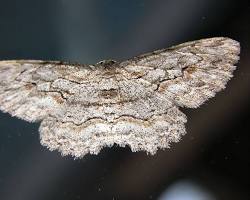
The Ectropis Looper Moth is a species of geometer moth whose larvae are known as inchworms or loopers. These caterpillars are significant defoliators of trees and shrubs in certain regions.
The “Bark-Blenders”: Ectropis Looper Moths
Ectropis Looper Moths (primarily the Pale Brindled Beauty or Engrailed species, Ectropis crepuscularia) are widely distributed Geometrid moths known for their exceptional camouflage. For Pestipedia.com users, these insects are significant because their larvae are polyphagous generalists, meaning they feed on a vast array of U.S. deciduous trees and shrubs. While they are a common sight in U.S. woodlands and suburban gardens, they typically exist in balance with their environment, rarely reaching the “outbreak” levels seen in more aggressive defoliators.
Technical Identification: Diagnostic Markers
- Phenotype (Adult): Characterized by mottled grey, white, and tan wings with fine, wavy dark lines. A primary diagnostic key for Pestipedia.com users is their resting posture: they sit with their wings spread flat against tree bark, making them nearly invisible to the naked eye.
- Larval Phenotype (Inchworms): The caterpillars are classic loopers, ranging in color from purplish-brown to greenish-grey. They often feature a light-colored “V” or “X” pattern on their back and a slightly swollen second thoracic segment.
- Movement: Like all Geometrids, they move in a looping or “measuring” fashion by drawing their hind prolegs up to their front legs and then extending forward. When resting, they often extend their bodies outward to mimic a small twig.
Ecological Impact: Generalist Foliage Consumption
The primary impact of Ectropis loopers is the removal of host leaf tissue, serving as a vital link in the avian food web.
- Broad Host Range: These larvae feed on Oak, Birch, Willow, Apple, and various conifers. Their feeding usually results in ragged holes or “notching” on the leaf edges, but healthy trees easily recover.
- Nocturnal Flight: Adults are nocturnal and are highly attracted to porch and street lights. During the day, they rely on their bark-like patterns to avoid bird predators.
- Seasonal Generations: Depending on the latitude, there are typically two generations per year (spring and summer). This means looper activity can be observed across a broad growing season.
Management & Conservation Strategies
Management of Ectropis Loopers in landscapes is usually unnecessary and focuses on integrated biological balance.
| Strategy | Technical Specification | Operational Benefit |
|---|---|---|
| Natural Predator Support | Preserving U.S. native bird habitats | Encourages Nuthatches, Chickadees, and Creepers to forage for pupae on tree bark, naturally regulating moth populations. |
| Biological Drench (Spot Treatment) | Bacillus thuringiensis (Bt) | Only necessary if a specimen tree (like a young Apple or Birch) shows excessive foliar loss; targets the larval digestive system without harming humans. |
| Light Pollution Reduction | Switching to Warm-LED or Motion Lighting | Prevents adult moth exhaustion and disorientation, ensuring they can fulfill their role as nocturnal pollinators and food sources. |
- Monitoring: Perform a “Beat Test” by placing a white sheet under a branch and tapping the branch sharply. Seeing brown or grey loopers drop onto the sheet confirms their presence.
- Conservation Tip: These moths are often indicators of forest health. Pestipedia.com recommends tolerating low levels of damage to ensure that beneficial predatory wasps (like Braconids) have enough hosts to maintain their own populations.
Classification
- Order: Lepidoptera
- Family: Geometridae
Behavior and Damage
Larvae feed on leaves and can cause widespread defoliation during outbreaks. Their looping movement is characteristic of the group.
Management
- Monitor populations
- Encourage natural predators